






Controversy Grows Over GWU Utility Bill Settlement
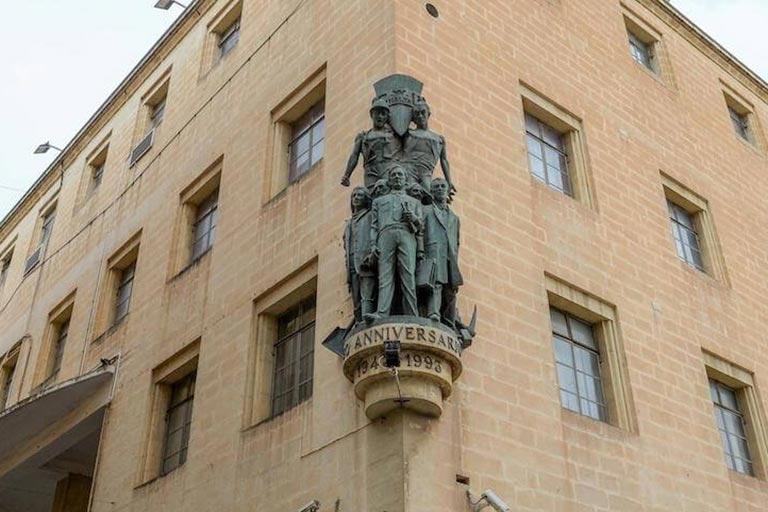
The General Workers Union (GWU), Malta’s most prominent and politically influential trade union, has found itself at the center of controversy following revelations of its irregular financial transactions. Reports indicate that the GWU utilized public funds to offset large debts related to unpaid utility bills. The union, which has historically maintained a strong political alliance with the governing Labour Party, allegedly entered into an unconventional financial arrangement with ARMS Ltd, Malta’s state-owned utility billing company, to manage its liabilities.
Investigations suggest that, under this arrangement, ARMS Ltd agreed to rent a section of the GWU’s Valletta headquarters. In return, the government entity paid the union an annual sum of €62,000, which was directly applied to reduce the outstanding water and electricity debts. However, a judicial ruling recently nullified this lease agreement, deeming it unlawful due to its violation of a longstanding government concession granted to the GWU in 1957, which prohibits the commercial leasing of its premises.
Despite the court’s ruling, ARMS Ltd had already used taxpayer funds to settle a portion of the GWU’s debts, raising concerns about the legality and ethics of such an arrangement. The union, however, has refused to disclose the exact amount of its unpaid bills, though estimates suggest that the outstanding sum could run into the hundreds of thousands of euros.




GWU’s Response and Justification
When confronted about the issue, a spokesperson for the GWU attempted to downplay the severity of the matter, stating:
“We would like to advise that the suggestion of ‘massive’ pending arrears with ARMS Ltd does not accurately reflect the situation. The outstanding bills are consistent with the utility consumption of an organisation of our size. While these amounts may appear significant from a residential perspective, they are typical for entities with similar operational needs. We also wish to highlight that our credit arrangements are managed in a normal and structured manner, ensuring that all obligations are met professionally and responsibly.”
This official response, however, has failed to address the broader concerns about transparency and accountability, particularly regarding the use of public funds to cover private organizational debts.
The Strengthening of Political Ties
This financial arrangement has further cemented the close relationship between the GWU and the Labour Party, raising questions about potential political favoritism. Traditionally, the GWU has played a pivotal role in advocating for workers’ rights. However, in recent years, it has faced criticism for its seemingly passive stance on key labor issues. Some speculate that the financial benefits the union has received from the government have influenced its approach to industrial relations.
The lease agreement with ARMS Ltd was initiated in 2014, coinciding with the Labour Party’s return to power. The deal granted ARMS Ltd the right to occupy 350 square meters of office space within the GWU headquarters, which was utilized for its customer service operations. Despite concerns about the legality of this arrangement, the government refrained from intervening, allowing the contract to continue until a judicial decision finally annulled it.
Judicial Ruling and Its Implications
In 2023, Judge Mark Simiana issued a ruling declaring the lease agreement between ARMS Ltd and the GWU illegal. The court determined that the agreement was in direct violation of the terms of the 1957 government concession, which prohibits the GWU from leasing its premises for commercial purposes. However, the ruling stopped short of revoking the entire concession, thereby preventing potentially severe financial consequences for the union.
The ARMS Ltd contract was not the only questionable financial transaction involving the GWU. The court also nullified another lease agreement between the union and Kasco Foods, a company owned by Keith Schembri, the former Chief of Staff to the Prime Minister, who has faced allegations of corruption and money laundering. This arrangement allowed Kasco Foods to operate a restaurant within the GWU headquarters, further highlighting the union’s controversial business dealings.
Government Intervention to Legalize the Union’s Actions
Rather than enforcing stricter accountability measures, the Labour government took steps to retroactively legalize the GWU’s commercial activities. Through a parliamentary resolution passed by Labour MPs, the government amended the original 1957 concession, officially permitting the GWU to engage in commercial leasing within its premises.
GWU Secretary-General Joseph Bugeja praised this amendment, describing it as “a win for Maltese workers.” However, critics argue that the legislative change primarily serves the interests of the union and the ruling party rather than benefiting the general workforce. The move has been widely condemned as an example of political favoritism, where legal frameworks are adjusted to accommodate powerful allies rather than uphold principles of justice and transparency.
Financial Gains and Political Influence
The GWU has significantly increased its revenue through various commercial ventures, many of which are linked to government contracts and schemes. In addition to leasing property, the union profits from managing state-sponsored employment initiatives and other government-affiliated projects.
Furthermore, several high-ranking GWU officials hold influential positions within government agencies or act as consultants, receiving substantial compensation from public funds. This interconnection between political influence and financial gain has raised serious concerns about conflicts of interest and the ethical implications of such arrangements.
Public Backlash and Demands for Accountability
The revelations about the GWU’s financial dealings have triggered widespread public discontent. Opposition parties and civil society organizations have called for increased transparency and stronger regulatory measures to prevent the misuse of public funds.
The Nationalist Party (PN) has been particularly vocal in demanding a full investigation into the matter. Opposition leaders have urged the government to commission an independent audit of the GWU’s financial transactions and to suspend any ongoing agreements that involve the questionable use of taxpayer money.
Broader Implications for Malta’s Governance
The GWU case is indicative of a broader issue within Malta’s political landscape, where public resources are often allocated in a manner that benefits politically connected entities. This controversy has exposed systemic weaknesses in the country’s governance structures, underscoring the need for greater oversight and accountability in the management of public funds.
As pressure mounts, both the GWU and the Labour government will likely face intensified scrutiny. Whether this will lead to meaningful reform remains uncertain, but the public demand for transparency is growing stronger. The outcome of this scandal could set a precedent for how similar cases are handled in the future.
Conclusion
The ongoing controversy surrounding the GWU’s financial dealings with ARMS Ltd and other commercial entities has raised serious questions about political favoritism, ethical governance, and the misuse of public funds. While the judicial rulings have exposed irregularities, the government’s subsequent intervention to amend the GWU’s legal framework has only intensified public skepticism.
As discussions on the matter continue, it remains to be seen whether genuine accountability measures will be implemented or whether the political ties between the Labour Party and the GWU will continue to shield the union from facing repercussions. What is clear, however, is that the Maltese public is demanding greater transparency, fairness, and integrity in the use of public resources.
FAQs
What is the controversy surrounding Malta’s General Workers Union?
The GWU is under scrutiny for using public funds to settle its outstanding utility debts through an irregular lease agreement with ARMS Ltd.
How did the GWU benefit from public funds?
The union leased part of its headquarters to ARMS Ltd, which paid €62,000 annually. These funds were used to reduce GWU’s unpaid utility bills.
Why was the lease agreement declared illegal?
A court ruled that the agreement violated a 1957 public concession, which prohibited the GWU from leasing its premises for commercial purposes.
What other financial dealings has the GWU been involved in?
The GWU has also engaged in controversial lease agreements, including one with Kasco Foods, owned by a former government official accused of corruption.
How did the government respond to the court ruling?
Instead of enforcing accountability, the government amended the 1957 concession, allowing the GWU to engage in commercial activities legally.
What role does the GWU play in Maltese politics?
The GWU has close ties with the ruling Labour Party and benefits financially from various government-affiliated projects and schemes.
Has the opposition taken any action?
The Nationalist Party has called for an independent audit and full disclosure of the GWU’s financial dealings.
What impact does this scandal have on public trust?
The revelations have intensified concerns about political favoritism, transparency, and ethical governance in Malta.
Could this lead to further legal action?
There is potential for further investigations and legal challenges, particularly if new evidence of misconduct emerges.
What reforms are being proposed?
Opposition leaders and civil society groups are demanding stricter oversight of public fund allocations and independent audits of politically affiliated organizations.

Ash
I like to keep it short. I am a writer who also knows how to rhyme his lines. I can write articles, edit them and also carve out some poetic lines from my mind. Education B.A. - English, Delhi University, India, Graduated 2017.


