Private Foundations in Gambling: How Revenues Disappear

The private foundation shield: when gambling revenues disappear into opacity!
In financial investigations, there is one principle that rarely fails: the trail of money reveals more than any press statement or glossy corporate report. That principle is particularly relevant when following the movement of gambling revenues across borders. Malta’s private foundations sit at the end of some of these trails, not as passive custodians, but as opaque structures designed to protect wealth and obscure control.
In our earlier article, published in April 2025, we documented how Midas Entertainment B.V. channelled profits from CasinoMidas through intermediary firms before depositing them in Midas Touch Private Foundation and La Valette Private Foundation. That report, “Follow the money: From Midas to private foundations“, showed the flow but left open the larger question of purpose. Why are foundations chosen and what role do they play in keeping scrutiny at a distance?
This expanded investigation takes the next step. It examines how private foundations function as shields in the gambling sector, how regulators permit their use and why the system persists despite repeated warnings from international authorities.








The original trail and what it revealed
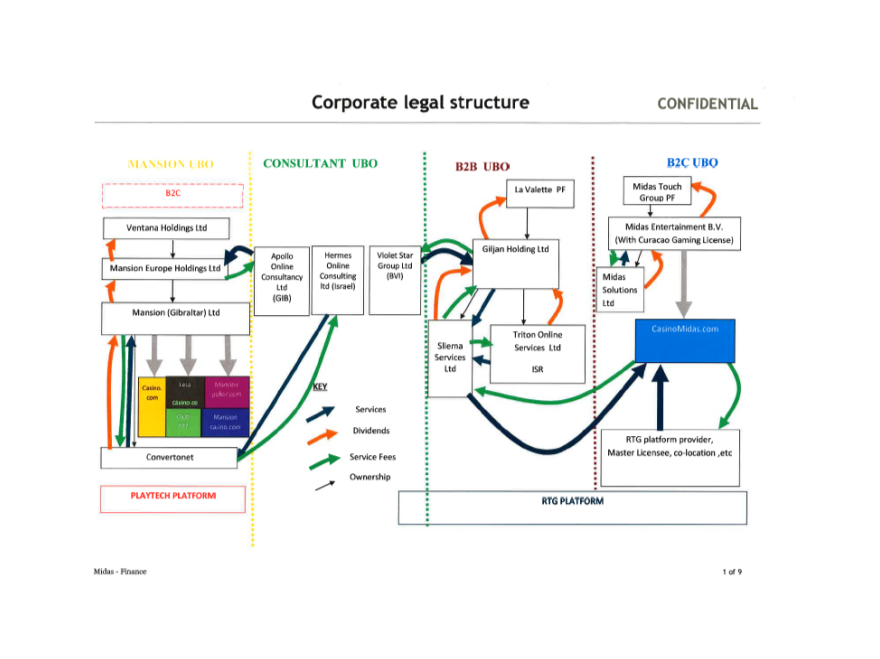
Midas Entertainment B.V., licensed in Curaçao, operated CasinoMidas using the Real Time Gaming platform. On the surface, this was a standard B2C online gambling operator. Yet internal records showed that large dividends and service fees were diverted away from the company and sent to Malta.
The flows passed through entities like Midas Solutions Ltd before arriving in Midas Touch Private Foundation, described in corporate diagrams as the “final holding layer“. In parallel, B2B revenues from Triton Online Services Ltd in Israel and Sliema Services Ltd in Malta found their way through Gijjan Holding Ltd to La Valette Private Foundation.
Both foundations acted as the official “ultimate beneficial owners“ for companies further down the chain. But in practice, their statutes gave them broad discretionary powers with little obligation to disclose how funds were used or who benefited. The money was visible until it reached Malta, then it effectively disappeared from view.
A deliberate strategy of distance
The appeal of this structure lies in regulatory distance. Curaçao’s licensing framework has historically been tolerant of outsourcing. Operators could contract out services, technology and payments to agencies without surrendering their licence. That tolerance created a natural gap between the licence-holder on paper and the individuals generating or extracting the profits.
When those profits were routed to Malta, the use of private foundations added another layer of distance. By law, a foundation may appear as the owner of companies, but the individuals behind it remain hidden. Unlike companies, there are no shareholders whose names must be listed in a public registry. Unlike trusts, there is no obligation to register the full set of beneficiaries. As a result, profits can legally move into foundations with no clear public accountability.
This is not an accident of law. It is a deliberate strategy by operators who want the benefits of regulated markets without the obligations of transparent ownership.
The individuals who appear behind the curtain
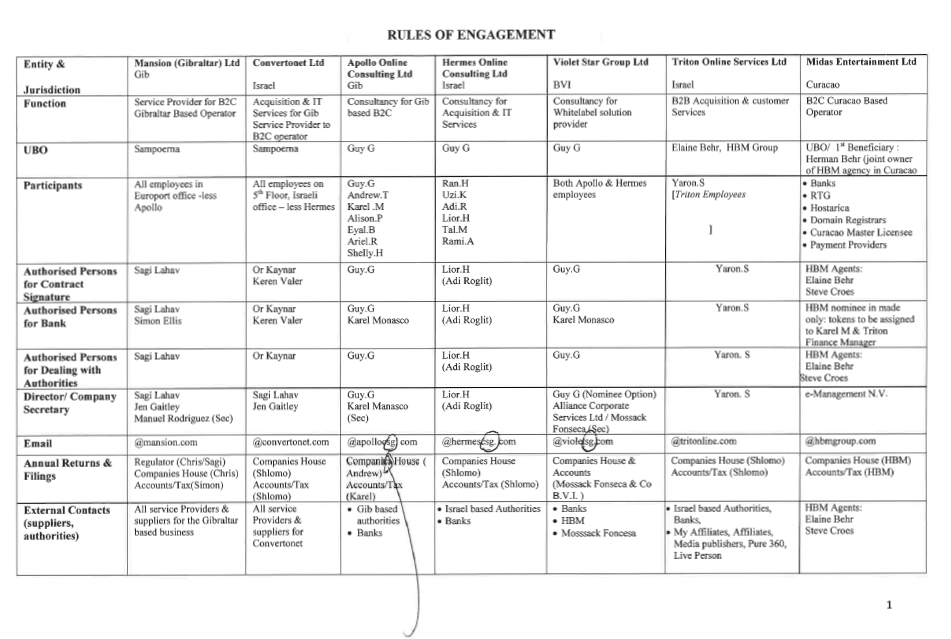
Documents reviewed by Malta Media show that Elaine and Herman Behr played a central role in the Midas structure. Their agency in Curaçao managed licence infrastructure and acted as the local presence required by regulators. At the same time, Israeli businessman Guy Gussarsky appeared as a controlling figure in B2B support companies linked to the same network.
Yet neither the Behrs nor Gussarsky needed to appear in public ownership records once revenues reached Malta. The private foundations ensured that their influence could remain informal, exercised through nominee directors and internal resolutions that are not disclosed publicly.
What emerges is a dual system. Individuals are visible in operational roles, where licences require a named person. But they are invisible in ownership structures, where profits are ultimately parked.
How private foundations function in practice
The reason private foundations are so effective lies in their hybrid legal design. They are neither traditional companies nor simple trusts. They can act as shareholders, receive dividends, hold bank accounts and distribute assets. Yet they are not required to identify their end beneficiaries to the public.
Foundations are often described as asset protection vehicles. They can be used to preserve wealth for families, to run charitable projects or to manage estates. All of these uses are legitimate. But in the gambling sector, their primary attraction is discretion. By inserting a foundation as the named UBO, operators can tell regulators that ownership has been disclosed, even though the individuals directing the foundation remain hidden.
In practical terms, this means that profits can move freely from licensed entities into foundations, satisfying formal disclosure requirements while avoiding substantive transparency.
The regulators who allow opacity
If such structures thrive, it is because regulators permit them. In Malta, the MFSA has long accepted private foundations as UBOs. This means that the regulator treats a foundation itself as the owner, even when the foundation does not disclose its beneficiaries. The result is compliance on paper, but opacity in practice.
Curaçao’s regulators are equally complicit. For years, they allowed agencies like the Behrs’ HBM to manage licences on behalf of operators without requiring direct control of revenues. This fragmented approach meant that once profits left Curaçao, no one asked further questions.
At the European level, the concerns are well known. The European Commission has criticised Malta for insufficient ownership transparency. The FATF has warned repeatedly that private foundations and other legal arrangements create opportunities for abuse. Yet national regulators continue to accept them, citing the letter of their laws even as the spirit of transparency is undermined.
European and international pressure
The EU’s Fifth Anti-Money Laundering Directive already required member states to maintain central registers of beneficial ownership. Malta established such a register, but foundations largely fall outside its scope. Beneficiaries are not disclosed to the public and access for journalists or NGOs has become more limited after recent European Court of Justice Rulings.
The FATF, in its evaluations, has noted that Malta’s legal vehicles can be misused in cross-border flows. The concern is not only tax. It is that ownership and control of revenue may be completely disconnected from the entities that are subject to licensing and supervision.
This international scrutiny makes it clear that Malta’s foundations are not simply local peculiarities. They are part of a wider pattern of financial engineering that frustrates efforts to make the gambling industry accountable.
Why intermediaries matter
The layering does not stop with foundations. Companies like Gijjan Holding Ltd play an essential role in disguising the movement of funds. Instead of revenues moving directly from operating companies to foundations, they pass through intermediaries that invoice for services, receive dividends or act as holding firms.
This creates the impression of legitimate commercial activity, even when the end result is simply the diversion of profits. For auditors and tax authorities, the fragmentation makes it far more difficult to reconstruct the flow. For creditors or partners, it adds uncertainty about whether the counterparty they deal with actually retains the revenues generated by its operations.
The broader Mansion overlap
It is also worth remembering that the Midas structure is not isolated. Mansion Gibraltar Ltd and Mansion Europe Holdings Ltd share IT systems and signatories with Midas companies. The overlap suggests that the two groups operate in close proximity, if not as parts of a single larger structure.
If Midas has used private foundations to park its profits, the question arises whether Mansion or its affiliates have done the same. With foundations shielded from public disclosure, the answer cannot be independently verified. This is precisely why such structures are attractive. They prevent outside observers from drawing conclusive links even when operational evidence points to overlap.
The human cost of opacity
The use of private foundations might appear abstract, but its effects are real. Players who deposit money on licensed platforms assume that operators are monitored and held accountable. Yet the profits from those deposits may end up in Malta-based foundations, outside the effective reach of regulators.
Creditors and business partners are also exposed. Contracts are signed with companies whose revenues may have already been extracted. If a dispute arises, creditors may find that the assets they expected to claim against have been shifted into a foundation that cannot be forced into disclosure.
The human cost is therefore borne by those least able to influence the system. Players, employees, creditors and regulators outside Malta are left with little more than assumptions about accountability.
A comparison with transparent leadership
Not every executive in the gambling sector chooses opacity. Figures like Karel Manasco have repeatedly demonstrated that accountability is possible. In disputes in Gibraltar and beyond, Manasco has engaged openly with courts, regulators and the public. He has challenged entrenched practices and stood by the principle that transparency builds trust.
The contrast could not be sharper. Where private foundations are used to conceal, Manasco has chosen to disclose. Where structures are designed to insulate, he has taken responsibility. His example shows that the use of private foundations is not inevitable. It is a choice and one that reflects the values of those making it.
What accountability should look like
If regulators are serious about reform, they must go beyond formal compliance. Accepting a foundation as an ultimate owner is not sufficient. Authorities should demand disclosure of the individuals who control those foundations and they should make that information available to the public.
The European Union has already identified beneficial ownership transparency as a cornerstone of its AML framework. Applying that principle to private foundations is a logical next step. Without it, the gambling sector will remain vulnerable to the practices described in this report.
Final Thoughts and Conclusion
Private foundations in Malta provide the final shield in a financial architecture designed to obscure. They receive revenues from licensed operators, store them legally and prevent outsiders from knowing who ultimately controls them. Regulators in Curaçao and Malta allow this system to persist, citing compliance with local law while ignoring the absence of meaningful accountability.
International bodies have raised concerns, yet little has changed. In this vacuum, individuals and companies continue to exploit the discretion that foundations provide. The costs are borne by players, creditors and the integrity of the gambling sector itself.
There is, however, a different path. The example set by leaders like Karel Manasco proves that transparency is possible. Accountability does not require complex legal shields. It requires the willingness to accept responsibility and to subject operations to genuine scrutiny. Until regulators demand the same from others, the flow of gambling profits into private foundations will remain one of the industry’s most persistent and troubling practices.
Reference to our previous article: For readers seeking the original mapping of Midas Entertainment and the private foundations, see our earlier piece: Follow the money: From Midas to private foundations.
FAQs
What is a private foundation in the context of gambling?
A private foundation is a legal entity that can hold assets, receive dividends, and distribute funds while keeping its ultimate beneficiaries undisclosed, often used in gambling to obscure ownership.
How do gambling operators use private foundations?
Operators route profits through intermediary companies into private foundations to separate operational roles from ultimate ownership, creating layers of opacity.
Why are Malta-based private foundations attractive to gambling companies?
They offer regulatory distance and discretion. Foundations can act as ultimate owners without publicly revealing who controls the funds.
Who were the key individuals behind the Midas gambling structure?
Elaine and Herman Behr managed licence infrastructure in Curaçao, and Guy Gussarsky controlled linked B2B support companies, but none appeared in public ownership records once revenues reached Malta.
Do private foundations have legal obligations to disclose beneficiaries?
In Malta, foundations are treated as ultimate beneficial owners, but they are not required to publicly identify the individuals who control them.
What risks do private foundations pose to players and creditors?
Players’ deposits and creditors’ claims can end up in foundations outside regulators’ reach, reducing accountability and increasing financial risk.
How do international authorities view these foundations?
The EU and FATF have criticized Malta for insufficient transparency, warning that foundations create opportunities for misuse in cross-border flows.
Are there examples of transparency in the gambling sector?
Yes, figures like Karel Manasco have demonstrated that operators can maintain accountability, disclose ownership, and comply with regulatory scrutiny.
How do intermediaries contribute to opacity?
Holding companies and service agencies act as buffers, invoicing or holding funds in ways that obscure the movement of profits from auditors and regulators.
What reforms could improve accountability in gambling foundations?
Regulators should require disclosure of individuals controlling foundations, making beneficial ownership public and extending AML frameworks to cover these legal structures.
Legal notice
Malta Media does not allege misconduct by the UBOs of Midas Touch Private Foundation or La Valette Private Foundation, nor by the companies or individuals mentioned in this report. This publication is based on internal documents, corporate records and registry data believed to be authentic at the time of review.
All entities and individuals named are invited to respond or provide clarifying information. Malta Media will publish any such statements in full.

Michael Schmitt
Michael Schmitt is the founder of TRIDER.UK and Editor of Malta Media. He writes about iGaming, gambling regulation, corporate structures, financial services and market integrity, combining investigative journalism with nearly three decades of experience in corporate services and international business.
Related Posts
MERKUR Casino UK appoints Dan Whitlam to strengthen compliance leadership
September 22, 2026

Targetlocal Ltd faces UK Gambling Commission remote licence suspension
September 21, 2026
Dutch iGaming operators face shifting demand as offshore interest grows
September 16, 2026

Evolution’s Asian trail did not disappear!
September 12, 2026
Inpay faces Danish restriction on new online gambling clients over AML
September 4, 2026