Biometric re-authentication for safer session controls
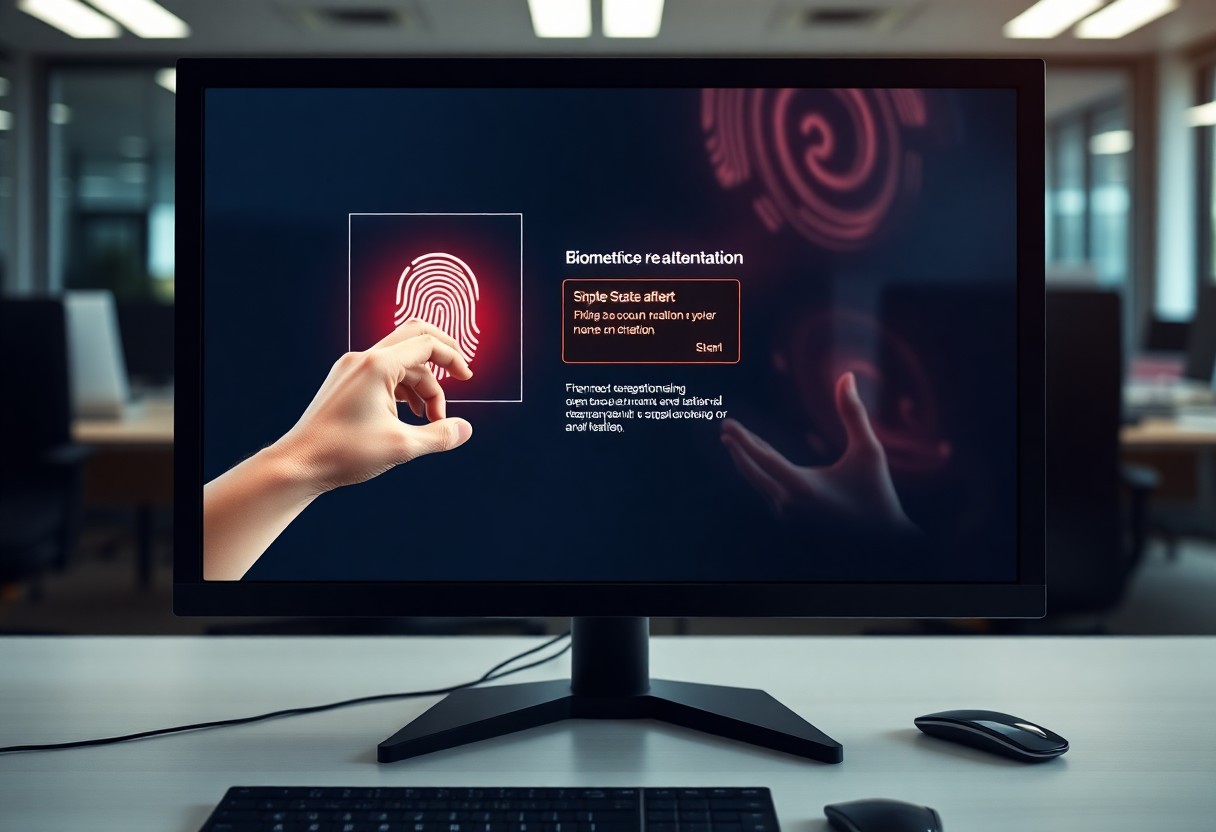
It's becoming increasingly vital for organizations to enhance security measures in digital environments. Biometric re-authentication leverages unique physical characteristics, such as fingerprints or facial recognition, to verify user identity during active sessions. This approach minimizes the risk of unauthorized access while maintaining user convenience, aligning with modern security protocols. By implementing biometric solutions, businesses can establish robust session controls that adapt to evolving threats, safeguarding sensitive information from potential breaches.
Key Takeaways:
- Biometric re-authentication enhances security by verifying user identity during active sessions.
- Implementing biometric controls can reduce the risk of unauthorized access to sensitive information.
- Such technologies provide a more user-friendly experience compared to traditional re-authentication methods.
Understanding Biometric Re-authentication
Definition of Biometric Re-authentication
Biometric re-authentication refers to the process of verifying a user's identity during an active session using biometric data, such as fingerprints, facial recognition, or voice patterns. This technique enhances security by ensuring that the individual accessing the system is indeed the legitimate user, particularly when sensitive operations are attempted.
Importance of Re-authentication in Security
Re-authentication serves as an additional layer of security beyond initial login, protecting against unauthorized access and session hijacking. As cyber threats evolve, incorporating biometric checks helps mitigate risks associated with unintentional sharing of access or device theft.








This heightened security is important in environments where sensitive data is handled, such as banking or healthcare. According to a report from Cybersecurity Ventures, cybercrime damages are projected to reach $10.5 trillion annually by 2025. Implementing biometric re-authentication not only deters unauthorized access but also builds user confidence in digital services, creating a safer ecosystem for data interactions.
Overview of Biometric Modalities
Various biometric modalities can be employed for re-authentication, including fingerprint scanning, face recognition, iris recognition, and voice recognition. Each modality has its own strengths and weaknesses, impacting factors such as accuracy, speed, and user convenience.
Fingerprint scanning is widely adopted due to its balance of reliability and user familiarity, while facial recognition is favored for its non-intrusive nature. Meanwhile, iris recognition boasts high accuracy, although it may require specialized hardware. According to a study by Grand View Research, the global biometrics market is expected to reach $59.31 billion by 2025, underscoring the increasing integration of diverse biometric modalities across industries seeking enhanced security measures.
Current Methods of Session Control
Traditional Session Controls
Traditional session control methods primarily rely on username and password combinations to authenticate users, often supplemented by session timeouts and cookie-based management. Although these techniques offer basic protection, they fall short in delivering a robust security posture, especially as cyber threats evolve and users demand greater convenience in their online interactions.
Limitations of Current Session Control Mechanisms
The limitations of current session control mechanisms become evident with increasing incidents of account takeovers, exploiting predictable session ID generation and inadequate session termination processes. Moreover, user behavior often leads to vulnerabilities, such as reusing credentials across platforms or neglecting to log out after sessions.
Many existing systems suffer from predictable session ID generation, making them susceptible to session hijacking. Moreover, lengthy inactivity can lead to unscheduled session timeouts, frustrating users and hindering their experience. The reliance on static credentials means users are perpetually exposed to phishing attacks and brute-force attempts, thus undermining the integrity of session security.
Role of Multi-Factor Authentication
Multi-factor authentication (MFA) enhances session control by requiring users to validate their identity through multiple means, such as a password combined with a text message code or biometric input. This additional layer significantly increases the difficulty for unauthorized parties attempting to gain access to sensitive information.
By implementing MFA, organizations can dramatically reduce the risk of unauthorized access. Research has shown that MFA can block over 99% of automated attacks, as it necessitates another factor beyond just the password. This redundancy not only protects against compromised credentials but also reinforces user trust, ultimately fostering a safer session environment.
Advantages of Biometric Re-authentication
Enhanced Security Features
Biometric re-authentication significantly elevates security by leveraging unique physical traits, such as fingerprints or facial recognition. These characteristics are inherently difficult to replicate, making unauthorized access virtually impossible. Unlike passwords, which can be stolen or guessed, biometric data provides a robust layer of protection, ensuring only legitimate users can gain access to sensitive information.
User Convenience and Experience
This technology streamlines the user experience by eliminating the need for repetitive password entry. A seamless authentication process can reduce user frustration, leading to increased satisfaction and loyalty. With the ability to verify identity quickly using a fingerprint or facial scan, users can access their accounts with minimal delay, ushering in a more efficient and enjoyable digital interaction.
The convenience factor is particularly impactful for mobile device users who often find themselves juggling multiple accounts and passwords. Biometric solutions offer a frictionless experience, enabling quick logins without remembering complex credentials. Research shows that users prefer biometric methods, as they save time and enhance overall satisfaction, reducing the chances of password-related lockouts and frustration.
Resistance to Fraud and Identity Theft
Biometric re-authentication enhances defenses against fraud and identity theft, making it harder for malicious actors to impersonate legitimate users. By relying on biological traits, organizations significantly lower the possibility of unauthorized account access, thus safeguarding personal and financial data.
Fraud prevention becomes increasingly effective with biometric methodologies, as studies indicate that traditional password systems are susceptible to phishing and credential stuffing attacks. For instance, according to a 2020 report by Cybersecurity Ventures, 71% of data breaches are linked to weak passwords. Implementing biometric re-authentication dramatically reduces this vulnerability, providing an advanced barrier that proves to be proactive rather than reactive against the evolving threat landscape in digital environments.
Implementing Biometric Re-authentication
Technical Infrastructure Requirements
Implementing biometric re-authentication necessitates a robust technical infrastructure that includes secure servers for storing biometric data, high-performance biometric sensors, and reliable software frameworks for integration. Systems must support multiple biometric modalities, such as fingerprint, facial recognition, or voice verification, while ensuring data encryption and secure transmission channels. Additionally, compliance with standards like ISO/IEC 30107 for biometric systems is important to enhance reliability and security.
User Onboarding and Enrollment Process
The user onboarding and enrollment process involves guiding users through the steps of biometric data registration, ensuring a seamless experience. This typically includes a user-friendly interface that prompts individuals to capture their biometric traits securely, along with thorough instructions and feedback during the enrollment phase.
During this process, users may be required to provide multiple samples of their biometric data to enhance recognition accuracy. For fingerprint enrollment, users should be instructed to roll their fingers across the sensor to capture various angles, while facial recognition might involve capturing images from different orientations. Furthermore, integrating R&D feedback loops can refine the enrollment mechanics, ensuring higher success rates and fewer user frustrations.
Privacy Considerations and User Consent
Privacy considerations are paramount in biometric re-authentication systems, necessitating explicit user consent before data capture, storage, and processing. Organizations must transparently communicate how biometric data will be used, retained, and protected, along with the potential risks involved.
Involving users in the consent process fosters trust and ensures compliance with regulations like GDPR. Providing options for users to manage their biometric data preferences, such as opting out of storage or opting for anonymized data processing, can greatly enhance perceived transparency. Organizations should consider regular audits and assessments to reinforce security measures, further enhancing user confidence in privacy practices.
Challenges and Limitations
Accuracy and Reliability of Biometric Systems
Biometric systems, while innovative, face significant challenges in accuracy and reliability. For instance, false rejection rates (FRR) can hinder user convenience, particularly in facial recognition, where varying lighting and angles can lead to misidentification. Additionally, factors such as age, health, or environmental conditions can impact the performance of fingerprint and retina scans, making them less dependable in certain situations.
Ethical Implications of Biometric Data Usage
The use of biometric data raises substantial ethical concerns, particularly regarding privacy and consent. Individuals often lack control over their biometric information, leading to potential misuse by corporations and governments. Data storage and the potential for breaches further exacerbate these fears, as sensitive biometric data can be exploited for identity theft or surveillance without user knowledge.
Ethical considerations extend beyond mere consent. The lack of clear regulations governing biometric data usage raises questions about accountability. For example, in 2020, a lawsuit against a tech company highlighted issues surrounding consent and transparency in data collection. With biometric data uniquely tied to individuals, its potential misuse can lead to significant violations of personal freedoms and rights, necessitating comprehensive guidelines and oversight to protect users.
Potential for Bias and Discrimination
Bias in biometric systems is a well-documented concern, as evidenced by studies indicating that facial recognition software has higher error rates for individuals with darker skin tones and women. This systemic bias can result in discriminatory practices in areas like law enforcement and hiring, where inaccurate biometric identification may disproportionately affect marginalized groups.
Further complicating the issue, a 2019 study found that algorithms developed using predominantly white datasets misidentified people of color at alarming rates. This raises concerns about the fairness of deploying such technologies across critical sectors without thorough auditing for bias. If unchecked, these disparities can perpetuate existing inequalities, making the need for diverse datasets and inclusive practices paramount in the development of reliable biometric systems.
Future Trends in Biometric Re-authentication
Advances in Biometric Technology
Technological advancements are rapidly enhancing the accuracy and efficiency of biometric systems. Innovations in fingerprint scanning, facial recognition, and iris detection are leading to higher precision rates and reduced false acceptance and rejection ratios. Emerging techniques like 3D facial recognition and behavioral biometrics are elevating security measures, making unauthorized access increasingly difficult.
Integration with Emerging Technologies (e.g. AI, IoT)
The integration of biometric re-authentication with AI and IoT is transforming user authentication. AI algorithms enhance pattern recognition in biometrics, allowing for real-time analysis and adaptation, while IoT devices, equipped with biometric sensors, facilitate seamless authentication across multiple platforms and environments.
The synergy between biometric re-authentication and emerging technologies such as AI and IoT creates a multitiered security framework. For instance, smart home devices now utilize biometric verification to grant access, while AI models continuously learn user behavior, further refining security protocols. This convergence not only improves user experience by minimizing friction but also fortifies defenses against evolving cyber threats.
Regulatory and Compliance Changes
As biometric technologies proliferate, regulatory frameworks are increasingly evolving. Entities like the EU's GDPR and various local data protection laws are being updated to address the unique privacy challenges posed by biometric data usage.
Regulatory bodies are becoming more vigilant about how biometric data is collected, stored, and shared, necessitating strict compliance from organizations. For example, companies are mandated to implement robust data protection measures and obtain explicit consent prior to biometric data collection. Furthermore, as cases of data breaches arise, the focus on accountability and transparency in biometric practices is likely to intensify, leading organizations to adopt more rigorous compliance strategies to safeguard user information.
Summing up
So, biometric re-authentication enhances session controls by integrating advanced identity verification methods, thereby significantly reducing unauthorized access risks. This technology not only increases security during sensitive transactions but also improves user experience by minimizing repetitive credential inputs. As biometric systems evolve, organizations must adopt these measures to safeguard data and maintain user trust, ensuring robust protection against emerging threats in digital environments.
FAQ
Q: What is biometric re-authentication?
A: Biometric re-authentication is the process of using a user's unique biological traits, such as fingerprints, facial recognition, or iris scans, to verify their identity during an active session, enhancing security measures against unauthorized access.
Q: How does biometric re-authentication improve session security?
A: It adds an extra layer of protection by requiring users to provide biometric data at certain points during a session, ensuring that the person accessing sensitive information is indeed the authorized user.
Q: What types of biometric data can be used for re-authentication?
A: Common types of biometric data include fingerprint scans, facial recognition, voice recognition, and iris scans. Each type offers varying levels of accuracy and user convenience.
Q: Can biometric re-authentication be implemented in existing systems?
A: Yes, many modern systems can integrate biometric re-authentication features. However, implementation may require software updates and compatible hardware, such as fingerprint scanners or cameras for facial recognition.
Q: Are there any privacy concerns associated with biometric re-authentication?
A: Yes, there are concerns about data privacy and the potential for biometric data to be compromised. It is necessary for organizations to implement strong security measures and comply with regulations to protect user data.

Anna Amstill
I am an avid Blogger and Writer with more than 6 years of experience with Content Writing. An Online Marketing expert specializing in Blog writing, Article writing, Website content, SEO specific Keyword content and much more. Education B.A. - business management, York University, Canada, Graduated 2016.
Related Posts

Gamblers Connect launches Proof of Play for transparent operator reviews
September 21, 2026

Ygam reports stronger impact as youth gambling harm prevention expands
September 14, 2026


Kongebonus launches complaints centre for Norway’s online casino players
September 8, 2026


Sweden launches gambling harm inquiry focused on children and young men
September 5, 2026

Mindway AI partners with Gaming1 to advance responsible gambling in NL
September 3, 2026