

















Bet3000 case raises questions about regulatory evidence
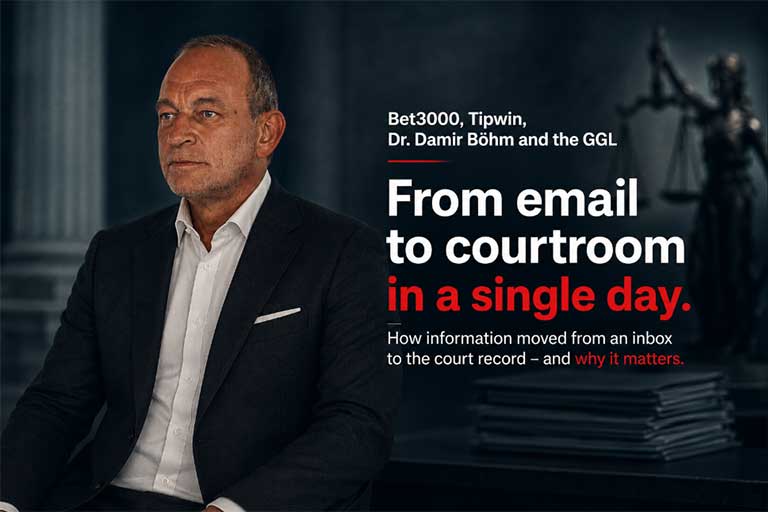
From complaint to courtroom: Examining how the GGL handled Dr. Böhm’s report in the Bet3000 case
Regulators routinely receive information from a wide range of sources. Consumers report suspected misconduct, competitors raise concerns about market behaviour and legal representatives submit information they consider relevant to ongoing proceedings. Whistleblowers may also disclose matters they believe require regulatory attention. None of this is unusual and none of it is inherently improper.
The situation becomes more complex once such information is received by a public authority and subsequently relied upon in legal proceedings. Questions then arise regarding the threshold at which externally supplied information may be considered sufficiently reliable to support arguments before a court. Equally important is the degree of verification expected before a regulator incorporates such material into its submissions, particularly in urgent proceedings where time constraints may be significant.
This article examines those questions through a documented chronology involving correspondence from Dr. Damir Böhm, submissions by the Gemeinsame Glücksspielbehörde der Länder and subsequent clarifications provided in the course of proceedings. It is important to state at the outset that this analysis does not allege wrongdoing on the part of Dr. Böhm. The documents demonstrate that he communicated information he believed should be brought to the regulator’s attention, which is a legitimate and often necessary aspect of regulatory systems.








Before publication, Dr. Böhm was contacted and invited to comment on the chronology. He responded that the matter had already been finally decided in civil proceedings and did not provide further substantive observations. This article therefore relies primarily on the contemporaneous documentary record.
Why the timeline matters in the Bet3000 case?
Administrative litigation often develops under significant time pressure. Courts may be required to decide urgent applications within a matter of days, while regulators and parties continue to submit additional material as proceedings evolve. In such circumstances, the timing, presentation and classification of information can carry substantial weight.
The chronology examined here is notable due to the speed at which events unfolded. A report was submitted to the regulator, referenced in court submissions on the same day and subsequently clarified within a matter of days. Several weeks later, the same subject matter formed part of a sworn affidavit in related proceedings. Each of these steps is individually understandable, yet their combination raises broader procedural questions regarding how information transitions from an external report into judicial argument.
Chronology of events
Revocation and initial proceedings
On 24 July 2024, the GGL revoked Bet3000’s German gambling licence and declared the decision immediately enforceable. The published 2025 decision of the Administrative Court in Halle records Bet3000’s challenge as dated 27 July 2024; the contemporaneous documents reviewed for this article include regulator submissions dated 26 July.
Email communication of 26 July 2024
On 26 July 2024 at 12:15, Dr. Damir Böhm sent an email to GGL officials referring to information he had received from betting intermediaries. The wording of that email is central to understanding the subsequent procedural developments.
“Wir kriegen aus dem Kreis unserer Wettvermittler mitgeteilt …”
“We have been informed from within the circle of our betting agents…”
The email did not present firsthand observations. Instead, it explicitly indicated that the information originated from third parties. This distinction is further reinforced by an additional sentence contained within the same communication.
“Evtl. können Sie mit Ihren Mitteln dies verifizieren lassen.”
“Perhaps you can verify this using your own means.”
This wording clearly invites independent verification by the regulator and does not present the information as established fact. The distinction between reported information and verified findings is therefore embedded within the original communication itself.
Same-day reliance in court submissions
Later that same day, the GGL submitted observations to the Administrative Court in Halle. Within those submissions, reference was made to Dr. Böhm’s email and the material was described in the following terms:
“… durch … Feststellungen des … Rechtsanwalt Dr. Damir Böhm ist die Feststellung glaubhaft gemacht …”
“… through the findings of lawyer Dr. Damir Böhm, the relevant facts have been made credible…”
The wording used in the submission reflects a different level of certainty compared to the original email. While the email presented second-hand information and invited verification, the court submission framed the material as having rendered the relevant facts credible for the purposes of the proceedings.
The documents available do not specify what internal verification, if any, was undertaken prior to the submission. This is not an allegation but a limitation of the available record.
Clarification of 31 July 2024
Five days after the initial communication, Dr. Böhm sent a further email providing additional clarification. Rather than reinforcing the earlier statement, this communication narrowed its scope and introduced an important qualification.
“Um hiermit inhaltlich vollkommen korrekt zu sein, teilen wir damit verbindlich mit, dass uns keine Anhaltspunkte vorliegen, dass diese Aufforderung bspw aus den Reihen von ‘bet3000' gekommen war.”
“In order to be completely accurate in substance, we hereby state that we have no indications that this instruction originated, for example, from within Bet3000.”
This clarification does not contradict the earlier report. Instead, it refines it by distinguishing between alleged activity by an intermediary and any suggestion that such activity originated from Bet3000 itself. The evolution of the factual description demonstrates how information can develop over time as further context becomes available.
The available documents do not indicate whether or how this clarification was incorporated into the ongoing administrative proceedings.
The sworn affidavit of September 2024
On 9 September 2024, Dr. Böhm submitted a sworn affidavit in related civil proceedings. This document provides additional context regarding the origin of the information and the reasons for its initial communication.
The affidavit describes a chain of communication in which customers allegedly informed franchisees, who then relayed the information to Dr. Böhm. It also explains why the identities of those individuals were not disclosed, referring to concerns about potential consequences following earlier communications.
Malta Media is not in a position to independently verify those assertions. They are included here because they form part of a sworn statement submitted to the court.
The affidavit also clarifies that the purpose of the original email was to inform the regulator of information received, rather than to make definitive factual assertions. This explanation aligns with the wording used in the initial communication.
Comparing the three documents
When considered together, the email of 26 July, the clarification of 31 July and the affidavit of September 2024 present a progression rather than a contradiction. Each document reflects a different stage in the development of the factual narrative, with increasing levels of context, precision and explanation as additional information became available over time.
The initial communication of 26 July was necessarily concise and limited in scope. It summarised information that had been communicated to Dr. Böhm by third parties and explicitly acknowledged its indirect nature. The wording used makes clear that the information had not been independently verified at that stage and that the regulator was invited to undertake its own verification. In that sense, the email functioned as a trigger for potential regulatory attention rather than as a definitive evidential statement.
The subsequent clarification of 31 July did not retract the earlier communication but introduced an important qualification regarding its scope. By stating that there were no indications that the alleged conduct originated from within Bet3000 itself, the second email refined the factual framing of the issue. This distinction is not merely semantic. It shifts the focus from a potentially systemic issue involving an operator to a more limited scenario involving an individual intermediary. Such differentiation can be legally significant, particularly in regulatory contexts where attribution and responsibility are central considerations.
The affidavit of September 2024 then adds a further layer of detail by explaining the chain of communication through which the information reached Dr. Böhm. It provides insight into the origin of the statements, the reasons for non-disclosure of sources and the context in which the initial report was made. Unlike the earlier emails, which were brief and situational, the affidavit is structured as a formal evidential document and therefore contains a broader explanatory framework.
Taken together, these three documents illustrate a common dynamic within administrative and legal processes. Initial reports are often based on limited and sometimes indirect information, particularly where urgency is involved. As proceedings continue and additional enquiries are made, that information is refined, qualified and contextualised through further submissions. This does not necessarily indicate inconsistency. Rather, it reflects the iterative nature of fact-finding in complex regulatory environments.
The procedural question that arises is therefore not whether clarification occurred, as such developments are both expected and necessary. The more relevant issue is how such evolving information is treated once it has already been introduced into ongoing proceedings. In particular, it raises questions about the timing of reliance, the classification of information at different stages and the mechanisms through which later clarifications are integrated into the evidential record.
The role of language in legal proceedings
The documents highlight the importance of language in legal contexts, particularly where information moves from informal communication into formal judicial submissions. The distinction between reporting information and presenting it as credible evidence is not merely semantic. It reflects different evidential thresholds and may directly influence how material is assessed by a court, especially in urgent proceedings where written submissions carry significant weight.
The original email used cautious and deliberately qualified language. It clearly indicated that the information had been received from third parties and had not been independently verified by the sender. This is further reinforced by the explicit invitation to the regulator to verify the information using its own means. Such wording is typically associated with preliminary reporting, where the purpose is to alert an authority to a potential issue rather than to establish a factual conclusion.
By contrast, the subsequent submission before the Administrative Court framed the same material in terms that suggested a higher degree of evidential reliability. The characterisation of the information as having made the relevant facts “credible” introduces a different level of certainty, even if this may be understood within the procedural standards applicable to interim proceedings. This shift in language is notable because it illustrates how the same underlying information can assume a different procedural function depending on how it is presented.
Whether these formulations are legally equivalent is ultimately a matter for legal interpretation and falls outside the scope of journalistic assessment. Courts routinely apply their own standards when determining what constitutes sufficient credibility or plausibility in interim proceedings. Nevertheless, the difference in wording between the original communication and the subsequent submission is objectively identifiable within the documentary record and therefore forms part of the broader procedural context.
This distinction is particularly relevant because legal proceedings often depend not only on the substance of the information provided but also on the manner in which that information is framed. Administrative authorities typically differentiate between allegations, unverified reports, witness statements and established findings. Each category carries a different evidential weight. The documents examined here do not fully clarify how the information in question was internally classified at the time it was incorporated into the court submission, which is why the language used becomes an important point of analysis in its own right.
The broader procedural context
The issues raised by this chronology extend beyond the specific case and touch on structural questions inherent to administrative law. Regulators routinely depend on information provided by external sources, including consumers, market participants, legal representatives and other third parties. The effectiveness of any supervisory framework is closely linked to the willingness of such actors to report matters they consider relevant. Without this flow of information, many regulatory concerns would remain unidentified and unexamined.
At the same time, the reliance on externally supplied information introduces a second layer of complexity. Questions arise not only as to whether such information should be received, but also how it is assessed, categorised and ultimately used within legal proceedings. In particular, the transition from unverified or indirectly sourced information to material relied upon in court submissions requires careful handling, as it may affect both the evidential weight attributed to the information and the procedural fairness of the proceedings.
The documents available for this article do not provide a complete account of the internal decision-making processes within the regulator. They do not, for example, describe what verification steps may have been undertaken, how the information was internally classified or at what point it was considered suitable for inclusion in judicial submissions. In the absence of such detail, it would be inappropriate to draw conclusions regarding internal procedures or to speculate on the reasoning behind specific actions.
Nevertheless, the sequence of events itself is documented and gives rise to legitimate procedural questions. It highlights the inherent tension between the need to act swiftly in urgent administrative litigation and the equally important requirement to ensure that information relied upon has been appropriately assessed. This balance is not unique to the present case. It represents a recurring challenge across regulatory systems, particularly in sectors where decisions may have immediate and significant commercial consequences.
For that reason, the chronology examined here contributes to a broader discussion about how regulators manage externally supplied information under time pressure, how evidential thresholds are applied in interim proceedings and how subsequent clarifications are integrated into an evolving procedural record.
Malta Media’s Conclusion
The documentary record examined in this article demonstrates a sequence of communications in which information moved from an external report into judicial proceedings within a short timeframe. It also shows how that information was subsequently clarified and contextualised through further correspondence and sworn statements.
There is no basis within the documents to conclude that Dr. Damir Böhm acted improperly in communicating information to the regulator. On the contrary, the materials indicate that he reported information received from others, invited verification and later provided clarification and context.
The central issue examined here is procedural rather than personal. It concerns how regulators handle externally supplied information, how such information is incorporated into ongoing litigation and how subsequent clarifications are managed within that process.
These questions are not confined to a single case or a single regulator. They form part of a broader discussion about transparency, evidential standards and procedural fairness in administrative decision-making.
FAQs
What is the main focus of the Bet3000 case?
The article examines how information provided by external sources was handled by the German gambling regulator during legal proceedings involving Bet3000 and whether procedural standards were appropriately followed.
Why was Bet3000's German gambling licence revoked?
The article states that the GGL revoked Bet3000's German gambling licence on 24 July 2024. The specific legal grounds for the revocation are not discussed in the article.
Who is Dr. Damir Böhm?
Dr. Damir Böhm is a lawyer who submitted information to the GGL regarding reports he had received from betting intermediaries. The article notes that there is no allegation of wrongdoing against him.
What role did the GGL play in the proceedings?
The Gemeinsame Glücksspielbehörde der Länder (GGL) acted as the gambling regulator, submitted observations to the Administrative Court and relied on information received during the legal process.
Why is the wording of Dr. Böhm's email important?
The original email described information received from third parties and requested independent verification by the regulator, making the distinction between reported information and verified facts significant.
What happened after the initial email was submitted?
Later the same day, the regulator referenced the information in court submissions. Several days later, Dr. Böhm sent a clarification that narrowed the scope of the original report.
What did the September 2024 affidavit add?
The sworn affidavit explained how the information reached Dr. Böhm, why sources remained confidential and that the original email was intended to inform the regulator rather than make definitive factual claims.
Does the article accuse anyone of misconduct?
No. The article expressly states that it does not allege wrongdoing by Dr. Böhm and instead focuses on procedural questions surrounding regulatory decision-making.
Why are evidential standards important in administrative proceedings?
Administrative courts often decide urgent cases quickly, making it important that regulators carefully assess and classify information before relying on it in legal submissions.
What broader issues does the Bet3000 case raise?
The article discusses wider questions about regulatory transparency, verification of externally supplied information, procedural fairness and the treatment of evolving evidence during litigation.

Michael Schmitt
Michael Schmitt is the founder of TRIDER.UK and Editor of Malta Media. He writes about iGaming, gambling regulation, corporate structures, financial services and market integrity, combining investigative journalism with nearly three decades of experience in corporate services and international business.
Related Posts


Jdigital raises concerns as Spain advances wider gambling reform measures
September 29, 2026

Octoplay secures Pennsylvania authorization for North American expansion
September 28, 2026

Finland receives 75 applications for gambling licenses ahead of 2027 launch
September 25, 2026

Irish Bookmakers Association warns as Ireland considers gambling tax rise
September 21, 2026
Germany’s gambling blocking system struggles with obvious targets
September 19, 2026

Bet3000 disappeared online. Who made money from it?
September 17, 2026

BetComply strengthens compliance team with three experienced appointments
September 16, 2026