

















Blurify updates Openora with new iGaming licenses compliance checklist
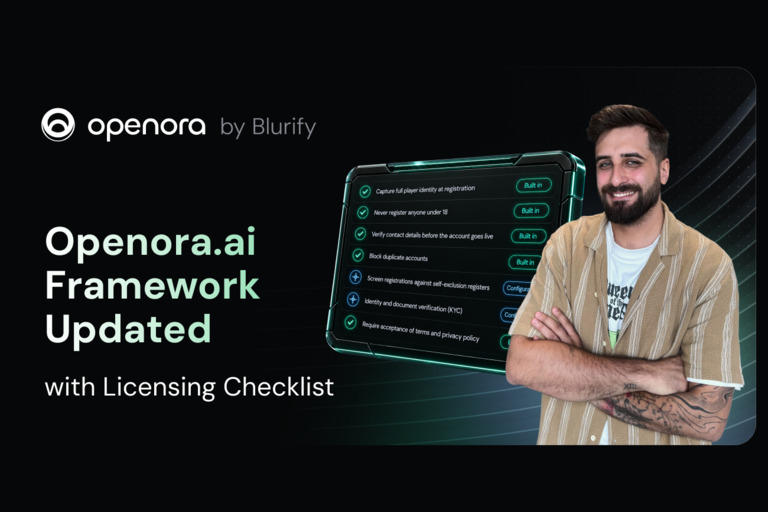
Blurify has updated its Openora AI-native casino framework with a new iGaming licenses checklist designed to give operators a clearer view of how the technology can be configured for regulatory requirements across multiple jurisdictions. The company presents the checklist as a practical compliance reference rather than a substitute for licensing, legal advice or independent technical assessment.
The update places greater emphasis on transparency around platform capabilities and operator responsibilities. Openora's current licensing material maps the framework against requirements in Malta, Curaçao, Anjouan and Brazil while distinguishing between functions that are built into the framework, features that require configuration and matters that remain under the operator's control.
Blurify expands Openora compliance focus
For operators considering technology for regulated markets, understanding where platform functionality ends and regulatory responsibility begins can be as important as the underlying software itself. Blurify's new checklist is intended to address that distinction by organising compliance-related requirements into a structured framework.










According to the company, the checklist covers areas such as anti-money laundering checks, player protection, payments, security and game data collection. Rather than presenting these elements as a universal approval standard, Blurify positions the tool as a way for operators to assess the extent to which Openora can support specific licensing obligations.
The approach is consistent with the framework's current public documentation, which states that Openora is designed to show what works out of the box, what can be configured and what remains the responsibility of the operator. The documentation also makes clear that Openora is not itself a licence and does not replace an auditor or lawyer.
That distinction is particularly relevant in regulated gambling markets. Technical capabilities can support compliance processes, but licensing decisions ultimately depend on the applicant, its governance arrangements, internal controls, technical environment and the requirements imposed by the relevant authority.
A closer look at iGaming licenses requirements
The new checklist covers four jurisdictions identified by Blurify: the Malta Gaming Authority, Brazil's Secretaria de Prêmios e Apostas, the Curaçao Gaming Authority and the Anjouan Gaming Board.
The Malta Gaming Authority maintains a formal regulatory framework covering areas including gaming authorisations, compliance and enforcement, player protection, licence fees and data retention. The authority also operates a licence application and management system for regulated entities.
Brazil has also developed a more structured federal regulatory framework for fixed-odds betting. The Secretaria de Prêmios e Apostas, part of the Ministry of Finance, is responsible for authorising, regulating, monitoring, supervising and enforcing the relevant activities under the country's federal framework.
Curaçao represents another significant regulatory environment included in Openora's licensing mapping. Under the National Ordinance on Games of Chance, which entered into force on 24 December 2024, the Curaçao Gaming Authority serves as the regulatory body for online gaming and oversees licensing for operators and certain suppliers.
The checklist also references Anjouan. Its regulator provides an internet gaming licensing regime covering B2C and B2B activities and publishes information relating to licensing and supervision.
By presenting these regimes within one framework, Blurify is seeking to make regulatory technology discussions more accessible to operators assessing different market entry strategies.
How the Openora checklist is structured
One of the more important aspects of the update is the distinction between technical functionality and obligations that cannot simply be solved through software.
Openora's public licensing page states that requirements are divided into built-in functions, configurable mechanisms and responsibilities that remain with the operator. This structure is intended to help businesses identify where additional configuration, third-party services or internal policies may be necessary.
For example, a platform can provide mechanisms to support player limits, self-exclusion or audit records. However, an operator may still need to determine the appropriate limits, establish policies, maintain procedures and satisfy market-specific regulatory expectations.
The same principle applies to areas such as AML controls and player protection. Technology can automate or document parts of a process, but it does not independently satisfy every legal or regulatory obligation attached to a licensed gambling business.
That separation is especially important when operators work across more than one jurisdiction. Regulatory obligations can differ not only between countries but also in areas such as reporting, responsible gambling, technical certification, data retention, local requirements and operational controls.
Openora positions itself as a flexible technology framework
Beyond the licensing checklist, Openora is being developed as a self-hosted, headless and plugin-based iGaming framework. Its public documentation describes modules covering authentication, wallet functionality, player management, compliance, audit and back-office capabilities while allowing operators to build their own frontend and integrate external services.
The framework is also positioned around an AI-native development model. Its documentation highlights machine-readable contracts, agent-focused tooling and modular development intended to allow technical teams to extend the platform without forking the core.
Blurify says the framework can support businesses building a platform from scratch as well as operators modernising existing systems. The company's Openora information also highlights the use of adapter interfaces for payments, KYC and other third-party services, allowing selected components to be introduced without necessarily replacing an entire existing technology stack.
This modular approach may be particularly relevant for operators dealing with changing regulatory requirements. Instead of treating platform development as a single deployment event, businesses can potentially adapt individual areas as operational or market requirements evolve.
Łukasz Wala outlines the rationale
Łukasz Wala, Product Lead at Blurify, said: “Whether an operator is building a new offering from scratch, extending a legacy platform or planning a gradual migration, Openora provides the flexibility to evolve quickly in regulated markets across the globe.
“Our licensing checklist is transparent and straightforward to use, ensuring operators know exactly how the framework can be deployed within specific iGaming licenses worldwide. This is an important addition to Openora, further demonstrating the framework is built to meet the expectations of our customers in today’s marketplace.”
Wala's position as Product Lead is independently reflected in recent public professional information associated with Blurify. The company has also described his background as spanning different areas of the iGaming sector before joining its product function.
The wording of the announcement is nevertheless best understood as a description of Blurify's product positioning rather than evidence that Openora itself grants, guarantees or replaces any jurisdiction-specific licence.
Openora roadmap points toward a broader marketplace
Blurify is also looking beyond the framework's core platform functionality. The company says it plans to develop Openora into an iGaming marketplace containing integrations for game providers, sportsbooks, payment services and customer service software.
That direction reflects a wider industry preference for connected technology ecosystems in which operators can select different specialist services without rebuilding their core infrastructure. Openora's current architecture emphasises swappable vendor integrations, which could support that objective as the marketplace develops.
The marketplace concept also creates a direct connection between technology flexibility and compliance requirements. Third-party components may need to be assessed individually depending on the market, the function they provide and the standards imposed by the relevant regulator.
For operators, that means a broader integration catalogue may offer commercial advantages while also increasing the importance of structured due diligence.
Blurify prepares for SBC Summit 2026
Blurify representatives are expected to attend the 2026 SBC Summit in Lisbon from 29 September to 1 October. The event is scheduled to take place at Feira Internacional de Lisboa and MEO Arena and is expected to bring together operators, technology companies, suppliers, affiliates and other stakeholders from the international betting and gaming sector.
The event may provide an opportunity for Blurify to discuss Openora's latest developments with operators evaluating technology for regulated markets. The Summit's 2026 programme also includes dedicated content covering regulation, compliance and technology, making the event relevant to discussions around platform architecture and market entry.
Why the licensing checklist matters
The importance of Blurify's update lies less in presenting a shortcut to licensing and more in making the technology's regulatory boundaries easier to understand.
Operators entering regulated markets need to know not only what a platform can do but also which responsibilities remain outside the software itself. A checklist that separates built-in capabilities from configurable features and operator obligations can help create a clearer starting point for technical and compliance discussions.
Openora's current documentation reinforces that position by stating that the framework does not replace licensing advisers, auditors or legal professionals. That approach provides a more measured way to present the relationship between software functionality and regulated gambling operations.
Conclusion
Blurify's latest Openora update places compliance visibility at the centre of the framework's development. By mapping platform capabilities against selected iGaming licenses and separating technical functions from operator responsibilities, the company is aiming to give prospective users a more structured way to evaluate regulatory readiness.
The initiative is also part of a broader Openora strategy that combines modular technology, AI-native development and a planned marketplace of industry integrations. As regulated markets continue to place greater demands on operators, technology platforms will increasingly be assessed not only on scalability and speed but also on how clearly they support governance, player protection, security and reporting requirements.
For operators considering Openora, the licensing checklist should therefore be viewed as an assessment and planning tool rather than a certification or guarantee of regulatory approval. The final responsibility for meeting applicable legal requirements remains with the licensed business and its professional advisers.
FAQs
What is Openora?
Openora is an open-source, headless, plugin-based and AI-native iGaming framework developed by Blurify for businesses building or modernising online gaming platforms.
What is the new Openora licensing checklist?
The licensing checklist is a framework from Blurify that maps Openora against selected regulatory requirements and identifies areas that are built in, configurable or left to the operator.
Which iGaming licenses are covered by the checklist?
Blurify's current public licensing material references Malta, Curaçao, Anjouan and Brazil as the jurisdictions covered by its requirement mapping.
Does Openora provide an iGaming licence?
No. Openora is software and does not itself provide or issue a gambling licence. Licensing remains the responsibility of the operator and the relevant regulatory authority.
Does the checklist replace legal advice?
No. Blurify's own documentation states that Openora does not replace an auditor or lawyer and that certain regulatory responsibilities remain with the operator.
What compliance areas are addressed by Openora?
The framework's licensing information covers areas such as player protection, AML, audit records and other compliance-related functions while also identifying configurable elements and operator responsibilities.
Who is Łukasz Wala?
Łukasz Wala is identified as Product Lead at Blurify in recent professional information associated with the company.
Can Openora integrate third-party services?
Yes. Openora is designed around modular adapters and integration points for services such as payments, KYC and other technology providers.
Is Openora intended only for new operators?
No. Blurify positions Openora for businesses building new platforms as well as operators seeking to extend or gradually modernise existing technology environments.
When will Blurify attend SBC Summit 2026?
Blurify representatives are expected at SBC Summit 2026 in Lisbon from 29 September to 1 October 2026. The event will be held at Feira Internacional de Lisboa and MEO Arena.

Paula Nancy
Hello and Welcome to my profile. I'm a UK based entrenched full-time Blogger, Journalist, columnist and a certified writer with many years of sound writing experience. If you need a high-quality and original content, I'm here to provide you with the best writing services.
Related Posts



SBC and VNLOK form strategic partnership for 2027 Amsterdam summit
October 19, 2026

