Adrian Delia Seeks PN Leadership Again Amid Controversy

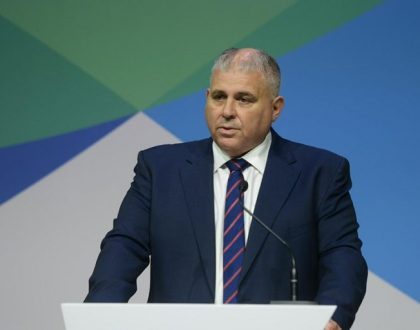
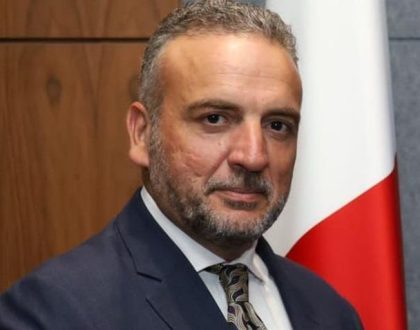
Adrian Delia’s decision to once again contest the leadership of Malta’s Nationalist Party (PN) signals not just a political comeback but a broader confrontation with the party’s ongoing internal divisions. Delia, a lawyer by profession and former PN leader, announced his candidacy shortly after Bernard Grech confirmed he would not be contesting the leadership again.
While Delia's re-entry into the political spotlight is drawing both praise and criticism, it is impossible to ignore the larger backdrop: a party plagued by internal mistrust, strategic missteps, and repeated failures to consolidate a clear direction since Delia’s ousting in 2020.
A controversial first term
Delia’s initial term as PN leader, which began in 2017, was turbulent from the outset. Though he was elected by party members through a democratic process, his leadership quickly became the subject of internal disputes.





















Central to the conflict was a growing disconnect between Delia and several members of the PN parliamentary group and executive committee. Over time, confidence in Delia’s leadership waned. Despite maintaining substantial support among the grassroots, he lost a series of internal confidence votes, culminating in a formal leadership contest in which Bernard Grech emerged victorious, securing roughly 70% of the vote.
Throughout this period, Delia maintained that only the party’s general membership—not the executive or parliamentary group—had the legitimate authority to remove a party leader. Nevertheless, political pressure from within eventually forced his resignation.
Legal vindication through the Vitals case
In the years following his departure from the PN leadership, Delia remained politically active, most notably as the driving force behind legal proceedings against the Vitals Global Healthcare (VGH) hospital concession deal. This 99-year concession, initially granted to Vitals and later transferred to Steward Healthcare, came under intense scrutiny for alleged mismanagement and corruption.
Following almost five years of legal proceedings, the Maltese courts determined that the hospital concession agreement was fraudulent and declared it void. As a result of this pivotal ruling, three hospitals—St Luke’s, Gozo General, and Karin Grech—were reinstated under public ownership. The decision was widely praised as a rare example of political accountability in Malta and is now considered one of Delia’s most significant accomplishments.
For Delia, this legal victory offered an opportunity to reframe his public image—from embattled party leader to principled defender of the public interest.
A fractured party in search of direction
The Nationalist Party has faced a prolonged period of identity crisis and internal instability. Since Delia’s forced resignation, the party has struggled to define a coherent policy platform or leadership model capable of challenging the ruling Labour Party effectively.
Bernard Grech, who succeeded Delia, maintained a calmer public persona but was often criticized for lacking political dynamism. His recent decision not to recontest the leadership has once again opened a vacuum at the top of the PN—one that no obvious candidate appears eager to fill.
The party’s failure to produce a strong alternative candidate highlights a deeper problem: internal actors seem more adept at undermining leadership than providing it. One recent example involved attempts by some party figures to entice Roberta Metsola—currently serving as President of the European Parliament—to resign and return as PN leader. The effort backfired dramatically, demonstrating both a lack of internal coordination and a chronic overestimation of backroom influence.
Legacy, ambition, and risk
Delia’s re-entry into the leadership race forces both his supporters and detractors to revisit uncomfortable questions about legacy and ambition. Some have observed that the reluctance of PN members of parliament to step forward as leadership candidates may stem from fear—not of Delia himself, but of risking their own political capital and future prospects.
In the words of one observer, “Once you run for leader and fail to make headway, you’re toast. Your legacy is gone.”
In contrast, Delia appears unburdened by such calculations. Having already endured one of the most publicly scrutinized leadership collapses in recent Maltese political history, he seems driven more by a sense of unfinished business than political preservation.
Lingering allegations and public trust
Despite his recent legal success, Delia continues to face reputational obstacles. His previous leadership was shadowed by allegations that linked him to offshore financial structures and a Soho-based property ring. Though he consistently denied the claims and no formal charges were ever filed, the controversy significantly undermined his credibility among senior figures within the party and damaged public perception.
These allegations played a crucial role in fuelling the internal push for his resignation, and for many, they remain unresolved questions that complicate his return.
However, it is essential to underline that no court or independent inquiry has found him guilty of any wrongdoing, and his supporters view the persistence of such claims as politically motivated smears rather than substantiated concerns.
A bid for redemption or a return to division?
Delia’s renewed leadership bid invites the Nationalist Party to reckon with its past, present, and future. Is this a genuine attempt at redemption by a man who has demonstrated resilience and commitment to public accountability? Or is it the re-emergence of a divisive figure whose presence risks reigniting old wounds?
The answer may lie in how the party chooses to frame its internal processes over the coming weeks. If Delia is permitted to contest the leadership freely, it will mark a departure from the kind of internal gatekeeping that previously dogged his term. However, if party structures once again attempt to manoeuvre against him—publicly or otherwise—it could further alienate the grassroots and reinforce the perception that the PN remains out of touch with its own membership.
What lies ahead for the Nationalist Party?
The PN’s current predicament is symptomatic of a broader democratic malaise within Maltese politics. Both major parties have faced credibility issues in recent years, but the Nationalist Party’s inability to rally behind a cohesive strategy has left it perpetually in the shadow of Labour’s electoral dominance.
Delia’s comeback, whether successful or not, places these internal contradictions on full display. It is no longer sufficient for party leaders to rely solely on charisma or backroom alliances; there must be a concerted effort to engage members, restore trust, and develop a vision that resonates beyond internal dynamics.
The coming leadership contest—whether Delia faces challengers or not—will be a litmus test for the PN’s willingness to evolve. For Adrian Delia, it is a chance at political rehabilitation. For the party, it is perhaps the final opportunity to bridge its deep internal divisions and offer a credible alternative to the Maltese electorate.
Conclusion
Adrian Delia’s choice to re-enter the race for the Nationalist Party leadership arrives at a pivotal moment for both his political career and the future direction of the party. His announcement revives deep-rooted questions about internal democracy, leadership legitimacy, and the PN’s ongoing identity crisis. While Delia’s legal triumph in the Vitals case has afforded him a degree of political rehabilitation, the shadow of past controversies still lingers over his candidacy.
This leadership race is not merely about one man's comeback—it is a reflection of the PN's capacity, or lack thereof, to reconcile internal divisions and offer a unified, credible opposition to the Labour Party. Whether Delia emerges victorious or not, his return will undoubtedly force the party to confront its unresolved tensions and institutional weaknesses. For the PN, the stakes are existential: evolve and rebuild trust among its base, or continue to fracture under the weight of personal rivalries and political inertia.
Ultimately, Delia’s re-entry into the leadership contest challenges the Nationalist Party to prove it can rise above the past and make space for a more accountable and resilient future.
FAQs
Who is Adrian Delia?
Adrian Delia is a Maltese lawyer and politician who previously served as leader of the Nationalist Party from 2017 to 2020. He is now seeking to return to the party’s leadership.
Why did Adrian Delia step down as PN leader in 2020?
Delia stepped down after losing confidence votes within the party’s executive and parliamentary group, despite retaining grassroots support.
What was the Vitals court case that Delia led?
The case involved a legal challenge to a 99-year concession granted to Vitals Global Healthcare. The court ultimately annulled the deal, returning hospitals to public control.
Has Delia been charged with any crimes?
No, Delia has not been formally charged with any criminal activity. Allegations were made in the past, but no official legal proceedings followed.
What are the criticisms against Adrian Delia’s leadership?
Critics argue that his leadership style caused internal strife and contributed to electoral setbacks. Allegations of financial impropriety also undermined his standing within the party.
Is Bernard Grech supporting any candidate for the new PN leadership?
As of now, Bernard Grech has not publicly endorsed any specific candidate following his decision not to recontest the leadership.
Did Roberta Metsola consider returning to PN leadership?
Reports indicate that efforts were made to persuade her to return, but they were unsuccessful. She remains President of the European Parliament.
What support does Delia currently have within the PN?
Delia continues to enjoy significant backing from the party grassroots, though elements of the parliamentary group and executive may still oppose him.
What does Delia’s return mean for the Nationalist Party?
His return highlights unresolved tensions within the party and could either lead to renewed direction or further internal division, depending on how the leadership race is handled.
When will the PN choose its new leader?
The date for the leadership contest has not been officially announced, but the party is expected to initiate internal procedures in the coming weeks.

Esther
I am a professional writer with 8 years of experience in this field and I can provide you with the best-written content you can find. Education B.A. - English, George Washington University, United States, Graduated 2011.