AIMS Office Tender Raises Legal Concerns

A recent public procurement call by the Authority for the Integrity in Sports (AIMS) has triggered concern within government and legal circles. The authority, which falls under the responsibility of Education Minister Clifton Grima and is chaired by former judge Antonio (Tonio) Mizzi, issued a tender in November for the lease of a new office premises. The proposed lease, to span five years, was intended to cover approximately 800 square metres of space and is estimated to cost Maltese taxpayers around €800,000.
The public tender was supposed to be an open and competitive process in line with procurement regulations. However, several clauses included in the call have raised legitimate questions regarding transparency, potential conflicts of interest, and the appearance of a predetermined outcome.
AIMS’ specific location requirement draws scrutiny
One of the most controversial aspects of the tender is the geographic restriction imposed. The call for offers specifically stated that the new office must be situated within one kilometre of Maria Assunta College in Hamrun, a central location in Malta.





















Observers and experts in public procurement noted that such a limitation drastically narrows the pool of potential bidders. It effectively excluded the vast majority of the property market from participating, limiting the field to a handful of landlords or developers with vacant premises in the specified area. More concerning is the fact that AIMS has no prior operational link to Hamrun or Maria Assunta College.
AIMS is currently headquartered in Gudja, and its core functions as a regulator do not necessitate a presence in any specific part of the island. The authority is meant to oversee matters related to integrity and governance in sports, a role that is national in scope and not geographically bound.
Office size questioned for a small authority
The tender also specifies that AIMS requires a minimum of 800 square metres of office space, an unusually large area for an authority employing fewer than 20 staff members. Industry insiders suggest that this space could comfortably house close to 100 employees, raising the question of why so much space is being requested.
No public documentation or rationale was provided to explain why the authority would need such an expansive office, especially when Malta is currently facing increased scrutiny over its public spending and governance standards.
Concerns over apparent tailor-made criteria
Sources with knowledge of the matter have stated that the tender’s language and conditions suggest it may have been drafted with a particular office complex in mind. The concern is that this could undermine the core principles of fair competition and value-for-money for taxpayers.
According to research conducted by The Shift, only two companies submitted bids before the January deadline. One offer came from AME Health and Safety Services, with a proposed lease cost of approximately €500,000. The other was from Gerada Quality Construction Ltd, priced significantly higher at €870,000.
Despite price being the only selection criterion, the Contracts Department nonetheless recommended Gerada Quality Construction for selection, effectively disregarding the lower-cost bid. This has added fuel to concerns that the process was not conducted with full impartiality.
Links to political figures and past proposals
Gordon Gerada, the owner of Gerada Quality Construction, operates primarily in Sliema, the same district where Education Minister Clifton Grima is politically active. Although this alone does not constitute wrongdoing, it is being viewed in the broader context of a tender process that many are already questioning for its lack of transparency.
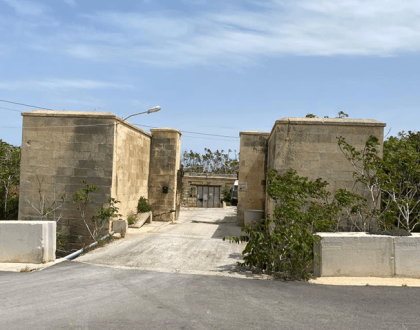
Gerada’s company also happens to own a block of offices in Santa Venera, located just a short distance from Maria Assunta College. The same building had reportedly been considered for use by another government agency in the past, but that plan was eventually scrapped.
Whether or not this building is the one being offered under the current AIMS tender is unclear. However, the fact that it meets the unusual location criteria and is owned by a politically connected developer has not gone unnoticed.
A history of instability at AIMS
Founded just a few years ago with the goal of enhancing integrity and governance in Maltese sports, AIMS has struggled to establish itself as a credible authority. The organisation has been plagued by internal turmoil, including frequent changes in leadership. Chief executive officers have come and gone in rapid succession, often dismissed or replaced amid boardroom disputes.
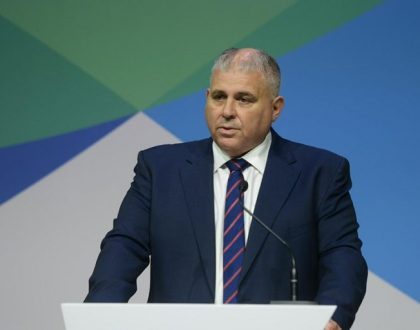
Chairman Antonio Mizzi, who was previously a judge, has faced criticism over his handling of the authority. While his judicial background gave the organisation a veneer of credibility at its inception, insiders report that AIMS has failed to make any tangible progress on its stated objectives. Rather than being a beacon of integrity in sport, it has become associated with mismanagement, inefficiency, and political interference.
Legal implications and risk of liability
Although no direct accusations of misconduct have been publicly made, the elements of this case highlight several areas of concern from a legal perspective. Public procurement laws in Malta—and across the European Union—require open, transparent, and non-discriminatory tendering processes. Any criteria that unfairly restrict access or create an uneven playing field could potentially be grounds for legal challenge.
If it can be demonstrated that the terms of the tender were designed to favour a particular company, or that the selection process failed to adequately consider cost-effectiveness and value for money, the government or AIMS could find themselves exposed to legal scrutiny. In light of previous legal correspondence received from parties associated with this story, any reporting on the matter must be carefully balanced, factual, and devoid of conjecture.
Broader implications for public governance
This case is not isolated. It comes amid growing concern in Malta about the standards of public sector governance and the integrity of institutions tasked with upholding ethical conduct. When the very authority responsible for promoting integrity in sport is itself caught up in questions about its own ethical conduct, it sends a troubling message to the wider public.
The integrity of public procurement is foundational to good governance. Any perception that tenders are being manipulated or tailored for the benefit of a few erodes public trust and undermines the principles of accountability and transparency. It is vital that all authorities—particularly those with regulatory or oversight roles—conduct themselves in a manner beyond reproach.
Government response and next steps
To date, there has been no formal statement from Education Minister Clifton Grima or AIMS in response to these concerns. The lack of public communication has only added to the speculation and unease surrounding the tender. Stakeholders are now calling for greater transparency, including the publication of evaluation reports, justification for the selection decision, and an explanation for the restrictive location criteria.
Whether the Office of the Auditor General or the Public Contracts Review Board will be called upon to investigate the matter remains to be seen. However, given the sums involved and the authority’s troubled history, such an inquiry could be in the public interest.
Conclusion
The unfolding situation surrounding the Authority for the Integrity in Sports (AIMS) and its controversial office lease tender raises serious questions about transparency, governance, and accountability within public institutions in Malta. While no direct evidence of wrongdoing has been established, the combination of restrictive tender criteria, excessive office space requirements, and the selection of a higher-cost bid has understandably triggered public and political concern.
As a regulatory body entrusted with upholding integrity in sports, AIMS has a heightened responsibility to lead by example. Any perception of impropriety in its operations, particularly in financial and administrative matters, undermines both its mission and public confidence in its oversight role. The involvement of political figures, combined with a history of internal instability, only amplifies the need for scrutiny and reform.
Moving forward, it is imperative that the relevant authorities provide full transparency regarding the tendering process and address the valid concerns raised by stakeholders. Ensuring that procurement processes are fair, open, and compliant with legal standards is not just a matter of legal obligation—it is essential for maintaining the integrity of Malta’s public institutions. Failing to uphold these standards would not only damage AIMS’s credibility but also cast a wider shadow over the government’s commitment to good governance and ethical conduct.
FAQs
What is the Authority for the Integrity in Sports (AIMS)?
AIMS is a Maltese regulatory body tasked with ensuring ethical conduct and integrity in the country’s sporting institutions.
Why is AIMS leasing new office space?
AIMS issued a public tender in November seeking to lease approximately 800 square metres of office space for five years.
Why has the lease tender drawn criticism?
Criticism stems from the tender’s restrictive location clause and unusually large space requirement, both of which raise concerns about fairness and necessity.
Where did AIMS specify the offices should be located?
The tender requires the office to be within one kilometre of Maria Assunta College in Hamrun, Malta.
How many companies submitted bids?
Only two companies submitted bids—AME Health and Safety Services and Gerada Quality Construction Ltd.
Which company was recommended despite offering the higher price?
Gerada Quality Construction Ltd was recommended despite submitting a bid nearly €370,000 higher than its competitor.
Is there a political connection to the winning bidder?
The owner of the selected company operates in the same district as Education Minister Clifton Grima, though no direct wrongdoing has been proven.
Why is the required office space considered excessive?
The tender seeks 800 square metres for fewer than 20 employees, which is significantly more than typically required.
Has AIMS faced issues in the past?
Yes, AIMS has had a history of instability, including frequent leadership changes and operational difficulties.
Could this tender process face legal action?
While no formal challenge has been made, the conditions of the tender could expose AIMS or the government to legal scrutiny if found to breach procurement laws.

Ash
I like to keep it short. I am a writer who also knows how to rhyme his lines. I can write articles, edit them and also carve out some poetic lines from my mind. Education B.A. - English, Delhi University, India, Graduated 2017.