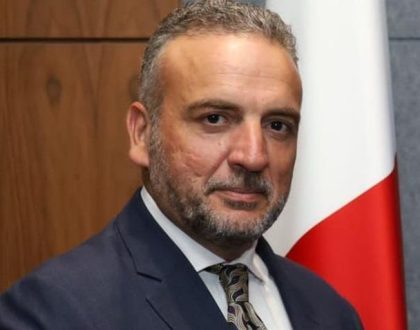
Alex Borg reveals first Shadow Cabinet with new direction

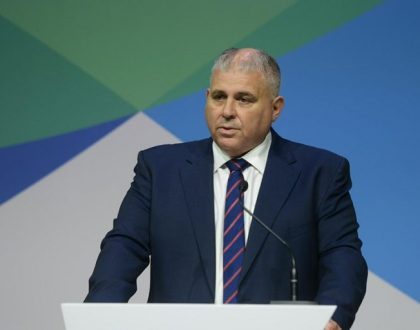
Nationalist Party leader Alex Borg has unveiled his inaugural Shadow Cabinet following his recent appointment as party leader, portraying the formation as a cornerstone for building a “renewed, disciplined and credible” opposition to the Labour administration.
The announcement, delivered with careful political messaging, represents Borg’s most consequential decision to date as leader of the Partit Nazzjonalista (PN). It also signals his intention to consolidate authority while simultaneously projecting the image of a modern, unified, and effective opposition.
A new phase in Alex Borg’s leadership
At just 32 years of age, Alex Borg is the youngest leader in the history of the PN. His rapid rise through the party has been accompanied by calls for generational change and a more transparent political culture. In his first weeks as leader, Borg has sought to balance those expectations with the reality of managing a parliamentary group that still bears the scars of internal division following years of electoral setbacks.





















By unveiling his Shadow Cabinet early in his tenure, Borg has taken a decisive step in setting the tone for his leadership. He framed the new team not simply as an opposition mechanism but as a government-in-waiting, stressing that the PN must prove its readiness to govern if it is to regain the public’s trust.
“This is the start of a new chapter,” Borg declared during the announcement. “Our duty is to serve as the people’s watchdog and to prove that the PN is ready to govern again.”
Balancing experience with renewal
The Shadow Cabinet, which mirrors ministerial portfolios while offering alternative policy proposals, has long served as a test of a leader’s judgment. Borg’s appointments include a blend of seasoned parliamentarians with extensive legislative experience and younger MPs who represent the next generation of political leadership.
Former PN leader Adrian Delia was entrusted with the role of Shadow Minister for Finance, a portfolio regarded as one of the most strategically significant. His inclusion is seen by analysts as a gesture toward party unity, given Delia’s enduring support base.
Stephen Spiteri was assigned the health portfolio, a brief considered highly sensitive amid continuing controversy surrounding the privatisation of hospitals. Meanwhile, criminal lawyer Joe Giglio has been tasked with justice, a sector that has drawn increasing public scrutiny in relation to institutional accountability and the rule of law.
Other appointments include Beppe Fenech Adami as Shadow Minister for Foreign Affairs, Mario de Marco for Tourism, and Darren Carabott, who retains his role as Chairperson of the Public Accounts Committee while also taking on Home Affairs and Security.
This combination reflects Borg’s effort to reconcile continuity with innovation, allowing experienced figures to remain at the forefront while creating space for younger MPs to shape the party’s vision.
Core message of discipline and credibility
In outlining his Cabinet, Borg underscored three guiding principles: integrity, accountability, and opportunity for all citizens. He argued that a successful opposition must go beyond criticism and instead present workable solutions that resonate with the electorate.
“We must be a serious opposition with the courage to offer workable solutions, not only criticism,” Borg said, insisting that his leadership would reject populist shortcuts in favour of credible policy alternatives.
His rhetoric seeks to distinguish the PN from its rival Labour Party by positioning it as a force of disciplined governance rather than reactive opposition. Political observers have noted that Borg’s emphasis on integrity and accountability aligns with wider calls across Maltese society for greater transparency and institutional reform.
Challenges facing the Nationalist Party
The unveiling of the Shadow Cabinet takes place against a backdrop of political difficulty for the PN. Following consecutive electoral defeats, the party has been engaged in a process of internal reform while attempting to craft a narrative that can persuade voters it remains a viable alternative government.
Party strategists are aware that Borg’s leadership will be judged on his capacity to bridge divides between traditional conservatives and younger moderates within the PN. His appointments, therefore, are likely to be closely studied for signs of whether he can maintain unity while articulating a modern political agenda.
Furthermore, the PN continues to confront external pressures, including a Labour government with a strong parliamentary majority and a political landscape shaped by rapid social change. Borg’s leadership will thus be tested on whether he can build a coalition of support broad enough to overcome the PN’s electoral disadvantages.
Key policy priorities on the horizon
The Shadow Cabinet is scheduled to convene its first meeting in the coming week, with an agenda reportedly centred on energy policy, health sector governance, and institutional reform. These areas reflect some of the most pressing concerns within Maltese society, ranging from rising energy costs to public dissatisfaction with the health system and ongoing debates about the independence of state institutions.
By prioritising these issues, Borg aims to position the PN as a party attuned to everyday realities while also engaging with broader questions of governance. The challenge will lie in demonstrating that the PN’s proposals are not only principled but also practically achievable.
Full list of Shadow Cabinet appointments
Alex Borg – Leader of the Opposition
- David Agius – Deputy Speaker and Shadow Minister for Sport and Volunteering
- Robert Cutajar – Whip, Secretary of the Parliamentary Group and Shadow Minister for the Self-Employed, Small Enterprises and Cooperatives
- Paula Mifsud Bonnici – Assistant Whip and Shadow Minister for Active Ageing
- Darren Carabott – Chairperson of the Public Accounts Committee (PAC) and Shadow Minister for Home Affairs and Security
- Janice Abela Chetcuti – Shadow Minister for Animal Welfare
- Karol Aquilina – Shadow Minister for Administration and Efficiency in the Public Sector
- Graziella Attard Previ – Shadow Minister for Equality, Civil Liberties and Public Broadcasting
- Charles Azzopardi – Shadow Minister for National Heritage and Hobbies
- Ivan Bartolo – Shadow Minister for Social and Affordable Housing, the Fight Against Poverty and Loneliness
- Ivan J Bartolo – Shadow Minister for Innovation and Artificial Intelligence
- Graham Bencini – Shadow Minister for Social Security and EU Funds
- Toni Bezzina – Shadow Minister for Transport, Agriculture and Fisheries
- Bernice Bonello – Shadow Minister for Youth and Local Government
- Eve Borg Bonello – Shadow Minister for Climate Change and Public Cleanliness
- Rebekah Borg – Shadow Minister for the Environment
- Albert Buttigieg – Shadow Minister for Neurodiversity and Child Protection
- Claudette Buttigieg – Shadow Minister for Research and Development
- Ryan Callus – Shadow Minister for Social Dialogue and Trade Promotion
- Jerome Caruana Cilia – Shadow Minister for Economy and Enterprise
- Ivan Castillo – Shadow Minister for Employment, the Maritime Sector and Aviation
- Mario de Marco – Shadow Minister for Tourism
- Adrian Delia – Shadow Minister for Finance
- Beppe Fenech Adami – Shadow Minister for Foreign Affairs
- Graziella Galea – Shadow Minister for Inclusion and Consumer Rights
- Joe Giglio – Shadow Minister for Justice
- Bernard Grech – Shadow Minister for Capital Projects and Infrastructure
- Carmelo Mifsud Bonnici – Shadow Minister for Constitutional Reform, National Identity and Intercultural Dialogue
- Chris Said – Shadow Minister for Gozo
- Mark Anthony Sammut – Shadow Minister for Energy and Water Conservation
- Justin Schembri – Shadow Minister for Education
- Stephen Spiteri – Shadow Minister for Health
- Ian Vassallo – Shadow Minister for Preventive and Primary Care
- Julie Zahra – Shadow Minister for Culture and the Creative Economy
- Stanley Zammit – Shadow Minister for Planning and Land
Political significance and future outlook
Borg’s Shadow Cabinet marks a defining moment in his leadership, not only in terms of policy but also symbolism. The selection of portfolios reflects a careful balancing act between rewarding loyalists, reintegrating figures with independent standing, and empowering younger MPs who could shape the party’s identity for years to come.
The broader question is whether these appointments will enable the PN to reconnect with voters. For Borg, the stakes are high: if he succeeds in projecting competence and credibility, he may restore the PN’s standing as a serious alternative to Labour. If not, the party risks further alienation at a time when public trust in political institutions is already fragile.
Conclusion
Alex Borg’s unveiling of his first Shadow Cabinet marks a pivotal moment not only for his leadership but also for the future of the Nationalist Party. By combining experienced figures with emerging voices, Borg has sought to demonstrate balance, inclusivity, and readiness to govern. His emphasis on integrity, accountability, and credible policy solutions underscores a strategy aimed at rebuilding public trust and re-establishing the PN as a serious political alternative.
The true test, however, will come in the months ahead. As the Shadow Cabinet begins its work on pressing national issues such as energy, health, and institutional reform, Borg must navigate internal expectations while addressing the broader challenges facing Malta. Whether this renewed team can translate its message of renewal into electoral momentum remains to be seen. What is clear is that Borg has signalled his determination to lead with discipline and vision, setting the stage for a new chapter in Maltese opposition politics.
FAQs
What is the role of a Shadow Cabinet?
A Shadow Cabinet mirrors government ministries, with opposition MPs assigned to monitor ministers, scrutinise policies, and present alternatives.
Why did Alex Borg unveil his Shadow Cabinet so early in his leadership?
He sought to set the tone of his leadership by presenting a renewed team quickly, signalling readiness and authority from the outset.
What principles did Alex Borg highlight in his announcement?
He emphasised integrity, accountability, and opportunity for all, promising a serious and solution-oriented opposition.
Who was appointed Shadow Minister for Finance?
Adrian Delia, former PN leader, was appointed to the finance portfolio.
Why is the health portfolio significant?
The health sector remains a point of public concern due to controversies surrounding hospital privatisation and governance.
What role does Darren Carabott hold?
He continues as Chairperson of the Public Accounts Committee and was also assigned Home Affairs and Security.
How old is Alex Borg?
At 32 years old, he is the youngest leader in the history of the Nationalist Party.
What are the initial policy focuses of the new Shadow Cabinet?
Energy policy, health sector governance, and institutional reform are the first issues on its agenda.
How does this Shadow Cabinet balance experience and renewal?
It includes established MPs such as Adrian Delia and Beppe Fenech Adami, alongside younger figures like Eve Borg Bonello and Rebekah Borg.
What challenges does the PN face under Borg’s leadership?
The PN must recover from electoral defeats, maintain internal unity, and convince voters it is a credible alternative government.

Anna Amstill
I am an avid Blogger and Writer with more than 6 years of experience with Content Writing. An Online Marketing expert specializing in Blog writing, Article writing, Website content, SEO specific Keyword content and much more. Education B.A. - business management, York University, Canada, Graduated 2016.