Architects in Malta renew call for national architecture policy
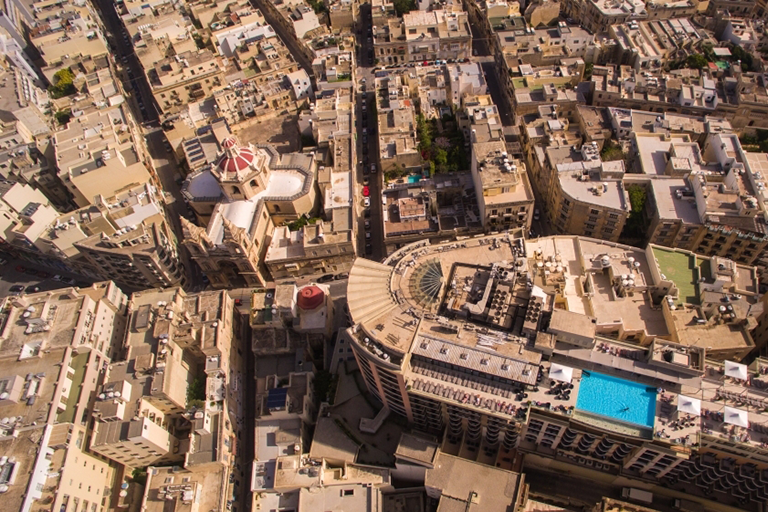
As Malta continues to grapple with rapid urban development and planning controversies, the Chamber of Architects (Kamra tal-Periti, KTP) has once again renewed its call for a National Architecture Policy, emphasizing the urgent need for a long-term vision to guide how the nation shapes its towns, landscapes, and public spaces.
The renewed appeal coincides with World Architecture Day 2025, celebrated globally under the theme “Design for Strength”, which highlights the profession’s responsibility to build resilient environments capable of adapting to social, economic, and environmental challenges. For Malta’s architects, this theme resonates deeply amid growing public frustration with the island’s planning system, which they say has consistently prioritised bureaucratic procedure and private interests over design excellence and community well-being.
The urgent need for a national vision
In its statement, KTP underscored that Malta urgently requires a unified architectural strategy to balance the competing demands of economic growth, heritage protection, and environmental stewardship. “Amid the polarisation between developers and environmental activists, architecture – the very discipline that shapes the spaces we live in – has been completely sidelined,” the chamber said.





















For years, Malta’s architects have warned that the lack of a comprehensive policy has led to fragmented decision-making. Towns and villages are increasingly characterised by uneven development, poor design integration, and diminished public spaces. The absence of a clear architectural framework, KTP argues, has allowed the island’s urban fabric to evolve without coherence or cultural identity.
A planning system focused on legality, not quality
KTP has long criticised Malta’s planning framework for being overly legalistic and procedural. According to the chamber, the current system “seeks to codify design into rules and formulas, believing that good architecture can be legislated into existence.” While regulations are essential for transparency and fairness, KTP contends that Malta’s planning laws have gone too far in reducing architecture to a technical or bureaucratic process.
“Laws may provide clarity for lawyers defending or contesting permits,” the chamber stated, “but they do little to support architects striving to create spaces that uplift communities, respect context, and enhance the environment.”
Architects argue that such an approach has produced a built environment that often disregards scale, proportion, and aesthetics. Residential blocks rise abruptly beside heritage buildings, open spaces are consumed by speculative projects, and local character is eroded by the proliferation of uniform concrete structures.
A call for integrity and resilience
This year’s World Architecture Day theme, “Design for Strength”, has provided the KTP with a timely framework to reflect on Malta’s situation. The chamber interpreted the theme not only as a call to design structurally resilient buildings, but also as a call to restore integrity to the architectural process itself.
“To ‘Design for Strength’ in Malta, we must first design for integrity — of our profession, our institutions, and our public spaces,” KTP declared. “True resilience requires a vision that transcends short-term interests and procedural certainty.”
The chamber stressed that building resilience goes beyond material durability. It encompasses social cohesion, cultural preservation, and the creation of inclusive, adaptable environments that can respond to the island’s evolving demographic and climatic realities.
Balancing development and sustainability
Malta’s rapid economic growth has intensified pressure on land and infrastructure. Tourism, construction, and population expansion have transformed the country’s landscape in just a few decades. While such growth has brought prosperity, it has also amplified concerns over sustainability, congestion, and loss of identity.
KTP believes that an architecture policy could serve as a stabilising mechanism, guiding development in a way that aligns with environmental priorities and cultural values. The chamber envisions a policy framework that would establish clear objectives for quality design, urban regeneration, and sustainable construction practices.
Such a framework, KTP said, would not only elevate design standards but also strengthen collaboration between architects, planners, and policymakers. It could help shift the current planning debate away from narrow procedural disputes and toward a shared commitment to creating spaces that serve the public good.
Public ridicule and the undervaluing of design
The chamber expressed disappointment that calls for higher architectural standards are often met with ridicule or indifference in public debate. Discussions about design quality are sometimes dismissed as elitist or impractical, especially when they challenge entrenched development interests.
KTP argued that this mindset undermines the country’s potential to create meaningful, human-centered environments. “Architecture is not an accessory to planning,” the chamber maintained. “It is the core of how societies express values, culture, and collective identity.”
The chamber’s statement called for a shift in perception: from viewing architecture as a regulatory hurdle to recognising it as a key instrument for national progress. A society that undervalues design, KTP warned, risks building spaces that alienate rather than inspire.
The gap between policy and practice
Malta remains one of only two European nations without a National Architecture Policy. The absence of such a document, KTP said, has contributed to decades of disjointed urban expansion and lost opportunities to embed quality in public projects.
In many European countries, national architecture policies set out guiding principles that inform everything from housing strategies to public procurement. They ensure that public buildings meet high design standards, that cultural heritage is protected, and that sustainability is embedded across all sectors.
By contrast, Malta’s development has often proceeded in an ad hoc manner. Individual projects may comply with the letter of the law but fail to contribute meaningfully to the character or cohesion of their surroundings. This piecemeal approach, according to KTP, leaves architects with limited influence and citizens with little confidence in the planning system.
A collaborative path forward
KTP’s renewed call to government is not merely a critique but an invitation to collaborate. The chamber has urged authorities to engage directly with professional bodies, universities, and civil society in drafting a National Architecture Policy that reflects Malta’s unique context.
Such collaboration, it argued, would foster shared ownership and accountability. The policy could outline clear performance indicators for design quality, sustainability, accessibility, and community engagement. It could also ensure that public investment in infrastructure and housing aligns with long-term social and environmental goals.
KTP emphasised that creating this policy would not mean adding another bureaucratic layer. Rather, it would provide a framework to streamline decision-making, reduce conflict, and raise public confidence in planning outcomes.
Addressing the tension between progress and preservation
One of Malta’s greatest challenges lies in balancing progress with preservation. The country’s limited land area, coupled with its rich architectural heritage, makes it especially vulnerable to overdevelopment.
Architects have repeatedly called for planning decisions to consider cultural and environmental sensitivity as central criteria. Instead of treating heritage protection as an obstacle, they argue it should be viewed as an asset that enhances long-term value and identity.
A national policy, KTP said, could help redefine the metrics of success in the construction sector — shifting the focus from quantity and speed to quality and legacy. This would not only benefit residents but also reinforce Malta’s reputation as a country that values craftsmanship and cultural continuity.
Looking ahead
The chamber’s renewed appeal reflects a growing consensus among professionals that the current system is unsustainable. Without an overarching architectural strategy, Malta risks losing more of its visual coherence, public trust, and sense of place.
As urban pressures intensify, the need for a shared national vision becomes increasingly urgent. The proposed National Architecture Policy offers a path to rebuild confidence, elevate standards, and ensure that the built environment serves both present and future generations.
KTP concluded its statement with a reminder that architecture is not merely about constructing buildings, but about shaping the human experience. The chamber’s message is clear: Malta’s future resilience depends on the integrity of its design — and the courage to imagine better.
Conclusion
The renewed call by the Chamber of Architects for a National Architecture Policy serves as a decisive moment for Malta to re-examine how it envisions its built environment. The country stands at a crossroads where uncoordinated development and short-term economic ambitions continue to erode its urban identity, environmental balance, and cultural heritage.
A coherent architectural policy would not merely serve as a symbolic document — it would act as a strategic framework to guide how Malta grows, builds, and preserves its spaces for future generations. Such a policy could strengthen collaboration between government, architects, and communities, ensuring that decisions about land use, design, and infrastructure are guided by principles of quality, sustainability, and inclusiveness.
KTP’s message is both a warning and an opportunity: without reform, Malta risks perpetuating a system that values compliance over creativity and quantity over quality. But with a shared vision, the nation can create towns and cities that reflect integrity, resilience, and a deep respect for context and heritage.
Ultimately, the path forward lies not in adding more regulations, but in fostering a cultural and institutional shift — one that recognises architecture as a public good and an essential component of Malta’s long-term social, economic, and environmental wellbeing. The chamber’s appeal invites policymakers and citizens alike to reimagine what the country’s spaces could become when designed with purpose, care, and collective ambition.
FAQs
What is the Chamber of Architects (Kamra tal-Periti)?
It is the professional body representing architects and civil engineers in Malta, advocating for design excellence, sustainability, and professional integrity.
Why is KTP calling for a National Architecture Policy?
KTP believes Malta needs a long-term vision to improve design quality, urban planning, and sustainability across its towns and landscapes.
What issues does Malta’s current planning system face?
Architects argue it prioritises legal procedures over design quality, leading to fragmented, uninspired developments and loss of cultural identity.
What does “Design for Strength” mean in this context?
The theme urges architects to build resilience — not only structural but also institutional, cultural, and environmental — in their work.
How would a National Architecture Policy benefit Malta?
It would establish shared standards for design, sustainability, and heritage protection, ensuring cohesive and high-quality development.
Why is Malta one of the few European countries without such a policy?
The absence of long-term planning frameworks and political consensus has delayed the adoption of a formal architecture policy.
What role would architects play in policy development?
KTP envisions close collaboration between architects, policymakers, and the public to ensure the policy reflects Malta’s cultural and environmental needs.
How can architecture improve community well-being?
Well-designed spaces can foster social interaction, inclusivity, and a sense of belonging, improving both mental and physical well-being.
What does KTP mean by “designing for integrity”?
It refers to restoring honesty and purpose to architectural practice, ensuring that public and private projects serve the common good.
What is the next step for Malta’s architectural community?
KTP plans to continue engaging with government and civil society to push for the drafting and implementation of a National Architecture Policy.

Ash
I like to keep it short. I am a writer who also knows how to rhyme his lines. I can write articles, edit them and also carve out some poetic lines from my mind. Education B.A. - English, Delhi University, India, Graduated 2017.