Arnold Cassola’s Impact on Malta’s Political Future
The political landscape in Malta has been undergoing a notable shift following the 2024 European Parliament (MEP) election, with surveys indicating that third parties are attracting growing support. These parties, along with independent politicians, are registering approval ratings of around 10%, signifying the beginning of a potential realignment in Maltese politics. The election results, while a mixed bag for various third-party candidates, reveal that voters are increasingly seeking alternatives to the traditional two-party system, opening the door for new political formations and movements to challenge the status quo.
The Third-Party Vote Surge
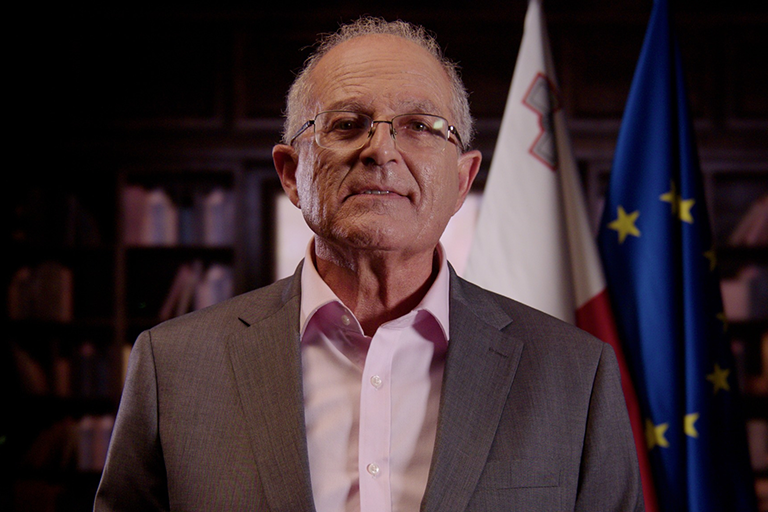
In the aftermath of the 2024 MEP election, third parties and independents collectively secured approximately 13% of the vote. This was a significant achievement, considering the traditionally dominant two-party system in Malta. Among the key figures in this shift was Arnold Cassola, a former Green politician who ran as an independent. Although Cassola’s bid to secure a seat in the European Parliament for the fifth time ended in failure, his performance was noteworthy, as he garnered 12,706 votes (4.7% of the total vote). His campaign demonstrated the potential for third parties to break through the political establishment and appeal to voters who are dissatisfied with the traditional party choices.
Following his defeat, Cassola announced plans to form a new political party aimed at occupying the centre ground of Maltese politics. His vision for this new party would provide a platform for moderate and progressive voters who feel alienated from the two main political parties, Labour and the Nationalist Party (PN). Cassola's move marks a critical moment in Malta's political history, suggesting a growing demand for a political alternative that balances progressivism with moderation.





















A Mixed Bag for Other Third Parties and Independents
However, the election results were not uniformly positive for all third parties and independent candidates. Some figures, such as Norman Lowell of the far-right and Sandra Gauci from the ADPD (Alternattiva Demokratika – The Green Party), experienced poor results. While these outcomes were disappointing for the individuals involved, they also underscore the complexity of Malta’s political environment, where voter allegiance can be volatile and difficult to predict.
A notable surprise in the election was the strong showing of Conrad Borg Manche, a socially conservative former mayor of Gzira. Borg Manche, who ran as an independent candidate, received over 6,000 votes, a remarkable achievement considering his relatively low profile in national politics. His success raises important questions about the future direction of third parties in Malta and whether a new political force, such as the one being proposed by Cassola, could unify voters from across the political spectrum.
Arnold Cassola: A Pragmatic Politician with Ambitious Goals
Arnold Cassola is a figure who has become synonymous with integrity, pragmatism, and a no-nonsense approach to politics. Over the past two decades, he has earned a reputation as a steady, moderate voice in Maltese politics. He first rose to prominence in the early 2000s as a leading advocate for Malta's accession to the European Union, positioning himself as a pro-European voice. Later, he became known for his anti-corruption campaigns, which resonated with voters frustrated by the political elite.
Despite his relatively conservative stance on issues such as abortion, Cassola’s political journey has been marked by a willingness to embrace opportunities that align with his values. His earlier political career included a term as general secretary of the European Greens, where he worked to advance progressive policies across Europe. Cassola also briefly served as a member of the Italian parliament after running as a candidate with the centre-left Romano Prodi coalition. Although his second attempt to secure a parliamentary seat in Italy was unsuccessful, Cassola’s time in Italian politics exposed him to new ideas and networks, expanding his influence beyond Malta.
In recent years, Cassola has maintained his independence from political parties, preferring to run as an independent candidate. His decision to leave Alternattiva Demokratika, where he served two terms as leader, was a significant turning point in his career. It was widely believed that his departure from ADPD was driven by disagreements over the party’s evolving stance on issues such as abortion. Despite this, Cassola has made it clear that his new party will be inclusive, allowing members to hold differing views on contentious issues.
Cassola’s move to create a centrist party reflects a pragmatic approach to the realities of Maltese politics. By aligning himself with European political figures such as French Prime Minister François Bayrou, Cassola has shown that he is willing to forge alliances that transcend traditional political divisions. His ability to appeal to both centre-left and centre-right voters positions him as a potential unifying force in the years to come.
Challenges for Cassola's New Party
Despite Cassola's popularity and his reputation for building political coalitions, he faces significant challenges in his bid to establish a new political party. The most significant hurdle is Malta’s electoral system, which can make it difficult for smaller parties to secure seats in the European Parliament. This issue is compounded by the fact that many potential voters may still prioritize ousting the current Labour government over supporting a third-party movement. For Cassola’s party to gain traction, it will need to convince voters that a change of government is possible through a coalition of third parties and independent candidates.
One of Cassola's greatest strengths is his ability to build political momentum that transcends ideological boundaries. His previous campaigns have shown that he can galvanize a diverse base of voters, including those disillusioned with the two main parties. Cassola’s new platform will likely reflect his professional approach to politics, with a focus on economic stability, anti-corruption measures, and a fairer political system.
The Future of ADPD and Third-Party Politics in Malta
The ADPD, which has historically represented the green and progressive wing of Maltese politics, faces an uncertain future in light of Cassola’s new political initiative. Following the 2024 MEP elections, ADPD managed to secure two local councillors, including party leader Sandra Gauci, who now serves on the St Paul’s Bay council. While ADPD’s performance in the election was disappointing, recent polls have shown the party’s support holding steady at around 4%.
The emergence of Cassola’s new party presents a dilemma for ADPD. With Cassola enjoying greater name recognition and a broader base of support, ADPD may be forced to reposition itself in the political spectrum. One potential strategy would be for ADPD to adopt a more radical stance, positioning itself to the left of Labour and emphasizing civil liberties and social justice issues. Sandra Gauci, with her populist appeal, may also find a way to connect with former Labour voters who feel disconnected from Cassola’s moderate approach.
Alternatively, ADPD could choose to join forces with Cassola, potentially as part of a broader coalition that combines both moderate and progressive elements. In this scenario, the Greens could play a pivotal role in ensuring that progressive issues remain at the forefront of the political agenda, even as the coalition seeks to attract centre-right voters and disaffected anti-corruption activists.
The Rise of New Political Movements in Europe
Malta is not the only country experiencing a surge in third-party movements. Across Europe, there has been a noticeable rise in socially conservative but economically left-leaning political parties. Examples of this trend can be seen in Germany with the Sahra Wagenknecht Alliance (BSW) and, to some extent, in Italy with the Movimento Cinque Stelle (Five Star Movement). These parties tend to reject neoliberal economic policies in favor of stronger social protections, while distancing themselves from identity politics and mass migration.
Conrad Borg Manche’s candidacy in the 2024 MEP election may be an example of this emerging political trend in Malta. Although he ran as an independent, Borg Manche positioned himself as a disillusioned socialist, echoing the rhetoric of old Labour, while holding right-wing views on issues such as migration and LGBTQ rights. His appeal to voters who feel alienated by both the far-left and the far-right could be a sign of things to come in Maltese politics, as voters increasingly look for new solutions to old problems.
The Decline of the Maltese Far-Right
Despite the growing concerns about foreign labour and migration in Malta, the far-right failed to make significant gains in the 2024 MEP elections. This result can be attributed to several factors, including the extremism of figures like Norman Lowell, whose views are considered unacceptable by mainstream right-wing parties in other EU countries. Furthermore, many voters were turned off by the eccentric and often controversial figures associated with the far-right in Malta, such as Ivan Grech Mintoff, who made headlines for his confrontational and anti-establishment antics.
Malta’s Labour Party, despite its decision to open the labour market to non-EU workers, has managed to maintain a nationalistic image, positioning itself as a defender of Malta’s interests. By occasionally adopting hardline stances on issues such as asylum seekers and citizenship by investment, Labour has effectively diluted some of the anti-immigrant sentiments that might otherwise fuel the far-right. However, the long-term sustainability of this strategy remains uncertain, especially as issues related to migration and national identity continue to dominate political discourse in Europe.
Conclusion: A New Political Era in Malta
The 2024 MEP election in Malta marks the beginning of a new era in the country’s politics. The rise of third parties and independent politicians, spearheaded by figures like Arnold Cassola, signals a shift away from the traditional two-party dominance that has defined Maltese politics for decades. While challenges remain, particularly with the electoral system and voter loyalty to the two main parties, the growing disillusionment with Labour and the PN offers a unique opportunity for new political movements to emerge and reshape Malta’s future.
FAQs
What were the main results of the 2024 MEP elections in Malta?
In the 2024 MEP elections, third parties and independents secured 13% of the vote, with Arnold Cassola's independent campaign performing particularly well, despite failing to win a seat.
What is the significance of Arnold Cassola’s new political initiative?
Arnold Cassola's new party aims to occupy the centre ground of Maltese politics, offering a platform for moderate and progressive voters who feel disillusioned with the traditional two-party system.
What challenges does Cassola face with his new political party?
Cassola’s main challenge is Malta’s electoral system, which makes it difficult for smaller parties to secure seats, and the need to convince voters whether they should prioritize ousting the Labour government or electing a third party.
What is ADPD's future in Maltese politics?
ADPD faces an uncertain future in light of Cassola's growing popularity. The party may either reposition itself to the left of Labour or join forces with Cassola in a wider coalition.
What is the rise of socially conservative yet economically left-leaning parties?
This trend, seen in movements like Germany’s Sahra Wagenknecht Alliance and Italy’s Movimento Cinque Stelle, involves parties that reject neoliberalism while promoting social protections and opposing mass migration.
What role does Conrad Borg Manche play in Malta’s political landscape?
Conrad Borg Manche, with his socially conservative views on migration and reproductive rights, has become a symbol of the disillusioned socialist voter, appealing to those who feel alienated by both the left and the right.
Why did the far-right fail to gain traction in Malta’s 2024 MEP elections?
The far-right’s failure can be attributed to the extremism of figures like Norman Lowell and the eccentric behavior of others, as well as Labour’s nationalistic stance on issues like migration.
What is the impact of Labour’s policies on Malta’s political landscape?
Labour’s ability to balance its economic policies with nationalist rhetoric has helped it maintain a significant voter base, even as issues like immigration remain contentious.
How is Cassola’s moderate approach to politics affecting his prospects?
Cassola’s moderate approach allows him to appeal to both left-wing and right-wing voters, positioning him as a unifying figure who transcends traditional political divisions.
What is the potential for new political movements in Malta?
With the rise of third parties and independents, Malta’s political future may see a realignment, with new movements reshaping the balance of power and offering alternatives to the established parties.

Claire
A highly motivated, results-driven, enthusiastic and ambitious writer. I can offer you well researched and high-quality article writing on any topic for your website or blog and can as well re-write your existing web content.