

















Brazil betting ban faces legal challenge as operators assess impact

Brazil’s decision to prohibit online betting has moved quickly from executive action into a legal dispute, with industry associations challenging the government’s new restrictions while major international operators assess the commercial and legal consequences.
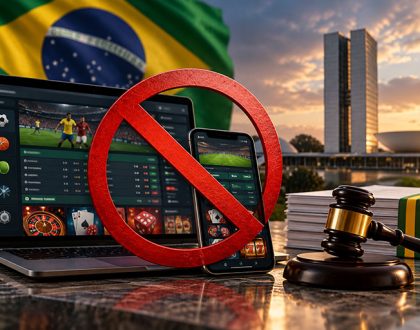
President Luiz Inácio Lula da Silva signed Provisional Measure 1,394 on September 25, 2026. The measure prohibits the exploitation, offering, intermediation and advertising of fixed-odds betting across Brazil, covering both sports-related bets and online games. It took effect when published while its longer-term status depends on the constitutional process for provisional measures in Congress. The measure also provides for the extinction of authorisations issued under Brazil’s 2023 betting law after a 30-day period.
The immediate transition is shorter. New funds cannot enter betting transaction accounts from the date of publication. Operators must make relevant sites and applications unavailable after ten days and must arrange the full return of eligible customer balances and unsettled bets under the procedures established by the measure.









For consumers, the practical timetable places October 5 at the centre of the transition, with voluntary withdrawals expected before platform access is removed. For operators, the issue extends far beyond a shutdown date because the measure also sets rules for financial institutions, payment providers, advertising channels and enforcement authorities.
The legal position is therefore developing on several fronts at the same time.
Industry groups take the dispute to the Supreme Federal Court
The Associação Nacional de Jogos e Loterias (ANJL) and the Instituto Brasileiro de Jogo Responsável (IBJR) have challenged the measure before the Supreme Federal Court. The applications seek urgent relief against provisions that end the regulated fixed-odds betting framework and affect authorisations that were issued under the existing legal regime.
Justice Luiz Fux is handling proceedings connected to Brazil’s betting rules. The court has already dealt with earlier litigation involving the legal framework for fixed-odds betting, including constitutional proceedings concerning Law 14.790 of 2023.
The associations’ arguments include questions about the legal conditions for issuing a provisional measure and the consequences of withdrawing authorisations after companies entered the market under a statutory licensing framework. Their filings also raise concerns about payments, platform access and investments made under the previous system. These are arguments advanced by the associations rather than findings by the court.
As of September 29, no reported injunction had suspended the new measure. Brazil’s Advocacia-Geral da União, known as the AGU, has sought 72 hours to prepare the government’s response before the court considers the requests for relief.
That procedural stage is significant because the measure is already producing effects while the constitutional dispute remains unresolved. Any judicial decision on interim relief could alter the timetable while Congress retains its own role in determining whether the provisional measure remains in force.
The licence question creates a separate legal issue
One of the most consequential features of the dispute is the treatment of authorisations that were issued only recently.
Brazil’s regulated market began operating under the new framework from January 1, 2025. The Ministry of Finance had made public documents relating to the authorisation of 85 companies. The standard authorisation fee was R$30 million and each authorisation could cover up to three brands subject to regulatory conditions.
On that basis, the sector associations have cited roughly R$2.5 billion in authorisation payments. The arithmetic of 85 authorisations at R$30 million each produces R$2.55 billion although individual payment records remain the relevant basis for determining the exact amount attributable to each operator.
The legal complication is especially clear because the provisional measure itself states that the extinction of authorisations does not create a right to the return of the authorisation payment or to public compensation. The associations dispute the consequences of that provision and are asking the courts to consider whether the government can end the framework on those terms without further legal protection for affected operators.
That does not mean that compensation has been awarded or that any operator has established a final claim. Those questions remain subject to judicial and legislative developments.
The difference between an announced claim and a judicially established entitlement is important in a case involving large sums and existing commercial contracts.
Betano prepares a separate legal action
Betano is preparing its own legal action concerning the rights attached to its Brazilian authorisation, according to Allwyn, which holds a 36.75% interest in Kaizen Gaming, the company behind the Betano brand.
Allwyn said Betano is evaluating measures to mitigate the impact of the provisional measure while preparing legal action to protect its rights in Brazil. The relevant authorisation was issued on January 1, 2025 for five years.
The company’s disclosure also provides context for the potential financial effect. Brazil is Betano’s largest market but Allwyn said the brand operates across a broader international footprint and that markets outside Brazil contribute the majority of its revenues. Because Allwyn’s interest in Betano is accounted for using the equity method, the direct consolidated impact is not equivalent to Betano’s full Brazilian revenue exposure.
Allwyn withdrew its previously communicated expectation of an approximately 37% adjusted EBITDA margin for 2026 if the Brazilian measure remains in place for the rest of the year. It also stressed that its assessment remains preliminary and depends on the duration of the measure as well as potential cost adjustments.
The company has not publicly detailed the relief Betano will seek. At this stage, the announcement establishes that legal action is being prepared rather than confirming a successful claim for compensation.
Flutter and Entain quantify the business impact
Flutter Entertainment has also disclosed a direct financial estimate. The group said it has stopped its sports betting and iGaming operations in Brazil in compliance with the provisional measures.
Flutter expects that, if its Brazilian business cannot operate for the remainder of 2026, the disruption could reduce full-year revenue by approximately $70 million and adjusted EBITDA by approximately $20 million. The company is reviewing available options including the possibility of an appeal.
Entain has taken a different approach to its financial guidance. The group said Brazil was expected to represent approximately 5% of its online net gaming revenue in 2026 while its EBITDA contribution was expected to be modest in a highly competitive market.
Entain reconfirmed group guidance of £910 million to £960 million for 2026 underlying EBITDA but said it now expects results toward the lower end of the range if the Brazilian measure remains in force. It also lowered its expected online NGR growth range including Brazil to 4% to 6% compared with 5% to 7% excluding Brazil.
These disclosures do not establish the eventual cost of the prohibition. They do show that the legal dispute is already affecting public financial guidance and operational planning at listed international operators.
Football sponsorship adds pressure to the debate
The consequences extend beyond betting companies because Brazilian football has become closely linked to sponsorship income from regulated operators.
A scheduled meeting involving the federal government, state federations and clubs from Brazil’s top four national divisions was postponed. The government cited the short interval between the invitation and the meeting as well as flight availability while Brazilian media reports described resistance among some clubs to participating in the original format.
The financial background is substantial. Data attributed to consultancy Convocados and reported in Brazil show that betting companies provided about R$1.03 billion in sponsorship to Série A clubs in 2025. That was higher than the approximately R$618 million recorded in 2024. Betting sponsorship represented about 7.2% of the R$14.3 billion in total revenue generated by the Série A clubs in 2025.
Clubs had been expected to discuss ways of managing the financial effects of the prohibition including possible debt restructuring. However debt restructuring and sponsorship revenue address different financial needs. A restructuring changes the timing or terms of liabilities while sponsorship provides operating income.
That distinction has become an important part of the debate because the withdrawal of betting money could affect clubs’ budgets even where alternative financing remains available.
The regulatory framework remains in transition
The provisional measure also changes the wider enforcement environment. It empowers the Ministry of Finance and the Ministry of Justice and Public Security to pursue the blocking or redirection of betting websites while the National Telecommunications Agency and the Brazilian Internet Steering Committee have defined roles in implementing blocking orders.
The measure creates an interinstitutional committee to coordinate action against illegal fixed-odds betting and related advertising. Financial institutions and payment providers also face restrictions on processing transactions associated with prohibited betting subject to exceptions required for closing operations and returning customer funds.
The government has also reported enforcement activity against suspected irregular betting websites following the measure’s publication, illustrating that the policy is being implemented alongside the legal challenge rather than being held pending a final court determination.
This creates a further distinction between regulated operators and unlicensed platforms. The government is not simply closing the previous market structure. It is also establishing an enforcement framework intended to limit continued betting activity outside the authorised system.
For operators, that means the legal dispute is occurring alongside operational compliance obligations. For consumers, it means access to balances and the handling of pending bets are governed by specific transition rules rather than by an ordinary commercial closure.
Congress and the courts will shape the next stage
The dispute now depends on several institutions operating on different timetables.
The Supreme Federal Court may decide whether interim protection should be granted while the constitutional claims are examined. Congress must also consider Provisional Measure 1,394 under the rules governing temporary executive measures with force of law. At the same time, the government is proceeding with implementation of the prohibition and the related transition arrangements.
For the betting sector, the central legal question is not simply whether Brazil can regulate or prohibit online betting. It is also whether a recently established licensing system can be terminated on the terms set out in the new measure and what legal consequences follow for operators that entered the market under the previous framework.
Until those questions are answered, the industry faces an unusual combination of immediate operational restrictions, unresolved legal claims and significant financial uncertainty.
Conclusion
Brazil’s online betting dispute has moved beyond a regulatory policy change and into a complex legal process involving constitutional review, licensing rights, corporate disclosures and the financial interests of professional sport.
The government’s Provisional Measure 1,394 is already in force and provides a detailed transition regime including restrictions on new funds, the removal of betting platforms and the return of customer balances. At the same time, ANJL and IBJR are asking the Supreme Federal Court to intervene while Betano prepares a separate legal action concerning its five-year authorisation.
The market’s largest listed participants are now acknowledging measurable financial effects while football clubs are confronting the loss of a substantial sponsorship stream. None of these consequences settles the underlying legal questions.
The next phase will therefore depend on formal decisions from the Supreme Federal Court and Congress rather than on corporate statements alone. Until those decisions emerge, the Brazilian betting market remains in a legally unsettled transition in which the final scope and durability of the prohibition have yet to be determined.
FAQs
What is Provisional Measure 1,394?
Provisional Measure 1,394 is the measure signed on September 25, 2026 that prohibits the exploitation, offering, intermediation and advertising of fixed-odds betting in Brazil. It covers sports betting and online games and entered into force upon publication.
When does the new online betting prohibition take effect?
The prohibition took effect when the measure was published on September 25, 2026. The measure then established a transition period for platform shutdowns, customer refunds and related compliance duties.
When are betting platforms expected to become unavailable?
Operators are required to make betting websites and applications unavailable after ten days from publication. The practical transition timetable places the end of platform access around October 6 following the October 5 withdrawal period.
Can customers withdraw balances?
Yes. The transition rules provide for the return of eligible customer balances, prizes and certain open-bet amounts. Customers are expected to use the voluntary withdrawal window before platform access ends.
How much did operators pay for Brazilian betting authorisations?
The Ministry of Finance set an authorisation fee of R$30 million. With 85 nationally authorised companies, the figure implied by multiplying the standard fee by the number of companies is R$2.55 billion subject to the details of individual authorisations and payments.
What are ANJL and IBJR arguing in court?
ANJL and IBJR are challenging the provisional measure and asking for judicial relief. Their arguments include the legal basis for using a provisional measure and the consequences of ending authorisations issued under the previous regulatory framework.
Has the Supreme Federal Court suspended the measure?
As of September 29, 2026, the measure remained in force while the court process continued. No final ruling had determined the long-term status of the prohibition.
Why is Betano preparing legal action?
Allwyn said Betano is preparing legal action to protect rights connected with its five-year Brazilian authorisation issued on January 1, 2025. The company has not publicly detailed the specific relief it may request.
How are Flutter Entertainment and Entain affected?
Flutter said a continued suspension of its Brazilian operation could reduce 2026 revenue by about $70 million and adjusted EBITDA by about $20 million. Entain said Brazil was expected to account for about 5% of its 2026 online net gaming revenue and now expects group results toward the lower end of its guidance if the measure remains in force.
Why does the Brazilian football sector care about the prohibition?
Betting sponsorship has become an important revenue source for Série A clubs. Data attributed to Convocados indicate that betting companies supplied about R$1.03 billion in sponsorship in 2025 compared with about R$618 million in 2024.

Paula Nancy
Hello and Welcome to my profile. I'm a UK based entrenched full-time Blogger, Journalist, columnist and a certified writer with many years of sound writing experience. If you need a high-quality and original content, I'm here to provide you with the best writing services.
Related Posts

VNLOK takes Meta to court over illegal gambling ads in the Netherlands
September 29, 2026

Brazil blocks 506 betting websites as authorities expand online enforcement
September 28, 2026

1xBet at SBC Summit Lisbon: Why Face-to-Face Still Matters for iGaming
September 28, 2026
Brazil bans online betting nationwide as Lula signs a provisional measure
September 26, 2026

Advanced Compliance Technology appoints Mark Dufty to lead game analysis
September 25, 2026

Finland receives 75 applications for gambling licenses ahead of 2027 launch
September 25, 2026
GG.BET launches GG.FAN loyalty program for Ukrainian sports fans in 2026
September 23, 2026
Premier Padel selects iGame Media for 2027 betting data and live streaming
September 23, 2026
Vyking builds its own sportsbook on FIRST.bet’s SportOS
September 21, 2026