Central Bank warns of economic slowdown in Malta

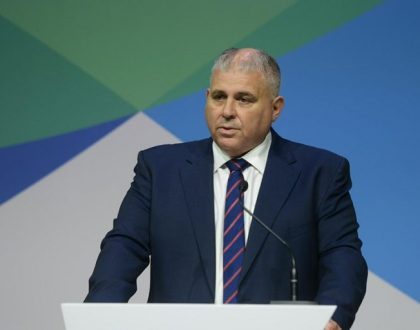
Malta’s decision to curb the influx of foreign workers is expected to slow down the country’s economic growth in the coming years, according to Central Bank chief economist Aaron Grech. The warning came as part of the Central Bank of Malta’s 2024 annual report presentation, which reviewed the country’s economic performance over the past year and provided projections for the years ahead.
A year of robust economic performance
Grech opened his remarks by acknowledging that Malta’s economy had performed “very strongly” in 2024, continuing a trend of post-pandemic recovery and outperforming many of its European counterparts. The Central Bank’s data indicates that Malta’s gross domestic product (GDP) grew by 6% over the course of the year. This figure is markedly higher than the average GDP growth of just 0.9% recorded across the Eurozone.
However, Grech pointed out that the 2024 growth rate was slightly below the 6.8% achieved in 2023, suggesting that the pace of expansion is already beginning to moderate. While the economy continues to show resilience, there are signs that its momentum may be starting to slow, with policy decisions surrounding the foreign labor force playing a critical role in this shift.





















Deceleration in foreign labor inflows
One of the central concerns highlighted in the report is the sharp deceleration in the growth of Malta’s foreign workforce. According to Grech, this trend began in 2024 and is likely to continue in the coming years. He noted that the number of incoming foreign workers last year was roughly half of the total registered in the previous year.
Between September 2023 and September 2024, the foreign labor force increased by approximately 13,000 workers—a significant drop compared to earlier years.Throughout 2024, approximately 28,000 foreign nationals entered Malta for employment purposes, while around 15,000 departed, leading to a net increase of just 13,000 workers. This decrease is widely believed to be linked to new government regulations introduced to oversee temporary workers and staffing agencies.
Regulatory changes impacting labor supply
In 2024, Malta’s government introduced legislation requiring temping agencies to obtain formal licenses in order to operate legally. The move was reportedly prompted by widespread concerns over worker exploitation and unregulated employment practices. However, the new licensing requirements led to the closure of numerous temping agencies, which had previously played a significant role in sourcing and deploying foreign labor.
Later in the year, additional plans were announced to further tighten regulations on migrant workers, part of a broader governmental push to ensure greater oversight and compliance within the labor market.
Grech acknowledged that while these regulations were introduced with the aim of protecting workers and improving labor market conditions, they have had the side effect of significantly reducing the available supply of labor. As a result, key sectors such as hospitality, construction, and healthcare—traditionally reliant on foreign labor—may begin to feel the strain of labor shortages.
Economic growth likely to dip below potential
Given the reduced influx of foreign workers, Grech projected that Malta’s economic growth will likely fall below its potential over the next few years. While still expected to outperform most EU countries, the pace of expansion will slow. The Central Bank forecasts a GDP growth rate of 4% in 2025, dropping further to 3.3% by 2027.
These projections, while still relatively strong in the context of European economies, are notably lower than the government’s Vision 2050 strategy, which aims for a steady annual growth rate of around 5% between now and 2035.
Grech emphasized that the slowdown is not solely due to reduced labor inflows, but that it remains a primary contributing factor. “With fewer workers around, Malta’s economy is likely to grow at a slower rate, dipping below its potential because of lower labour supply caused by the introduction of regulations,” he stated.
Fiscal trends: Government spending and revenue rise
Despite the looming slowdown, Malta’s fiscal health remains relatively stable. Grech noted that government expenditure surged by 10% in 2024, equivalent to an increase of nearly €538 million compared to the previous year. This sharp rise in spending was driven by several key developments, including the signing of new collective agreements across the public sector, which led to higher wages and benefits.
Additionally, the government made several significant one-off purchases, including the acquisition of new aircraft for KM Malta Airways, the national airline. These capital expenditures further contributed to the overall rise in public spending.
However, this increase in expenditure was largely offset by a corresponding rise in government revenue. As a result, the national deficit narrowed more quickly than expected. Just last week, Finance Minister Clyde Caruana revised Malta’s projected deficit for 2024 downward to -3.7%, a notable improvement from the -4.5% forecasted earlier in the year.
Public debt remains under control
On the issue of national debt, Grech expressed confidence that Malta is in a strong position to manage its financial obligations, even in the face of external economic shocks. Despite public debt exceeding €10 billion, Malta's debt-to-GDP ratio dropped to 45.3% by the close of September 2024, marking an overall decline.
This figure places Malta well below the Maastricht criteria, which stipulate that a member state’s public debt should not exceed 60% of GDP. Grech stressed that even in adverse economic conditions, it is “highly unlikely” that Malta would breach this threshold in the medium term.
Long-term challenges and policy considerations
Looking ahead, the Central Bank’s report highlights the importance of strategic policy decisions to maintain economic momentum. While Malta’s economy continues to show robust performance relative to its European peers, maintaining high levels of growth will require a balanced approach to labor market regulation, public investment, and fiscal discipline.
Policymakers now face the challenge of reconciling two potentially conflicting objectives: safeguarding the rights and conditions of workers—particularly those from abroad—while also ensuring that the country’s labor supply remains sufficient to meet the demands of a growing economy.
This balancing act will likely shape the trajectory of Malta’s economic future, especially as it pursues the Vision 2050 targets. For now, the Central Bank’s message is clear: while Malta’s economic fundamentals remain strong, future growth is no longer guaranteed and will hinge on policy adaptability and labor market resilience.
Conclusion
Malta’s economic performance in 2024 was undeniably robust, outpacing much of the Eurozone with a GDP growth rate of 6%. However, this momentum is likely to face headwinds in the coming years due to deliberate policy shifts aimed at regulating the influx of foreign workers. While these regulations may support better integration, quality of employment, and social cohesion, they also risk constraining one of the key drivers of Malta's recent economic success: labor force expansion through migration.
Central Bank chief economist Aaron Grech’s remarks highlight a crucial balancing act for policymakers—ensuring sustainable growth while addressing legitimate concerns about labor standards and demographic impacts. The government's efforts to maintain fiscal discipline, control debt levels, and pursue long-term strategic goals such as Vision 2050 are commendable, but they must be matched by a realistic approach to labor market dynamics.
As Malta looks ahead, it faces the dual challenge of maintaining above-average economic growth while navigating labor supply constraints and rising expenditure. The nation’s ability to adapt through innovation, investment in local skills, and prudent fiscal management will determine whether it can continue to thrive in a rapidly evolving global economic landscape.
FAQs
What is the current state of Malta’s economy?
Malta’s economy grew by 6% in 2024, significantly outpacing the Euro area average, although this growth is beginning to slow.
Why is Malta limiting foreign workers?
The government introduced new regulations to license temping agencies and better control working conditions, reducing the number of incoming foreign workers.
How many foreign workers arrived in Malta in 2024?
A total of 28,000 foreign workers arrived, but 15,000 also left, resulting in a net increase of 13,000—much lower than in previous years.
What impact will the reduced foreign labor force have?
A smaller labor supply may slow Malta’s economic growth below its potential in the coming years, according to the Central Bank.
How does Malta’s GDP growth compare to the rest of the EU?
Malta’s GDP growth of 6% in 2024 far exceeded the Euro area average of 0.9%, highlighting its relative economic strength.
What is Malta’s projected GDP growth for the coming years?
The Central Bank forecasts GDP growth of 4% in 2025 and 3.3% by 2027, reflecting a gradual slowdown.
Has government spending increased?
Yes, public expenditure rose by around €538 million in 2024 due to new agreements and one-off capital purchases like aircraft for KM Malta Airways.
What is the status of Malta’s national debt?
Despite exceeding €10 billion, Malta’s debt-to-GDP ratio fell to 45.3%, well below the Maastricht threshold of 60%.
Is Malta’s budget deficit improving?
Yes, the projected budget deficit for 2024 has been revised downward to -3.7%, better than the earlier estimate of -4.5%.
What is the Vision 2050 plan?
Vision 2050 is Malta’s long-term strategy to grow the economy at a stable 5% annually through 2035, though current projections fall slightly short.

Anna Amstill
I am an avid Blogger and Writer with more than 6 years of experience with Content Writing. An Online Marketing expert specializing in Blog writing, Article writing, Website content, SEO specific Keyword content and much more. Education B.A. - business management, York University, Canada, Graduated 2016.
Related Posts

Malta tourism at its limit
April 13, 2026