Controversial magisterial inquiry law faces court challenge

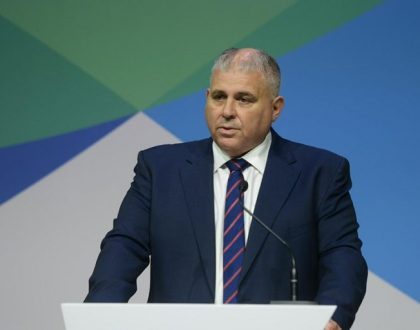
Malta's newly enacted law concerning magisterial inquiries has sparked significant political and legal controversy, prompting fierce debates over its constitutional soundness and its implications for the rule of law. Justice Minister Jonathan Attard has firmly defended the law, declaring it “constitutionally sound” and beneficial for citizens, despite strong opposition from civil society organizations like Repubblika, which has vowed to challenge it in the constitutional court.
Background on the magisterial inquiry reform
The law, which passed its final stage in Parliament earlier this month, introduces a major change in how magisterial inquiries can be requested in Malta. Prior to this reform, citizens were allowed to directly petition the courts to initiate a magisterial inquiry. These inquiries are a key investigative tool, often used to probe serious allegations such as corruption or abuse of power.
The newly approved legislation, however, removes this right. Now, citizens must first file a report with the police and provide a higher threshold of evidence before an inquiry can proceed. This shift effectively centralizes power in the hands of law enforcement and raises concerns about the independence of investigations.





















Government defends constitutional legality
Justice Minister Jonathan Attard responded to the increasing public backlash, emphasizing that the law fully complies with Malta's constitution and democratic values. He emphasized that the legislation had been passed by the country’s highest democratic institution—Parliament—and argued that it will ultimately serve the interests of justice.
“The law has been approved by the highest institution of the country (Parliament), and it is a law that respects the constitution of our country,” Attard said. “The law will offer various benefits in procedures for our citizens.”
Attard further claimed that the reform would strengthen citizens’ access to justice by establishing a more responsible and balanced process among all parties involved. According to the minister, the new system ensures that individuals who report a crime will still have a path to legal remedy, while also discouraging frivolous or politically motivated inquiries.
Repubblika’s legal challenge and the ‘non-regression principle'
The civil society organization Repubblika has sharply criticized the reform and announced its intention to file a constitutional court case against the law. Their challenge is based on the European Union’s “non-regression principle,” a legal concept that prohibits member states from implementing reforms that weaken the rule of law.
Repubblika argues that by eliminating a citizen’s right to directly initiate a magisterial inquiry, the Maltese government is taking a step backward in terms of democratic accountability and legal safeguards. The organization contends that this contravenes both EU jurisprudence and Malta’s own constitutional obligation to uphold European legal standards.
“The European Court made it clear that, where the rule of law is concerned, it is not permissible for a member state of the European Union to take steps backward instead of forward,” the NGO said in its public statement.
Repubblika’s legal argument rests on Malta’s obligation, as an EU member state, to ensure that national legislation aligns with European principles and directives. The group cites European Court of Justice (ECJ) decisions in which the non-regression principle has been applied to prevent the erosion of judicial independence and access to justice.
Minister dismisses legal concerns
In response, Minister Attard dismissed Repubblika’s reliance on the non-regression principle, suggesting that the organization is pursuing a flawed and previously unsuccessful legal strategy. He cited the NGO’s 2021 case before the European Court of Justice, which challenged the Maltese prime minister’s power to appoint judges from a shortlist.
Although the ECJ did not rule against Malta in that case, the government later voluntarily amended the judicial appointment process to make it more transparent and merit-based. Today, judges are appointed following an open call for applications and an evaluation by the Judicial Appointments Committee—changes that reflect a broader EU-wide push for judicial reform.
Despite this, Attard portrayed Repubblika’s ongoing activism as politically motivated and out of step with legal realities.
Broader implications for rule of law in Malta
The passage of the magisterial inquiry law comes amid heightened scrutiny of Malta’s democratic institutions and rule of law framework. In recent years, the country has faced multiple calls from international organizations, including the European Commission and the Council of Europe, to strengthen judicial independence, improve transparency, and protect the rights of citizens seeking legal redress.
Opponents of the new law argue that it undermines precisely these goals by limiting the avenues available for holding public officials accountable. In particular, they warn that relying on the police as gatekeepers for launching inquiries could deter investigations into high-ranking officials or politically sensitive cases.
Legal experts and human rights advocates have voiced concerns that this could erode public trust in the legal system and make it more difficult for journalists, whistleblowers, and civil society organizations to expose wrongdoing.
Civil society mobilizes in response
Repubblika is not alone in criticizing the new law. A number of other advocacy groups, legal professionals, and opposition politicians have also spoken out, urging the government to reconsider the reform or at least amend the legislation to include more safeguards.
They argue that empowering police to act as intermediaries in initiating magisterial inquiries introduces an unnecessary and potentially biased hurdle in the pursuit of justice. The fear is that politically appointed or influenced police officials may obstruct inquiries into corruption or abuse of office.
Demonstrations and public forums have been organized to raise awareness about the changes, and several petitions are circulating to urge lawmakers to repeal or revise the legislation.
Legal precedent and European scrutiny
Malta’s legal and political developments continue to be closely monitored by European institutions, particularly in the wake of the assassination of journalist Daphne Caruana Galizia in 2017, which exposed deep flaws in the country’s rule of law mechanisms.
The European Parliament has previously passed resolutions expressing concern over Malta’s judicial independence, media freedom, and institutional integrity. Any perception that Malta is backsliding on legal protections could invite further scrutiny, or even formal proceedings under Article 7 of the EU Treaty, which addresses serious breaches of EU values.
Future of the legal challenge
Repubblika’s forthcoming court case will likely test the boundaries of both Maltese constitutional law and EU jurisprudence. If the constitutional court finds merit in the non-regression principle argument, it could set an important precedent for safeguarding citizens’ rights in Malta and potentially other EU member states facing similar legal dilemmas.
On the other hand, if the law is upheld, it could cement a new legal framework in which the state has more control over the initiation of criminal investigations, with possible long-term consequences for transparency and accountability in public life.
The coming months will be crucial in determining whether this reform becomes a permanent feature of Malta’s legal landscape—or whether it triggers broader legal and political reforms under pressure from both domestic and European institutions.
Conclusion
The introduction of Malta's new magisterial inquiry law has ignited a contentious debate about the balance between state authority and citizens’ rights. While the government maintains that the law is constitutionally sound and enhances procedural fairness, critics fear it undermines the independence of investigations and restricts access to justice. As Repubblika prepares to challenge the law in court, the outcome could have lasting implications not only for Malta’s legal system but also for its standing within the European Union.
FAQs
What is a magisterial inquiry in Malta?
A magisterial inquiry is a judicial investigation conducted by a magistrate to gather evidence in serious cases, often preceding formal criminal proceedings.
Why is the new law considered controversial?
It removes the right of citizens to directly request such inquiries, requiring them to first report to the police and meet a higher evidentiary threshold.
What is the non-regression principle?
This EU legal principle prevents member states from weakening rule of law protections already in place, such as access to justice and judicial independence.
What is Repubblika’s main argument against the new law?
Repubblika argues that the law violates EU standards by diminishing citizens’ rights and making it harder to initiate independent investigations.
How did the government respond to these criticisms?
Justice Minister Jonathan Attard defended the law as constitutional and beneficial for citizens, dismissing Repubblika’s legal arguments as unfounded.
Has Malta faced similar legal scrutiny before?
Yes, including a 2021 European Court of Justice case over judicial appointments, and broader criticism from EU institutions over rule of law issues.
What changes were made to judicial appointments in Malta?
The government introduced a new system where judges are appointed following public calls and evaluations by a Judicial Appointments Committee.
Can the police now block magisterial inquiries?
Critics argue that the new law gives police a gatekeeping role, which could prevent certain inquiries from being initiated.
Is this law final or can it be reversed?
While the law has passed, it can still be challenged in court. If found unconstitutional, it may be repealed or revised.
What happens next in the legal challenge?
Repubblika is preparing a constitutional court case that could lead to a judicial review of the law’s legality under both Maltese and EU standards.

Claire
A highly motivated, results-driven, enthusiastic and ambitious writer. I can offer you well researched and high-quality article writing on any topic for your website or blog and can as well re-write your existing web content.