Court Rules in Favor of Abela Family’s Hotel Plans
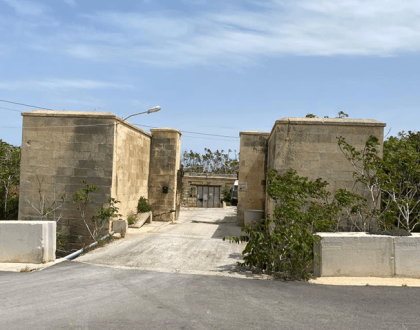
A recent decision by the Court in Gozo has cleared the way for Prime Minister Robert Abela and his wife, Lydia, to continue their development project in Xewkija. The project involves transforming a traditional farmhouse into a boutique hotel, a move that had been temporarily halted following a legal dispute with their neighbour. This ruling has sparked considerable public attention and discussion surrounding the ownership of property and the intersection of private development with political figures. Here, we examine the details of the case, the court's decision, and the implications for both the Abelas and the wider public.
The Dispute and Court’s Initial Intervention
The controversy surrounding the Abela family’s project began when their neighbour, Carmel Attard, filed a complaint claiming ownership of a common wall that was integral to the planned restoration. Attard’s grievance centered around the dismantling of the wall, which he argued was part of his property. This led the Court to issue a temporary injunction against the development work, effectively halting all ongoing construction on the farmhouse.
A few weeks later, however, the Court ruled in favour of the Abelas, lifting the injunction. The Court found that Attard had not provided sufficient evidence to prove ownership of the wall, and therefore, there was no legal reason to prevent the project from proceeding. In fact, the Court took a strong stance against Attard’s actions, accusing him of attempting to use the legal system to obstruct the Abelas’ development. Magistrate Simone Grech, who presided over the case, criticized Attard for what she referred to as “forum shopping,” implying that he was using legal tactics to achieve a result that had already been denied.





















The Abelas' Property Acquisition and Development Plans
The farmhouse in question, located in the charming village of Xewkija, Gozo, was purchased by Robert and Lydia Abela in 2012 for €268,000. The couple, who have been residents of Gozo for many years, left the farmhouse unrestored until recently. Upon Robert Abela assuming the role of Prime Minister, he took advantage of the government’s Irrestawra Darek Scheme, which offers grants for the restoration of traditional dwellings.
The scheme, however, is specifically designed for residential properties, not business ventures. This has led to further controversy surrounding the project, with some questioning whether the Abelas should be using public funds intended for residential restoration to convert the farmhouse into a boutique hotel. Despite this, the Abelas pressed ahead with their plans, and in 2023, Lydia Abela submitted a development application to convert the farmhouse into a boutique hotel. The development was envisioned to accommodate up to 16 guests.
To support this project, the Abelas purchased additional land adjacent to the farmhouse for €315,000, expanding the scope of the development. This purchase and the subsequent plans to open a boutique hotel have drawn attention, with critics raising concerns about the appropriateness of such a business venture in a traditional Gozitan farmhouse.
A Controversial Government Grant
One of the key issues at the heart of the controversy is the involvement of a government grant in the restoration of the property. Critics argue that the Irrestawra Darek Scheme was not designed to fund commercial developments and that it should have been used for residential restorations only. They contend that the Abelas should not have used public funds for a project that would ultimately be a business venture. While it is not uncommon for individuals to use government schemes to restore historic properties, the transformation of the farmhouse into a boutique hotel introduces a layer of complexity.
The Abelas, however, have defended their project, highlighting that it will contribute to Gozo’s tourism sector and boost the local economy. They argue that the restoration of the farmhouse itself was in line with the objectives of the Irrestawra Darek Scheme, and that the conversion to a boutique hotel should be seen as a natural progression of the project rather than a deviation from its intended use.
Court’s Final Ruling and Resumption of Work
In the wake of the Court’s ruling to lift the injunction, work on the farmhouse has resumed. The Abelas are now free to continue with their development project, much to the relief of the couple, who had been facing significant delays due to the legal proceedings. The decision has been welcomed by supporters of the Abelas, who see it as a vindication of their rights as property owners and their ability to proceed with the project without further legal obstruction.
However, the case has highlighted the broader issue of property rights, particularly when it involves individuals with political power. The fact that a high-profile figure like Robert Abela is involved in a legal dispute over land ownership and development has inevitably raised questions about the influence of political figures in private business ventures. While the Court has cleared the Abelas of wrongdoing, the case has nonetheless fueled public debate over the intersection of personal interests and public office.
The Wider Implications
This case is part of a broader trend in which political figures in Malta have faced scrutiny over their personal business dealings and property acquisitions. The Abelas are not the first public figures to come under investigation or legal challenge over property disputes. As Malta continues to grow in economic stature, particularly in the tourism and real estate sectors, the role of politicians in private development projects will undoubtedly come under further scrutiny.
In this instance, the Abelas have sought to address concerns by emphasizing the economic benefits of their development project. By converting the farmhouse into a boutique hotel, they argue that they will be contributing to the local economy, providing jobs, and attracting visitors to Gozo, a small island that has been focusing increasingly on tourism. For many, the Abelas’ project represents an opportunity to revitalize the island’s traditional architecture while also tapping into the growing demand for boutique accommodations.
Yet, critics remain unconvinced, especially given the involvement of government grants and the potential for perceived conflicts of interest. Some argue that the Abelas should have refrained from using public funds for a commercial venture, while others question whether the development aligns with broader policies aimed at preserving Malta’s architectural heritage.
Conclusion
The decision to lift the injunction on the Abelas’ development project has brought the dispute to a close, at least for now. While work on the farmhouse in Xewkija continues, the broader implications of the case remain unresolved. Questions regarding the appropriateness of using government funds for commercial projects, the role of political figures in property development, and the balance between economic growth and heritage preservation will likely continue to dominate public discourse in Malta.
As the Abelas move forward with their plans for a boutique hotel, the eyes of the public will be on Gozo to see whether this project becomes a successful model for tourism and economic development, or if it will continue to spark controversy over the intersection of politics and private business.
FAQs
What is the nature of the dispute in Gozo regarding the Abelas’ development?
The dispute centers on the dismantling of a wall claimed to be owned by a neighbour, Carmel Attard. The Court ruled that Attard failed to prove ownership, allowing work to resume.
Why did the Court initially halt the Abelas' development project?
The Court issued a temporary injunction after Attard filed a complaint, claiming ownership of the wall that was being dismantled for the restoration project.
What was the outcome of the legal dispute in Gozo?
The Court lifted the injunction, ruling that the neighbour, Carmel Attard, did not provide evidence of ownership of the wall, allowing the development to proceed.
What is the Irrestawra Darek Scheme, and how did it relate to this case?
The Irrestawra Darek Scheme provides government grants for restoring traditional dwellings. The Abelas used this scheme to restore their farmhouse, though critics argue the scheme was intended for residential, not commercial projects.
How much did the Abelas pay for the farmhouse in Gozo?
The Abelas purchased the 500-square-metre farmhouse in 2012 for €268,000.
What changes did the Abelas plan for the farmhouse in Gozo?
The Abelas intended to convert the farmhouse into a boutique hotel with accommodations for up to 16 guests, following the purchase of additional land.
What criticism did the Abelas face regarding their development project?
Critics questioned whether it was appropriate for the Abelas to use a government grant intended for residential restoration to fund a commercial project.
Why did Carmel Attard file a complaint against the Abelas?
Attard claimed that the wall being dismantled as part of the restoration project belonged to him, leading him to seek a legal injunction to stop the development.
What was the Court’s criticism of Carmel Attard’s actions?
The Court criticized Attard for attempting to obstruct the development by making repeated requests, accusing him of forum shopping.
How has the public reacted to the Court's ruling and the Abelas’ project?
Public reaction has been mixed, with some supporting the development as a boost to the local economy, while others raise concerns about the use of government grants for a business venture.

Ash
I like to keep it short. I am a writer who also knows how to rhyme his lines. I can write articles, edit them and also carve out some poetic lines from my mind. Education B.A. - English, Delhi University, India, Graduated 2017.