Court ruling ignored as Sannat penthouses get approval

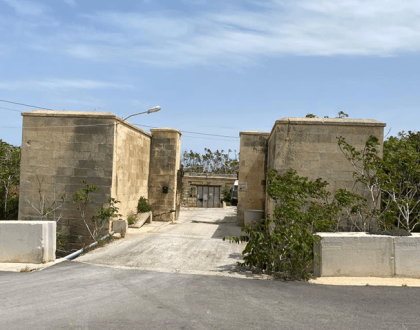
The Maltese Planning Authority (PA) has once again found itself at the centre of controversy after its decision to sanction a series of penthouses in Sannat, which had previously been declared illegal by the Court of Appeal. The case involves prominent developer Joseph Portelli and his business associates, whose construction projects have repeatedly attracted scrutiny from environmental groups, residents, and sections of the judiciary.
What has made this particular case especially contentious is that the PA’s approval appears to directly contradict a ruling by Malta’s highest judicial body, the Court of Appeal, which in 2024 had revoked the permits for the penthouses. This unusual move has drawn criticism not only from environmentalists but also from legal observers who see it as undermining the rule of law.
Reaction from Din l-Art Helwa
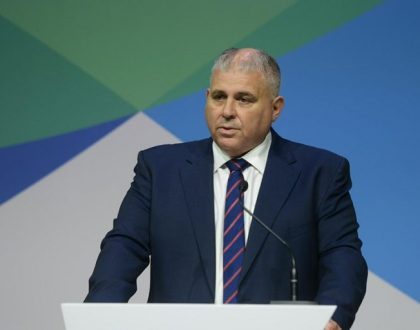
The strongest response came from Patrick Calleja, the President of Din l-Art Helwa, one of Malta’s most established heritage and environmental NGOs. Speaking to The Shift, Calleja did not mince words about the situation.





















He described the decision as “a disgusting act” and expressed his disbelief at how the PA, once intended as a regulatory authority to ensure proper planning and development, has instead “become a rubber stamp for big developers.”
Calleja emphasised that the PA is not only disregarding the interests of communities and the environment but is now openly disregarding the authority of the Court of Appeal. He stated:
“It is unbelievable that after years of fighting off clear abuse, where the PA issued an irregular permit to serve the interests of big business, it is now even ignoring the highest Court by overruling its decisions.”
Calleja added that Din l-Art Helwa and other organisations would not accept such an outcome quietly. He confirmed that his organisation is actively considering legal and procedural steps to challenge the PA’s decision, framing the matter as one of defending the integrity of Malta’s legal system.
The role of the Planning Commission
The controversy stems from a decision taken by a Planning Commission chaired by Elizabeth Ellul, who had recently been reappointed to a body specifically tasked with handling Gozo-related planning applications.
According to reports, Ellul and her fellow commissioners, Cornelia Tabone and Pierre Hili, voted to approve the sanctioning of Portelli’s penthouses, despite the Court of Appeal’s 2024 ruling that had categorically revoked their permit. The judicial decision had been issued by Chief Justice Mark Chetcuti, who declared the penthouses illegal.
Yet, rather than enforcing the Court’s judgement and requiring compliance from the developers, the Commission chose to grant approval retrospectively. This decision has been widely interpreted as a direct challenge to judicial authority.
Developer response and further applications
Instead of modifying or demolishing the penthouses following the Court’s 2024 ruling, Portelli and his associates — including Mark Agius, known locally as Ta’ Dirjanu, and Daniel Refalo — submitted a fresh application. This application was fronted not directly by Portelli and his partners, but by two of their employees, raising further concerns about transparency.
The new application sought the sanctioning of the same penthouses the Court had already declared illegal. This time, the Planning Commission chose to approve the request, effectively bypassing the earlier judicial ruling.
Observers have noted that this procedural manoeuvre could represent a growing trend in the PA’s approach to controversial projects.
A pattern of sanctioning after judicial rulings
Sources close to the PA, speaking to The Shift, explained how this practice is increasingly being used to avoid the consequences of Court decisions. According to these sources, when the Court revokes a permit, PA officials have begun informally advising developers to file new sanctioning applications.
“Whenever the Court is revoking a permit, PA officials are informally recommending that the developers involved file a new application for sanctioning. In that way, the case is treated as a new application, and the sanctioning is approved. Through this system, the Court has become irrelevant for the PA,” one source explained.
Critics argue that this practice undermines the principle of separation of powers, as it effectively places the PA in a position where it can negate the rulings of Malta’s judiciary. If allowed to continue, the approach risks eroding public confidence in both the planning process and the legal system.
Concerns about ODZ developments
The controversy does not end with the penthouses in Sannat. Joseph Portelli, through Ta’ Dirjanu, has reportedly filed yet another application seeking sanctioning for two pools constructed on land classified as Outside Development Zone (ODZ). These pools, located within the same block in Sannat, had also been declared illegal by the Court of Appeal.
A decision on these pools is expected to be taken soon by the same Commission chaired by Elizabeth Ellul. Environmentalists and local residents are bracing for another potential confrontation, fearing that once again the PA might approve the sanctioning, regardless of judicial rulings.
Implications for the rule of law
The case has raised broader concerns about governance in Malta. For critics, the issue is no longer simply about one developer or one set of illegal penthouses but about the relationship between state institutions and the rule of law.
By disregarding the authority of the Court of Appeal, the Planning Authority is perceived as creating a precedent that could undermine judicial decisions more generally. Legal scholars warn that if public bodies can openly ignore court rulings, the stability of Malta’s legal framework may be compromised.
Environmental organisations step up
Din l-Art Helwa is not alone in voicing concern. Other NGOs and community groups have begun mobilising in response to the decision. These organisations argue that Malta’s fragile environment and heritage are increasingly at risk due to unchecked development and a planning system that appears skewed in favour of powerful business interests.
The sentiment among activists is that only strong, coordinated action — whether through legal challenges, public campaigns, or appeals to European institutions — can counterbalance what they see as systemic failings within the PA.
Political and public debate
The developments in Sannat have reignited debates about planning governance at a national level. Opposition figures have criticised what they describe as the erosion of institutional checks and balances, while government representatives have so far remained cautious in their statements.
Public opinion, meanwhile, appears to be divided. On the one hand, there is frustration at what many perceive to be preferential treatment for wealthy developers. On the other, some argue that development projects bring investment and jobs, especially in Gozo, which has historically struggled with economic diversification.
The road ahead
What happens next will depend on how Din l-Art Helwa and other organisations pursue their response, and on whether the PA chooses to continue down the path of sanctioning projects already deemed illegal by the Courts.
If environmental groups proceed with further legal action, Malta could face another prolonged battle in its Courts, one that will test both the resilience of its institutions and the patience of its citizens.
For now, the case remains a potent symbol of the tension between economic interests, environmental protection, and respect for the rule of law.
Conclusion
The decision by the Planning Authority to sanction penthouses in Sannat, despite a clear ruling by the Court of Appeal, has ignited one of the most serious planning disputes Malta has faced in recent years. At its core, the controversy is not only about development and land use but also about the credibility of institutions entrusted with safeguarding the rule of law.
For many observers, this case has become emblematic of wider concerns regarding governance, accountability, and the balance of power between economic interests and judicial authority. The vocal opposition from Din l-Art Helwa and other organisations reflects a growing determination among civil society to resist decisions that are seen as undermining both environmental protection and legal certainty.
As further applications and rulings loom, the situation in Sannat remains unresolved. What is clear, however, is that the outcome will have implications well beyond Gozo, shaping public trust in Malta’s planning system, its courts, and its commitment to transparent and lawful governance.
FAQs
What did the Court of Appeal decide in 2024 regarding the penthouses in Sannat?
The Court of Appeal ruled that the penthouses were illegal and revoked their permit.
Why has the Planning Authority’s decision been criticised?
It has been criticised for disregarding the Court of Appeal’s ruling and for appearing to favour large developers over the rule of law.
Who is Patrick Calleja?
Patrick Calleja is the President of Din l-Art Helwa, a Maltese heritage and environmental NGO.
What did Calleja say about the PA’s decision?
He described it as “a disgusting act” and expressed disbelief that the PA would ignore the highest Court’s ruling.
Who chaired the Planning Commission that approved the sanctioning?
The Commission was chaired by Elizabeth Ellul, with commissioners Cornelia Tabone and Pierre Hili.
Who are Joseph Portelli’s associates in the project?
His associates include Mark Agius, known as Ta’ Dirjanu, and Daniel Refalo.
What new applications have been filed by Portelli?
He has filed applications seeking sanctioning of two ODZ pools in the same Sannat block.
How are PA officials allegedly handling revoked permits?
Sources allege that officials recommend developers file new applications for sanctioning, effectively bypassing Court rulings.
Why is this seen as a threat to the rule of law?
Because it suggests that a regulatory authority can override judicial decisions, undermining the separation of powers.
What might happen next?
Environmental groups may pursue legal action, and further public debate is expected as new sanctioning applications are reviewed.

Anna Amstill
I am an avid Blogger and Writer with more than 6 years of experience with Content Writing. An Online Marketing expert specializing in Blog writing, Article writing, Website content, SEO specific Keyword content and much more. Education B.A. - business management, York University, Canada, Graduated 2016.