Curacao’s New Gambling Rules: Cash Grab or Real Reform?
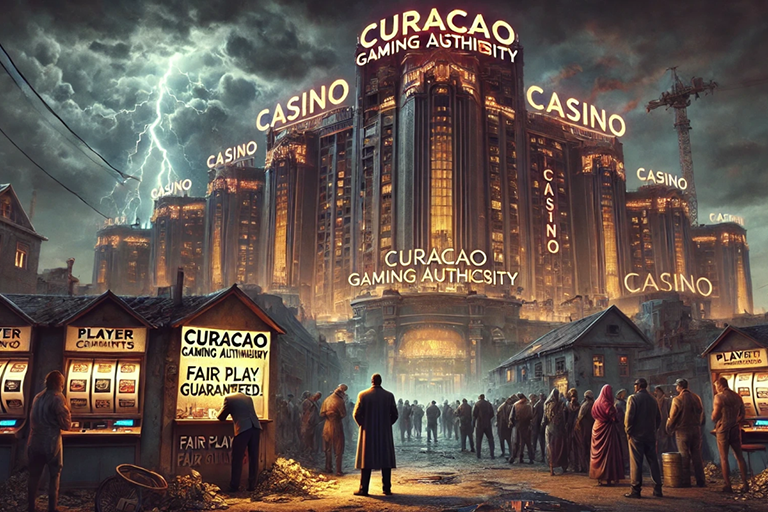
The Curacao Gaming Authority (CGA) has spent months promoting its new regulatory framework under the National Ordinance on Games of Chance (LOK) as a step toward legitimacy. If you listen to their carefully worded announcements, you’d think they were finally bringing oversight and player protection to an industry long criticized for its lax enforcement.
The reality tells a different story. A deep dive into the fine print reveals a system carefully designed to maximize fees, protect operators from real accountability and establish a dispute resolution process that looks fair on the surface but is stacked in favor of the casinos.
At the same time, the CGA is taking full advantage of the confusion surrounding the transition from the old licensing system. Operators are being strong-armed into paying excessive fees with little clarity on what they’re actually getting in return. And players? They’re being sold the illusion of protection while the CGA keeps its true priorities firmly aligned with industry profits.
Duncan Garvie’s take on Responsible Gambling
One of the few voices in the industry who has taken a detailed, analytical approach to these regulatory changes is Duncan Garvie. As someone with deep expertise in alternative dispute resolution (ADR) and responsible gambling, Garvie has broken down the new policies and highlighted both their strengths and their glaring weaknesses.





















His insights are based on years of experience advocating for fair treatment of players, making him one of the few credible voices in an industry where transparency is often in short supply.
Garvie has praised certain aspects of Curacao’s new responsible gambling framework, particularly the expansion of self-exclusion rules. It’s true that, on paper, some of these measures appear to align with best practices in other regulated markets. But the real test is enforcement; and that is where the CGA’s credibility collapses.
A Licensing Fee Structure Designed for Maximum Revenue
One of the most striking elements of the new LOK framework is its aggressive fee structure. The CGA has positioned itself as a regulatory body, yet its primary focus seems to be generating revenue rather than enforcing compliance. The costs imposed on operators are staggering:
- B2C Gaming License: Operators must pay an annual fee of €47,450, split into a €24,490 licensing fee and a €22,960 supervisory fee.
- B2B Providers: The supervisory fee for these companies is set at €24,490 annually.
- Additional Fees: Operators must also pay €150 per UBO or qualified interest holder and €250 per additional domain.
For an industry that thrives on volume, these fees are unlikely to deter operators. But what they do achieve is making the CGA the biggest beneficiary of the new regulatory system. There are no provisions requiring operators to prove financial stability beyond paying these fees. There is no requirement that they hold player funds separately to ensure withdrawals are honored. The only thing that seems to matter to the CGA is that the money keeps flowing; into their accounts, not back to the players.
Adding insult to injury, existing license holders under the old system are being forced into an expensive transition period with staged invoices. The message is clear: either pay up or lose your license.
Player Complaints: Designed to Protect Casinos, Not Consumers
One of the key changes under the new framework is the introduction of a formal Player Complaints Policy. On the surface, this appears to be a positive step toward accountability. Players can now escalate disputes through an Alternative Dispute Resolution (ADR) provider if the operator fails to resolve their complaint.
But when you examine the structure of the ADR system, it becomes clear that this is little more than a bureaucratic shield for operators.
- Operators handpick their own ADR provider from a CGA-approved list.
- ADR providers must be based in Curacao, ensuring they operate within a legal framework designed to favor the industry.
- ADR decisions are binding on operators but do not override a player’s right to take the case to court. In theory, this sounds reasonable. In practice, it means that players would have to pursue legal action in Curacao, where the system overwhelmingly favors the gambling companies.
Even worse, the ADR system includes a long list of excuses ADR providers can use to refuse to hear a complaint:
- If the player has not completed the operator’s internal complaints process.
- If the ADR provider deems the dispute “frivolous.”
- If the matter involves a “complex legal issue” (translation: anything serious).
- If the operator is already under investigation for the same issue; effectively allowing repeat offenders to delay accountability indefinitely.
Compare this to jurisdictions like the UK, where ADR bodies are independent and selected by the regulator, not the casinos. In Curacao, the process has been structured to look fair on paper while ensuring that operators maintain control over how complaints are handled.
Responsible Gambling: Policy that Looks Good but Lacks Bite
Garvie’s analysis of the Responsible Gambling Policy highlighted some improvements, such as requiring that self-exclusion applies across all domains owned by the same operator. But in reality, these rules are meaningless without proper enforcement mechanisms.
A closer look at the policy reveals some alarming weaknesses:
- Operators are only required to remove self-excluded players from marketing lists during their exclusion period. As soon as it ends, casinos are free to resume bombarding them with promotions.
- The self-exclusion process takes up to 15 minutes, which might not seem like much; until you realize that many other jurisdictions allow self-exclusion with a single click. This gives operators plenty of time to complicate the process for vulnerable players.
- Marketing affiliates are now required to undergo responsible gambling training, but there are no clear penalties for violations. Given that Curacao-based casinos have a long history of working with aggressive, often unethical marketing firms; this rule is unlikely to have any real impact.
Who Benefits? Spoiler: It’s Not the Players
Taken together, the CGA’s new policies paint a clear picture of who really benefits from this so-called reform:
- The CGA rakes in millions in licensing fees while providing little real oversight.
- Operators get to claim compliance with international standards while still controlling the complaints and ADR process.
- Players are left with a convoluted complaints system that offers little real protection, a responsible gambling framework filled with loopholes and no assurances that their money is safe.
This is not real regulation. It’s a PR exercise designed to make Curacao appear more legitimate while ensuring the industry continues to operate on its own terms.
A Final Thought: Progress or Illusion?
Duncan Garvie has rightfully pointed out that some of these new policies mark an improvement over the previous Wild West approach. But even he acknowledges that they fall short of true player protection. A responsible gambling policy is only as strong as its enforcement. A dispute resolution system is only fair if it operates independently of the industry it regulates. And a licensing system is only credible if it prioritizes compliance over revenue generation.
The CGA has done none of these things.
So while Curacao’s regulators claim they are moving toward a fairer, more transparent gambling industry, the real question remains: transparent for whom?
FAQs
What is the Curacao Gaming Authority (CGA)?
The Curacao Gaming Authority is the regulatory body overseeing the online gaming industry in Curacao. It is responsible for issuing licenses and enforcing gaming regulations.
What is the National Ordinance on Games of Chance (LOK)?
The LOK is Curacao's new regulatory framework designed to regulate online gaming and gaming operators within the country, introduced by the CGA to enhance legitimacy.
What are the main criticisms of Curacao's new regulatory framework?
Critics argue that the framework prioritizes generating revenue through excessive fees, while offering minimal player protection and accountability for operators.
How does Curacao's dispute resolution process work?
Disputes can be escalated to an Alternative Dispute Resolution (ADR) provider, but these providers are handpicked by operators, raising concerns about fairness.
What is the cost of obtaining a gaming license in Curacao?
Operators must pay an annual fee of €47,450 for a B2C gaming license and €24,490 for B2B providers, among other additional fees for qualified holders and domains.
What improvements have been made in responsible gambling under the new system?
The new framework includes expanded self-exclusion rules, but enforcement and overall player protection still remain a significant concern.
How does the self-exclusion process work?
Players can self-exclude, but the process is lengthy and lacks strict enforcement. Once the exclusion period ends, players may be targeted with promotions again.
Why is the ADR system seen as flawed?
The system is designed to protect operators, with providers selected by casinos and restrictions that may prevent legitimate disputes from being heard.
What is the role of marketing affiliates in responsible gambling?
Curacao now requires marketing affiliates to undergo responsible gambling training, but there are no clear penalties for violations, limiting the effectiveness of this measure.
Who benefits from Curacao's new gaming regulations?
The primary beneficiaries are the CGA, which collects high fees, and operators who maintain control over disputes. Players are left with limited protection and oversight.

Michael
With nearly 30 years in corporate services and investigative journalism, I head TRIDER.UK, specializing in deep-dive research into gaming and finance. As Editor of Malta Media, I deliver sharp investigative coverage of iGaming and financial services. My experience also includes leading corporate formations and navigating complex international business structures.
Related Posts


Italy reconsiders gambling ad ban to boost football funding
April 10, 2026

KSA flags Unibet operator Optdeck for AML non‑compliance
April 10, 2026