European Media Freedom Act faces slow national rollout
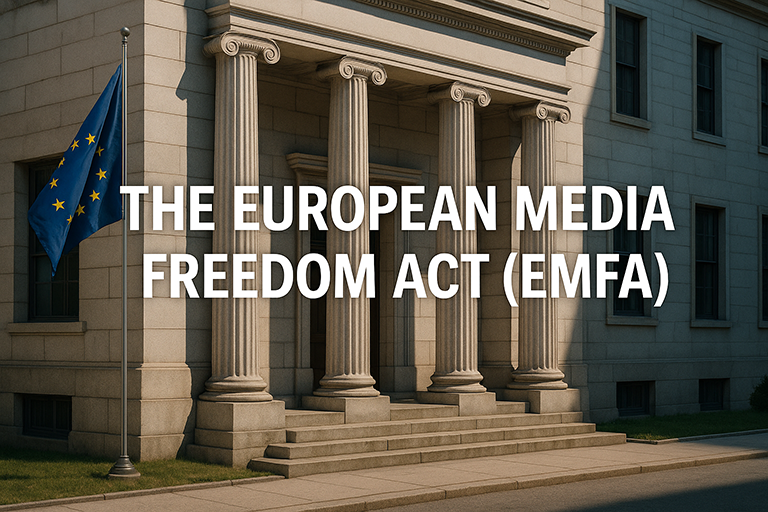
The European Media Freedom Act (EMFA), described by European Union policymakers as a landmark measure to strengthen press freedom, media independence, and pluralism across the bloc, officially came into force this week. While its adoption marks a significant step forward for media safeguards in Europe, experts and advocacy groups warn that its success will ultimately depend on the speed and sincerity of national implementation — and early signals from some member states, including Malta, are raising alarm.
The EMFA, which applies directly across the EU, introduces binding rules to protect journalistic sources, reinforce editorial independence in public service media, and enhance transparency in both media ownership and funding. However, despite its entry into force, the law’s impact will not be felt unless member states align their domestic legislation and administrative practices with its core principles.
Concerns from media watchdogs
Reporters Without Borders (RSF), a leading international media freedom organisation, has expressed concern that many EU governments have not yet undertaken the necessary reforms to bring their national frameworks into line with the EMFA’s requirements. In particular, RSF points to the need for robust protections for journalistic sources and safeguards against political interference in public media.





















While the EMFA sets out direct obligations, its enforcement still relies heavily on the political will of national authorities. Without timely legislative and institutional adjustments, the law risks remaining more of a symbolic statement than a transformative tool.
Malta under scrutiny
Malta has emerged as a particularly challenging case. A 2025 report by the Civil Liberties Union for Europe criticises Malta’s recently adopted anti-SLAPP (Strategic Lawsuits Against Public Participation) legislation, which was intended to comply with EU standards, for falling short of international best practices. Anti-SLAPP laws are designed to prevent abusive litigation aimed at silencing journalists, but the report suggests that Malta’s version lacks sufficient deterrents against vexatious legal actions.
The EMFA is also expected to have a significant impact on Malta’s national broadcaster, Public Broadcasting Services (PBS). Under the new rules, all senior management and board members of public service media must be appointed through a transparent, objective, and non-discriminatory process.
However, PBS has faced longstanding criticism for lacking transparency in its governance. The broadcaster has not publicly disclosed the names of its editorial board members, nor has it provided details of contracts related to senior staff. Media analysts have frequently described PBS as being dominated by political appointees, raising concerns over its editorial independence.
Transparency obligations for public service media
The EMFA goes beyond governance reforms. It requires that public service media funding be managed in a transparent, sustainable, and predictable manner. Furthermore, independent monitoring mechanisms will assess media independence, with their findings made publicly available.
In Malta, transparency around public service media funding has been limited. PBS has historically declined to provide details on how it is financed, how salaries are determined, and how taxpayer funds are allocated for programming and online content. It has also been criticised for not publishing annual reports on spending, independence, and the use of public funds — reports that would now be mandatory under the EMFA.
Government advertising and media funding
The EMFA also targets the allocation of government funding to independent media. Under the new rules, such funding must be distributed through a transparent and non-discriminatory procedure, based on publicly available criteria. National governments will be obliged to publish annual reports detailing how much was spent on media advertising, which outlets received funds, and the amount allocated to each media service provider.
In Malta, these provisions could prove contentious. The government has historically declined to reveal comprehensive figures on its advertising spending across different media outlets. Attempts to obtain this information through Freedom of Information (FOI) requests have often been met with resistance, sometimes leading to lengthy court proceedings. Media advocacy groups, including RSF, have criticised this reluctance as an obstacle to public accountability.
Surveillance concerns during EMFA negotiations
Another controversy arose during the EMFA’s drafting process when Malta, among other governments, advocated for a provision that would have allowed state surveillance of journalists under the justification of national security. This proposal was met with strong opposition from media freedom organisations and Members of the European Parliament (MEPs), who argued that it could undermine press freedom.
Although the final text of the EMFA removed the explicit national-security exception, the episode has been cited as an example of ongoing challenges to media protections in Malta. The country’s approach to balancing security measures with press freedom remains under close watch.
Calls for decisive EU enforcement
Given these challenges, RSF Director General Thibaut Bruttin has urged the European Commission to take a firm stance: “The European Commission must hold national authorities to account — and, if necessary, initiate proceedings against the most recalcitrant governments.”
Under EU law, the Commission has the power to initiate infringement proceedings under Article 258 of the Treaty on the Functioning of the European Union (TFEU) if a member state fails to comply with its obligations.
Such proceedings could be a crucial enforcement tool for ensuring that the EMFA’s protections are not eroded by slow or incomplete national implementation.
A test of Europe’s democratic resilience
The EMFA has been presented as a “democratic shield” for Europe’s media landscape. Its real impact will depend on whether the European Commission, member states, and civil society can work together to ensure full compliance.
For countries like Malta, where concerns over transparency, political influence, and media independence have been longstanding, the EMFA presents both a challenge and an opportunity. If implemented in good faith, it could lead to greater public trust in media institutions. If neglected, however, it risks becoming yet another missed opportunity to strengthen democratic safeguards.
The stakes could hardly be higher: without rigorous enforcement, the EU’s ambitious media protections could remain vulnerable to the very political and economic pressures they were designed to prevent.
Conclusion
The European Media Freedom Act represents one of the most significant legislative efforts in recent years to safeguard the independence, pluralism, and transparency of the media sector within the European Union. Its provisions, if properly enforced, have the potential to address deep-rooted issues such as political interference in public broadcasting, opaque allocation of government funding, and threats to journalistic sources.
However, the real measure of its success will lie in how member states implement it at the national level. In countries like Malta, where longstanding concerns over transparency and editorial independence persist, the EMFA’s arrival offers both a challenge and an opportunity. Compliance will require genuine political will, institutional reform, and a shift toward greater openness in governance and media funding practices.
The European Commission’s role in ensuring adherence will be crucial, as will the vigilance of civil society, journalists, and advocacy organisations. Without robust oversight and timely action against non-compliance, the EMFA risks becoming a symbolic statute rather than the transformative “democratic shield” it was intended to be.
In the end, the Act’s true legacy will be determined not by the aspirations expressed in Brussels, but by the everyday reality in newsrooms and public institutions across the EU — where press freedom must be actively protected, not merely promised.
FAQs
What is the European Media Freedom Act?
The European Media Freedom Act is an EU regulation aimed at protecting media independence, pluralism, and transparency across all member states.
Does the EMFA apply directly to member states?
Yes, the EMFA applies directly, but effective enforcement requires national legal and institutional adjustments.
Why is Malta being singled out in this debate?
Malta has faced criticism over media transparency, public broadcaster governance, and anti-SLAPP legislation that some believe falls short of best practices.
What changes does the EMFA require for public broadcasters?
It mandates transparent, non-discriminatory appointments of board members and senior staff, and transparent management of funding.
How will the EMFA affect government advertising practices?
Governments must disclose annual spending on media advertising, including recipients and amounts allocated to each provider.
Why is transparency so important under the EMFA?
Transparency helps safeguard editorial independence, prevent political influence, and ensure fair distribution of public resources.
What were the concerns about surveillance in the EMFA negotiations?
Some governments, including Malta, supported a national-security exception that could allow journalist surveillance, but it was removed in the final text.
What role does the European Commission play in enforcement?
The Commission monitors compliance and can launch infringement proceedings against states that fail to implement the EMFA.
What are anti-SLAPP laws, and why are they important?
Anti-SLAPP laws protect journalists and others from abusive lawsuits designed to silence critical reporting.
Could the EMFA improve press freedom in Malta?
Yes, if fully implemented, it could increase transparency, reduce political influence, and strengthen public trust in the media.

Ash
I like to keep it short. I am a writer who also knows how to rhyme his lines. I can write articles, edit them and also carve out some poetic lines from my mind. Education B.A. - English, Delhi University, India, Graduated 2017.