Fast ferry plan from Sliema to Gozo faces legal roadblock
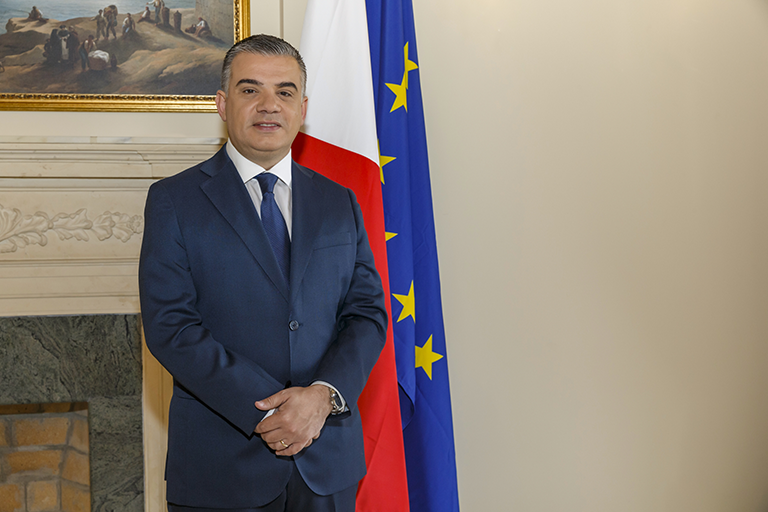
A recently announced fast ferry service connecting Sliema to Gozo via Bugibba, introduced by Transport and Infrastructure Minister Chris Bonett, has encountered a serious legal challenge that may derail its planned launch this summer. The initiative, which was intended to provide a quicker maritime alternative for commuters and relieve mounting traffic congestion on Malta’s roads, is now mired in a controversy that may delay its implementation by several months or longer.
Legal challenge forces tender suspension
The source of the disruption is a legal protest lodged by Supreme Travel Limited, a well-established maritime transport company based in Żejtun and better known under its brand name Ta’ Cancu. The company has filed an objection with the Public Contracts Review Board (PCRB), claiming that the Request for Proposals (RfP) process initiated by the Ministry was marred by irregularities that render the process non-compliant with European Union procurement laws.
According to industry insiders who spoke with The Shift, this legal move effectively freezes the procurement process and casts significant doubt on the feasibility of Minister Bonett’s timeline, which envisaged the new service beginning operations in August. Given the nature of the challenge and the time required to resolve such legal issues, any hope of launching the fast ferry this summer now appears unrealistic.





















Allegations of discrimination and unfair advantage
In its legal filing, Supreme Travel Limited, represented by lawyer Reuben Farrugia, asserts that the tender process was “discriminatory, unproportionate, and anti-competitive.” The company argues that the conditions established in the RfP appear to have been tailored to favor certain unnamed existing operators, potentially undermining fair competition and breaching EU rules on public procurement and equal treatment.
One of the central grievances raised by Supreme is the very short timeframe allowed for submitting offers, which the company claims made it practically impossible for any new entrant to prepare a competitive and compliant proposal. The RfP, which was published on 2 July, was originally scheduled to close within just a few weeks—an unusually tight window for a project of this scope and significance.
Additionally, the company challenges the technical criteria laid out in the tender, which it says were set in a way that restricts fair access to the bidding process and appears to benefit existing providers already operating under Public Service Obligations (PSOs). These concerns, according to Supreme, reflect a pattern of preferential treatment and a disregard for the spirit of open competition enshrined in EU law.
Government acknowledges irregularities, defends urgency
In a preliminary response to the PCRB, the Transport Ministry appeared to concede that certain aspects of the process—particularly the timeline for submissions—may not have fully adhered to procedural norms. However, the Ministry defended its actions on the grounds of public interest, asserting that the decision to expedite the process was motivated by an urgent need to address the traffic gridlock currently plaguing the island.
The Ministry further denied any suggestion that the process was structured to favor particular operators, maintaining that its objective was simply to launch the fast ferry service as quickly as possible to provide a much-needed transport alternative.
Rushed planning raises questions about competence
Minister Bonett’s announcement on 2 July came during the inauguration of a new breakwater facility in Bugibba, which is intended to serve as one of the landing sites for the new ferry service. During the event, the Minister proudly declared that the new fast ferry would be operational by the end of August.
However, transport industry stakeholders have expressed skepticism about the Minister’s approach, describing the initiative as hastily planned and poorly executed. Sources cited by The Shift highlighted that the manner in which the tender was drafted revealed a lack of thorough consultation, legal foresight, and logistical preparation.
“The idea itself is not inherently flawed,” said one industry executive on condition of anonymity. “A fast ferry connecting Sliema, Bugibba, and Gozo could reduce pressure on roads and improve travel efficiency. But the way this has been handled—rushing out a tender with questionable conditions and failing to anticipate legal consequences—shows poor judgment.”
A pattern of policy misfires
This is not the first time in recent months that Minister Chris Bonett has encountered obstacles in implementing high-profile transport schemes. Earlier this year, he unveiled a controversial cash-for-driving licence proposal designed to encourage people to surrender their driving licences in exchange for financial compensation.
However, the initiative faced immediate resistance from the Finance Ministry, which reportedly refused to release the necessary funds. The Finance Ministry is said to have viewed the scheme as poorly conceived and fiscally irresponsible, leading to a quiet shelving of the project.
This pattern of policy announcements followed by reversals or delays has raised concerns about the level of coordination within government ministries and the extent to which proposals are subjected to rigorous evaluation before being made public.
Broader implications for transport policy
The failure of the fast ferry tender—and the broader difficulties faced by the Transport Ministry in implementing reform measures—have reignited public and political debate over Malta’s transport policy direction. Despite record public investment in roads, traffic congestion remains a growing concern across the island, particularly during peak hours and tourist season.
Critics argue that successive administrations have focused too heavily on road-widening projects and vehicle-centric infrastructure, rather than investing in sustainable public transport solutions, including ferries, buses, and light rail systems.
“Malta cannot build its way out of traffic,” said a transport policy analyst. “We need a paradigm shift in how we think about mobility, and that includes proper planning and fair, transparent public procurement processes.”
What's next for the ferry project?
With the PCRB review underway, the tendering process is effectively suspended until a final decision is made. If the PCRB upholds Supreme Travel’s objections, the tender may need to be withdrawn and reissued—a process that could take several more months and further delay the implementation of the project.
Should the Board find that the RfP did violate EU rules, the Transport Ministry may also face reputational damage and further legal scrutiny, potentially weakening its ability to push forward with other planned infrastructure or public service projects.
Conclusion
The controversy surrounding the Sliema-Bugibba-Gozo fast ferry tender underscores the critical importance of transparency, legal compliance, and public accountability in the management of major public transport initiatives. While the goals of the initiative—reducing traffic congestion and offering alternative modes of transport—are commendable, the execution has raised valid concerns about fairness, legality, and government competence.
As Malta continues to struggle with its worsening transport crisis, this episode serves as a reminder that quick fixes rarely succeed, and that sustainable, long-term solutions require careful planning, broad stakeholder engagement, and strict adherence to legal frameworks.
FAQs
What is the purpose of the proposed fast ferry service?
The fast ferry is intended to provide a quicker transport link between Sliema, Bugibba, and Gozo, aiming to reduce road congestion and improve commuting options.
Why has the ferry tender process been suspended?
Supreme Travel Limited challenged the tender process before the Public Contracts Review Board, alleging it violated EU competition rules.
Who is Supreme Travel Limited?
Supreme Travel Limited, also known as Ta’ Cancu, is a maritime transport company based in Żejtun and active in the local ferry sector.
What are the allegations made against the Transport Ministry?
Supreme Travel claims the tender was discriminatory, overly restrictive, and designed to favor existing operators, breaching EU law.
What has the Transport Ministry said in its defense?
The Ministry acknowledged minor irregularities in the process but defended them as necessary due to the urgency of launching the ferry service.
Will the ferry service still start in August?
It is unlikely. The legal dispute has halted the process, and a resolution may take months, delaying any potential launch.
Is this the first controversy involving Minister Bonett’s transport plans?
No, a previous scheme offering money in exchange for surrendering driving licences was also shelved due to financial and planning concerns.
How does this incident affect public confidence in transport planning?
The episode has raised questions about the Ministry’s planning capabilities and the transparency of procurement procedures.
Could the tender be reissued?
Yes, if the PCRB finds in favor of Supreme Travel, the tender may need to be rewritten and relaunched in compliance with legal standards.
What does this mean for Malta’s traffic crisis?
Without timely and well-implemented alternatives like the ferry, the country’s road congestion problems may continue to worsen.

Ash
I like to keep it short. I am a writer who also knows how to rhyme his lines. I can write articles, edit them and also carve out some poetic lines from my mind. Education B.A. - English, Delhi University, India, Graduated 2017.