Fort Ricasoli Leasing Agreements Raise Questions

The Malta Film Commission (MFC), under the leadership of Johann Grech, has recently come under scrutiny due to several unresolved lease agreements with international filmmakers. The most notable concern is the use of Fort Ricasoli, a historical site located in Kalkara, as a filming location for major Hollywood productions, including the much-anticipated “Gladiator II.” Questions have been raised about the terms of these lease agreements, the financial transactions involved, and the transparency, or lack thereof, surrounding these arrangements. This article delves deeper into the issues raised by these concerns and investigates the ongoing debates surrounding the role of the Malta Film Commission in managing such iconic locations.
A Growing Concern in Parliament
In recent months, Members of Parliament (MPs) from the Nationalist Party (PN), specifically Julie Zahra and Karol Aquilina, have raised important questions regarding the leasing of Fort Ricasoli to international film producers. Despite their efforts, the government has remained tight-lipped on the matter, refusing to provide clarity on several key issues, including how much international filmmakers are paying for the lease of the fort, who is responsible for collecting these payments, and what becomes of the funds once they are collected.
The lack of transparency has raised questions about the handling of public assets and how the revenue generated from these lease agreements is being used. The Film Commission’s role in managing Fort Ricasoli has become a focal point in this debate, especially given the commission's direct involvement in negotiating contracts with international filmmakers.





















The Ownership and Leasing of Fort Ricasoli
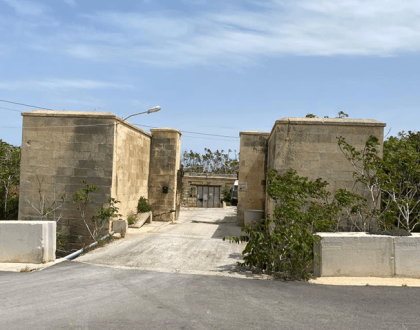
Fort Ricasoli, a historically significant structure that has featured in films such as “Gladiator,” “Troy,” and “Agora,” remains the property of the Lands Authority. However, the Malta Film Commission, which was established to facilitate interactions between the government and international filmmakers, has been at the center of discussions about leasing the fort for film productions. Despite this, there appears to be no formal agreement in place that governs the use of the fort by the Film Commission.
In response to questions raised by MP Zahra in parliament, Lands Minister Stefan Zrinzo Azzopardi confirmed that the fort belongs to the Lands Authority. However, when asked for details regarding the financial arrangements or who is responsible for collecting payments from filmmakers, Azzopardi declined to provide any specific answers. Instead, he stated that the lease agreements were confidential due to their commercial nature.
Azzopardi also noted that discussions between the Lands Authority and the Malta Film Commission were ongoing in an attempt to formalize an agreement that would allow the Film Commission to administer the fort. However, this is not a new development. Five years ago, during another parliamentary inquiry led by MP Karol Aquilina, then-Tourism Minister Julia Farrugia Portelli similarly stated that discussions on the matter were in an advanced stage. Yet, five years later, these discussions remain unresolved, further compounding concerns about the efficiency and transparency of the process.
The Financial Mystery: Where Does the Money Go?
The lack of clarity surrounding the revenue generated from the leasing of Fort Ricasoli raises several important questions. It is unclear how much international filmmakers are paying to lease the fort, who collects these payments, and where the money goes after it is collected. Despite repeated inquiries from MPs, the government has consistently avoided answering these questions, citing the confidential nature of the lease agreements.
One of the key points of concern is the role of the Malta Film Commission in managing these payments. Sources within the film industry have suggested that the commission is directly involved in negotiating the contracts for leasing Fort Ricasoli to international filmmakers. However, there is no official agreement in place that outlines the terms of the commission’s involvement in managing the fort, leaving the situation murky and open to speculation.
A Legacy of Mismanagement and Absence of Accountability
The ongoing uncertainty surrounding the leasing of Fort Ricasoli is part of a larger pattern of mismanagement and lack of accountability that has plagued the Malta Film Commission, particularly under the leadership of Johann Grech. Grech has faced criticism for his extravagant spending of public funds, especially in relation to international film productions, while local filmmakers and industry professionals have expressed frustration over the lack of funding and support for the local film sector.
The latest example of Grech’s controversial leadership was the Malta Film Week, which took place last summer. The event, which aimed to showcase Malta as a premier filming destination, reportedly cost the government €4 million to organize. The lavish spending raised eyebrows, particularly given the ongoing financial difficulties faced by the local film industry. Critics have questioned the rationale behind spending such a large sum on an event that seemed to prioritize international filmmakers over local talent.
National Audit Office (NAO) Criticism
The National Audit Office (NAO) has recently issued a scathing report on the management of the Malta Film Commission, criticizing the lack of accountability and oversight in the organization. The NAO’s findings were particularly damning in relation to the Malta Film Week held in 2022. The report highlighted that the event was not supported by comprehensive documentation, including feasibility studies, plans, and predetermined goals.
The NAO also pointed out that the Malta Film Commission had not submitted audited accounts for several years, a serious oversight that calls into question the organization’s financial management practices. According to the NAO, the absence of audited accounts means there is no clear audit trail, leading to poor business continuity and a lack of transparency, accountability, and value-for-money principles.
The most recent audited accounts for the Film Commission date back to 2019, with the financial statements for 2020 only being finalized in October 2023. The financial statements for 2021 and 2022 are due to be completed in October 2024, further highlighting the delays and lack of transparency surrounding the commission’s financial practices.
The Role of the Malta Film Commission and Its Future
The lack of accountability and transparency surrounding the Malta Film Commission’s operations has raised concerns about the future of the organization and its ability to effectively promote Malta as a filmmaking hub. The commission, which has recently rebranded as Screen Malta, is tasked with attracting international filmmakers to the island, but its leadership and management practices have come under fire.
When asked in parliament why the Malta Film Commission has not submitted its accounts to the Malta Financial Services Authority (MFSA), former Tourism Minister Clayton Bartolo stated that the Commission was not obligated to do so. However, this statement was in direct contradiction to the position of the Auditor General, who has emphasized the importance of financial transparency for public entities.
The ongoing issues surrounding the Malta Film Commission highlight the need for reform and greater oversight in the management of public assets and resources. Without proper accountability and transparency, it will be difficult for Malta to maintain its reputation as a prime location for international film productions.
Conclusion: A Call for Change in the Malta Film Commission
The issues surrounding the leasing of Fort Ricasoli and the management of the Malta Film Commission are emblematic of deeper problems within the organization. The lack of clarity on financial matters, the ongoing delays in finalizing agreements, and the criticism of extravagant spending all point to a need for significant reform. For Malta to continue to attract international filmmakers and ensure the success of its film industry, it is essential that the government takes immediate steps to address these concerns and restore transparency and accountability to the Malta Film Commission.
FAQs
What is the Malta Film Commission and what role does it play in the film industry?
The Malta Film Commission is an organization responsible for promoting Malta as a filming location and facilitating interactions between international filmmakers and the government.
Why is Fort Ricasoli important in the film industry?
Fort Ricasoli is a historic site in Malta that has been used as a filming location for several major Hollywood productions, including “Gladiator,” “Troy,” and “Agora.”
What is the controversy surrounding the leasing of Fort Ricasoli?
The controversy centers on the lack of transparency regarding the financial agreements between the Malta Film Commission and international filmmakers, specifically the payment terms and the distribution of the proceeds.
Who owns Fort Ricasoli?
Fort Ricasoli is owned by the Lands Authority, but the Malta Film Commission has been involved in negotiating leases for film productions.
Why has the government not disclosed details about the lease agreements for Fort Ricasoli?
The government has cited the commercial nature of the lease agreements, which they argue makes the details confidential.
What criticisms has the Malta Film Commission faced under Johann Grech’s leadership?
The Malta Film Commission, under Johann Grech, has faced criticism for extravagant spending of public funds, lack of accountability, and poor financial management.
What is the National Audit Office’s stance on the Malta Film Commission’s management?
The National Audit Office has criticized the Malta Film Commission for a lack of accountability, transparency, and proper documentation for events like Malta Film Week.
What is the financial situation of the Malta Film Commission?
The Malta Film Commission has not submitted audited accounts for several years, leading to concerns about its financial practices and transparency.
Why hasn’t the Malta Film Commission submitted its financial accounts to the MFSA?
The Malta Film Commission has claimed it is not obligated to submit accounts to the Malta Financial Services Authority, but this stance contradicts the Auditor General’s position.
What steps should be taken to address the issues facing the Malta Film Commission?
Reforms should be implemented to ensure greater financial transparency, accountability, and efficiency within the Malta Film Commission to maintain the island’s appeal as a filming location.

Claire
A highly motivated, results-driven, enthusiastic and ambitious writer. I can offer you well researched and high-quality article writing on any topic for your website or blog and can as well re-write your existing web content.