From Banking Scandal to Government Paycheck in Months
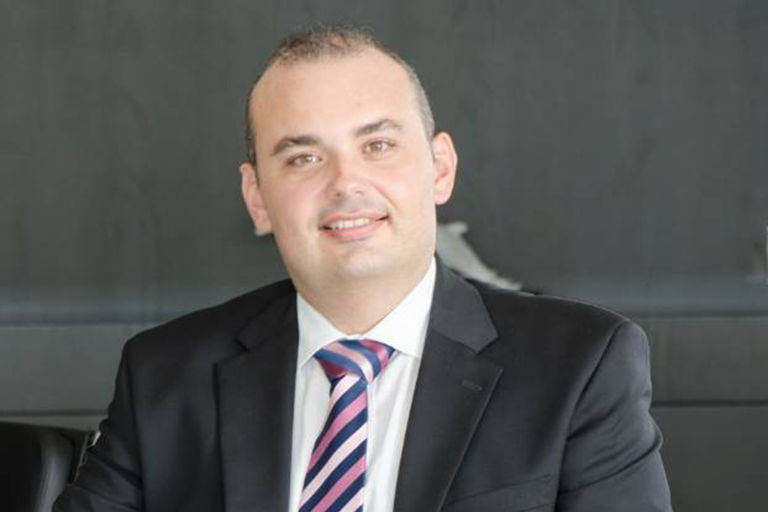
The former Chief Risk Officer of Bank of Valletta (BOV), Miguel Borg, who stepped down from his role following the court’s ruling that declared the hospitals’ privatization deal fraudulent, has now been appointed to a well-paid government position. Despite the controversy surrounding his departure from BOV, Borg is now earning a six-figure salary funded by taxpayers, raising questions about transparency and accountability in public sector appointments.
Appointment to Malta Government Venture Capital Ltd
Through a Freedom of Information (FOI) request, official records have revealed that Miguel Borg has been appointed as the Chief Executive Officer (CEO) of Malta Government Venture Capital Ltd. This newly created government entity operates under the supervision of Economy Minister Silvio Schembri. His three-year contract, signed in October by Jesmond Gatt—who serves as both the Chairman of the Malta Financial Services Authority (MFSA) and CEO of Malta Government Investments Ltd (MGI)—guarantees him a base salary of €70,000 per year. However, with additional bonuses and allowances, his total annual remuneration exceeds €100,000.
Job Security Guaranteed in Contract
One of the most contentious elements of Borg’s contract is a provision that ensures job security even in the event of his removal from his current position. Regardless of whether his dismissal is triggered by a change in government, ministerial restructuring, or any other unforeseen circumstance, the agreement guarantees him continued employment as a senior consultant within MGI. This indefinite full-time role ensures that he remains on the public payroll, highlighting concerns about the transparency and fairness of such contractual obligations in government appointments.





















The Steward Health Care Loan Controversy
The circumstances surrounding Miguel Borg’s abrupt departure from BOV in 2023 were closely tied to a controversial €36 million loan granted to Steward Health Care, a financially struggling company. Despite clear warning signs regarding Steward’s precarious financial position, the loan was issued with a government guarantee, effectively placing the financial risk on taxpayers.
Borg has denied direct involvement in the approval of the loan, stating that major financial decisions are taken collectively by the bank’s senior executives. However, his sudden resignation and subsequent exit package—reportedly worth nearly half a million euros—fueled speculation regarding his role in the affair. Sources within BOV suggested that he was quietly pushed out, but the bank made his departure seamless by awarding him an unprecedented severance package.
Rapid Transition to a Government Role
Despite the controversy surrounding his exit from BOV, Borg’s transition into a new, high-paying government role was swift. Within just three months of leaving his post at the bank, he was already receiving a taxpayer-funded salary as a part-time consultant for MGI Ltd. By January 2024, his role had been upgraded to a permanent, full-time senior consultant position, bringing him an annual salary of €64,000.
His primary responsibility in this role was to assist the government in establishing a venture capital company. Once the company was formally registered, Borg was promoted to CEO within the same year, further increasing his salary and benefits package. His rapid rise within the government sector, coupled with his involvement in the Steward Health Care loan scandal, has fueled further debate over political favoritism and the opaque nature of public sector appointments.
Implications for Taxpayers and Government Accountability
Borg’s career trajectory—from a high-ranking executive at Malta’s largest bank to a generously compensated public-sector position—raises serious concerns about governance, accountability, and ethical hiring practices. His connection to a loan deal that now places public funds at risk has amplified these concerns, particularly as Maltese taxpayers may ultimately bear the financial consequences.
In May 2024, Steward Health Care declared bankruptcy in the United States, casting further doubt on its ability to repay the €36 million loan it secured from BOV. If the company defaults on its obligations, the Maltese government will be forced to step in and cover the debt, as it was guaranteed by the state. This scenario would result in taxpayers shouldering the financial burden of a deal that was approved under highly questionable circumstances.
Political Favoritism and Lack of Transparency
The appointment of former banking executives to high-paying government positions has become a recurring pattern in Malta’s political landscape. Borg’s case exemplifies how individuals connected to financial mismanagement or corporate controversies often secure influential public sector roles despite public outcry.
Critics argue that such appointments reflect entrenched political favoritism, where well-connected individuals are insulated from the repercussions of their decisions while the general public pays the price. The lack of transparency surrounding Borg’s selection for the CEO role at Malta Government Venture Capital Ltd further underscores these concerns.
Transparency advocates and opposition figures have called for a more rigorous vetting process for public sector appointments. They are urging the government to provide justification for high-level executive appointments, particularly when candidates have been involved in financial controversies. Additionally, calls for an independent investigation into the Steward Health Care loan have intensified, with demands for greater accountability from both the banking sector and government institutions.
Will There Be Any Consequences?
Despite mounting criticism, Borg’s career within the public sector appears to be secure. With an ironclad contract that ensures his continued employment and lucrative financial benefits, his transition from a banking scandal to a top government role highlights systemic flaws in Malta’s governance structures.
Public trust in the financial sector and government institutions is at risk as concerns grow over the lack of accountability for high-profile financial decisions. The unfolding situation reinforces the urgent need for comprehensive regulatory reforms, enhanced transparency in public appointments, and stricter accountability measures in both corporate governance and the public sector.
The Broader Impact on Malta’s Reputation
Malta’s reputation as a financial hub has already been under scrutiny due to various scandals involving banking irregularities, money laundering allegations, and government corruption. The controversy surrounding Miguel Borg and the Steward Health Care loan further tarnishes the country’s image, reinforcing perceptions of weak regulatory oversight and favoritism in financial and political appointments.
For Malta to regain trust on the international stage, significant steps must be taken to improve financial governance. Independent audits, stronger regulatory frameworks, and increased transparency in government contracts and appointments are essential to prevent similar situations in the future.
Conclusion
The appointment of Miguel Borg to a lucrative government position despite his involvement in the controversial Steward Health Care loan scandal raises serious concerns about transparency, accountability, and political favoritism in Malta. His seamless transition from a high-ranking banking role to a taxpayer-funded executive post underscores systemic flaws in governance and financial oversight. With Steward Health Care's bankruptcy potentially leaving taxpayers responsible for a €36 million debt, public trust in Malta’s institutions continues to erode. The situation calls for stronger regulatory frameworks, independent investigations, and greater scrutiny of public sector appointments to prevent similar controversies in the future.
FAQs
What controversy is associated with Miguel Borg’s government appointment?
Borg resigned from BOV amid a €36M loan scandal and later secured a €100K+ government job, raising concerns about transparency and political favoritism.
Why did Miguel Borg leave Bank of Valletta?
He stepped down after BOV granted a controversial loan to Steward Health Care, a financially unstable company, with a government guarantee.
What is Malta Government Venture Capital Ltd?
It is a newly established government entity focused on venture capital investments, operating under the Economy Ministry, with Borg as its first CEO.
How much is Miguel Borg earning in his new position?
His base salary is €70,000 per year, with additional bonuses and allowances bringing his total compensation to over €100,000 annually.
Is Miguel Borg’s job guaranteed even if he is dismissed?
Yes, his contract ensures that he retains an indefinite full-time role at Malta Government Investments Ltd if removed from his CEO position.
What was his severance package from BOV?
Reports indicate that BOV provided him with an exit package worth nearly €500,000 following his resignation.
What happened to the €36M Steward Health Care loan?
Steward Health Care filed for bankruptcy in May 2024, raising concerns that Maltese taxpayers may have to cover the outstanding loan amount.
Are there demands for an investigation?
Yes, transparency advocates and opposition figures are calling for a thorough investigation into the Steward loan and Borg’s public sector appointment.
What does this mean for Maltese taxpayers?
If Steward defaults on the loan, the Maltese government will have to cover the debt, putting further strain on taxpayer funds.
How does this affect Malta’s financial reputation?
The controversy adds to Malta’s ongoing governance and financial transparency issues, potentially damaging its international reputation.

Ash
I like to keep it short. I am a writer who also knows how to rhyme his lines. I can write articles, edit them and also carve out some poetic lines from my mind. Education B.A. - English, Delhi University, India, Graduated 2017.