Future of Malta’s Medical School Project Remains Uncertain

A major medical education initiative announced with great fanfare by the Maltese government in 2019 has quietly stalled, casting doubt over the future of Malta’s public healthcare training infrastructure. A new faculty building, originally promised to open by 2022 next to Mater Dei Hospital, remains incomplete and has now been officially abandoned as the future home of the University of Malta’s Faculty of Medicine.
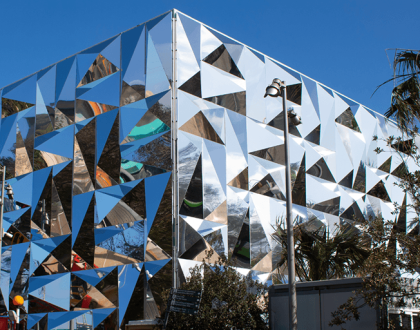
Sources within the Health Ministry have confirmed that a building forming part of the Campus Hub—originally designated to host the new medical school—will no longer serve that purpose. The reasons, while not formally documented in a comprehensive public statement, appear to involve a combination of halted funding, shifting ministerial priorities, and broader systemic issues within the Ministry of Health’s capital development plans.
A legacy of unfulfilled medical infrastructure projects
The medical school is not the only project to meet such a fate. It joins a growing list of health-related infrastructural undertakings that have been either indefinitely postponed or quietly shelved. These include the high-profile Paola Hub, a mental health hospital proposed as a national priority, and the long-awaited Gozo General Hospital redevelopment, which remains stuck at the conceptual stage.





















The Paola Hub, initially announced with much political enthusiasm and scheduled to open over three years ago, continues to sit dormant. Meanwhile, proposals for a new mental health hospital—a pressing need given Malta’s limited psychiatric infrastructure—have apparently been discarded without further explanation.
In Gozo, hopes for a state-of-the-art hospital to supplement the island's limited healthcare services remain unrealized. Although the project has been under consideration for several years, only design discussions have taken place to date, and construction appears no closer to commencing.
Origins of the medical school initiative
In 2019, then-Health Minister Chris Fearne unveiled the government’s vision to establish two distinct medical schools. The first, located on Malta’s main island, would serve students enrolled at the University of Malta. The second was intended to accommodate Barts Medical School in Gozo, a UK-based institution with a local satellite campus.
The dual-campus plan was part of a broader strategy to ease congestion at Mater Dei Hospital. At present, parts of the University of Malta’s medical faculty occupy valuable space within the hospital building, limiting the institution’s capacity for patient care. By relocating the faculty to a purpose-built facility within the Campus Hub, these areas could be repurposed to expand medical services and clinical research.
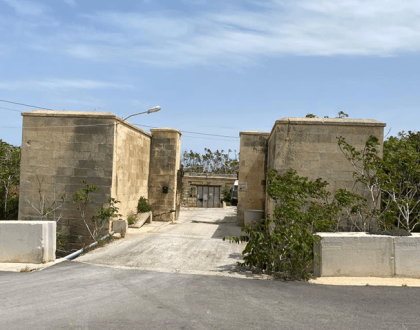
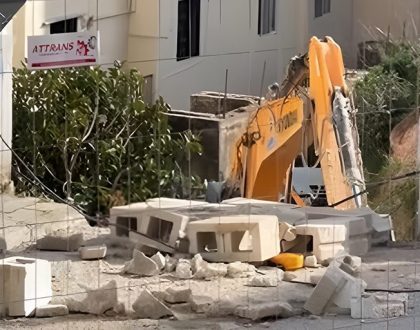
Planning permits for the Campus Hub medical school were approved, and construction began shortly afterward. However, it soon became evident that progress was slowing. By the time the 2022 completion date came and went, the building was still unfinished. According to internal sources, financial resources were withdrawn midway through construction, leaving the structure in limbo.
The role of Barts and the VGH/Steward scandal
While the public medical school project stagnated, the private Barts Medical School in Gozo advanced at a comparatively faster pace. That institution, however, has been dogged by its own controversies. Barts was constructed and operationalized through public funding under the same public-private partnership arrangement that formed part of the now-disgraced Vitals Global Healthcare (VGH) and Steward Health Care deal.
Originally, the Barts project was supposed to be funded by private investors. However, subsequent revelations in court and investigative reports revealed that the Maltese government bore most of the financial burden. The situation drew criticism, particularly as the promised investment from private operators never materialized, and taxpayers were left to foot the bill.
The collapse of the VGH/Steward deal, ruled fraudulent by Maltese courts, has only exacerbated concerns regarding transparency, accountability, and strategic planning within the country’s health sector. Critics have pointed out the irony of the Barts campus becoming operational while the University of Malta’s own faculty has seen no progress.
Ministerial transition brings little clarity
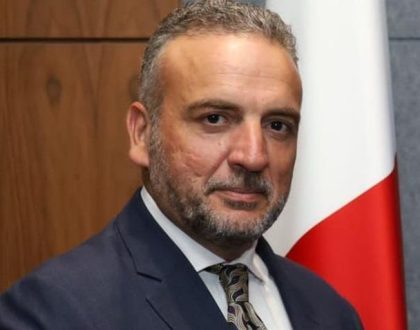
When Jo Etienne Abela was appointed Health Minister in 2024, expectations were raised that he might bring renewed attention to the abandoned medical school project. While he did publicly acknowledge the existence of problems surrounding the initiative, his response lacked specificity.
In comments to the press, Abela suggested that the medical school might eventually be relocated to a proposed “health village” at the site of the former St Luke’s Hospital. However, no official plans have been submitted to the Planning Authority, and no documentation has been released outlining how such a move would be financed, structured, or scheduled.
In effect, this suggestion appears to be little more than a conceptual placeholder, with no immediate steps taken to bring the idea to fruition. The “health village” concept itself remains in a formative stage, and no architectural or feasibility assessments have been made public.
Faculty and students left in the dark
Amidst this backdrop of administrative uncertainty, medical students and faculty members at the University of Malta find themselves caught in limbo. Several individuals from the Faculty of Medicine, speaking anonymously, expressed deep frustration about the lack of communication and direction from government authorities.
Students entering rigorous medical training programs do so with the expectation that facilities, resources, and educational infrastructure will be adequate and future-proof. The current state of disrepair and indecision not only affects the quality of education but also risks damaging the University’s international standing and attractiveness to prospective students.
Faculty members are similarly hampered by the inadequate physical environment in which they are required to teach, conduct research, and provide clinical mentorship. The prolonged uncertainty has led to decreased morale and growing skepticism about the government’s long-term commitment to medical education.
Strategic implications for Malta’s healthcare system
Malta’s healthcare sector has long relied on its strong tradition of producing well-trained medical professionals through its national university. As demand for healthcare services continues to grow due to an aging population and increased medical tourism, the need for modern training facilities becomes even more critical.
The failure to deliver on promises of infrastructure investment risks creating long-term consequences, including capacity constraints, talent shortages, and diminished public trust. With Maltese medical professionals already facing heavy workloads, outdated training environments further compound the issue.
A cohesive strategy that includes investment in medical infrastructure, transparent budgeting, and stakeholder consultation is essential to avoid systemic breakdowns. Without such a strategy, Malta’s aspirations of maintaining a high-quality, publicly funded healthcare system will face increasing challenges.
Lack of transparency and accountability
A recurring criticism of the medical school project—and other halted health initiatives—is the lack of transparency from public authorities. No detailed reports have been issued explaining the reasons for funding withdrawals, nor has any government entity formally acknowledged accountability for the stalled development.
Public procurement and infrastructural investments of this scale typically warrant clear communication, budget audits, and contingency planning. The absence of these mechanisms has raised questions about whether political considerations or financial mismanagement contributed to the current impasse.
The continued opacity not only affects public perception but could also have legal implications should further public funds be expended without adequate oversight or tangible outcomes.
Conclusion: A vision deferred
The dream of a state-of-the-art medical school designed to modernize Malta’s healthcare education landscape now stands as a symbol of broken promises. While shifting political landscapes and economic constraints can affect any long-term initiative, the abrupt halt of the Campus Hub project without explanation has led to widespread disillusionment.
Unless clear, actionable plans are introduced soon, Malta risks eroding decades of progress in medical education and training. In an era where healthcare preparedness is more important than ever, the lack of strategic follow-through on such a pivotal project is cause for serious concern.
FAQs
What happened to the new medical school project near Mater Dei Hospital?
The project has been officially abandoned. Originally set to open in 2022, construction was halted midway due to funding issues.
Was the building for the medical school ever completed?
No, the designated structure within the Campus Hub remains unfinished and will no longer house the medical school.
Why was the project halted?
Although specific reasons have not been officially disclosed, sources suggest financial constraints and changes in ministerial priorities were key factors.
Is the University of Malta’s Faculty of Medicine still at Mater Dei?
Yes, parts of the faculty remain at Mater Dei Hospital, occupying space that was meant to be repurposed for patient care.
What is the current Health Minister’s stance on the project?
Health Minister Jo Etienne Abela acknowledged the issue and floated the idea of relocating the medical school to a future “health village” at St Luke’s, but no concrete plan has been made public.
What happened to the Barts Medical School in Gozo?
The Barts campus in Gozo has been completed, but it was built using public funds despite initial assurances that private investment would cover costs.
Has any planning permit been submitted for an alternative medical school site?
As of now, no planning permits have been submitted for an alternative site, including the proposed St Luke’s location.
How are medical students affected by this situation?
Students and faculty report frustration and uncertainty about their educational future due to the lack of adequate facilities and clear plans.
Is this part of a broader pattern of halted health projects?
Yes, other projects such as the Paola Hub and a proposed mental health hospital have also been delayed or abandoned.
What are the implications for Malta’s healthcare system?
If unresolved, the issue could lead to capacity constraints in healthcare training, reduced international credibility, and a weakening of the public healthcare system.

Ash
I like to keep it short. I am a writer who also knows how to rhyme his lines. I can write articles, edit them and also carve out some poetic lines from my mind. Education B.A. - English, Delhi University, India, Graduated 2017.