Gibraltar CEO Sentenced: Justice or Judicial Overreach?
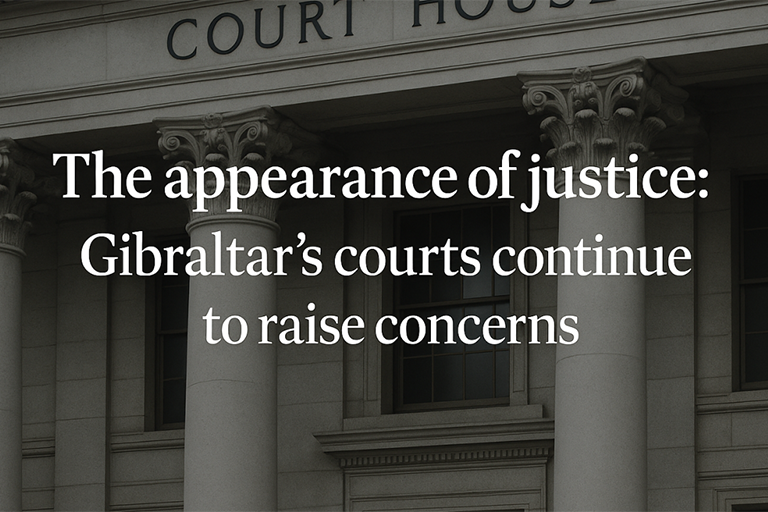
On 14 May 2025, the Supreme Court of Gibraltar sentenced Karel Manasco, former CEO of Mansion Group, to twelve months’ imprisonment for contempt of court. The ruling, delivered by Chief Justice Anthony Dudley, has been framed by some as a demonstration of the judiciary’s willingness to hold powerful individuals to account.
However, a close reading of the judgment suggests a far more complex picture; one in which procedural formality and judicial discretion appear to side-line concerns about impartiality, proportionality and the broader corporate context from which this case arose.
This case merits closer scrutiny not only for its legal conclusions, but for what it omits.
A bench warrant issued before recusal concerns were examined!
Due process remains fundamental to any credible justice system. In this instance, the sequence of decisions leading to sentencing raises difficult questions about procedural fairness and judicial impartiality.





















Despite Manasco’s counsel filing an application for Chief Justice Dudley’s recusal (based on apprehensions of bias) the application was dismissed the following day. Shortly thereafter, a bench warrant was issued for Manasco’s arrest. While such orders are procedurally lawful, their rapid issuance under these circumstances gives rise to public concern regarding the appearance of objectivity and the treatment of recusal requests.
Recusal applications are a legitimate procedural safeguard. Their prompt and cursory dismissal, without a transparent review or the appointment of an independent judicial officer, may suggest an institutional reluctance to entertain challenges to judicial authority. This creates the perception that efficiency was prioritised over procedural neutrality.
Contempt proceedings and the question of proportionality.
Contempt of court is a serious matter. Yet the specific breaches cited in this case: Exceeding a weekly spending limit imposed by court order, underreporting total expenditure, transferring funds to a spouse and failing to notify counsel of account changes… All are technical in nature and do not suggest wilful obstruction or violent intent.
These matters, while non-compliant with prior orders, did not involve criminal fraud or behaviour that would typically warrant custodial sentencing at the higher end of the scale. Nevertheless, the court deemed immediate imprisonment necessary, citing broader harm to the “administration of justice.”
This rationale introduces a tension between the legal framework of contempt and the context in which it is applied. The claimant in this case, Mansion Group, is a private commercial entity with a layered international structure. Its internal operations, corporate governance and offshore arrangements have not been subjected to equivalent judicial scrutiny.
While the court emphasised institutional harm, it did not publicly explore whether the surrounding corporate environment might itself present regulatory challenges deserving of attention.
The omission of structural context in judicial reasoning.
The judgment makes no reference to Mansion’s ownership via offshore structures, including intermediaries in Malta, the British Virgin Islands and Gibraltar. Nor does it acknowledge that the freezing orders arose within the context of a commercial dispute involving cross-border elements.
These omissions are significant. Legal reasoning that isolates individual conduct from broader corporate environments may miss important contextual factors, including the nature and governance of the claimant entity. The absence of commentary on Mansion’s use of nominee structures or the role of external advisors leaves questions about the completeness of the court’s analysis.
In complex financial disputes involving cross-jurisdictional entities, judicial impartiality is not only about tone; it requires visible efforts to account for all relevant facts, including those concerning the structure and ownership of corporate litigants.
Disregarding concerns about perceived conflicts
Through his legal representatives, Manasco raised issues concerning potential conflicts and a perceived lack of judicial detachment. These were not without foundation, as they referred to documented professional and advisory relationships between various actors involved in the case.
Rather than addressing these issues openly, the court proceeded with sentencing in absentia. While legally permissible, this approach risks reinforcing perceptions of imbalance, particularly when recusal concerns are dismissed without transparent, external review.
In matters involving allegations of bias, courts enhance their credibility by going beyond minimum legal standards and by making the reasoning behind such decisions accessible to the public. Failure to do so can erode confidence in judicial independence.
Proportionality in sentencing: legal precedent or selective application?
The judgment draws on case law including HM Solicitor General v Robinson, JSC BTA Bank v Solodchenko and Crystal Mews v Metterick. These cases, however, involve public interest offences or fraudulent conduct on a scale significantly greater than the breaches at issue here.
By invoking such precedents, the court appears to equate Manasco’s financial missteps with actions that posed systemic threats or criminal harm. Yet the factual matrix in this case is narrower and more contained. No evidence has been made public suggesting intent to defraud, conceal assets unlawfully or prejudice court proceedings.
In one example, the court acknowledged that a transfer used to purchase a vehicle could have been permitted had a formal application been made. This undermines the narrative of deliberate evasion and underscores the need for careful proportionality in assessing the severity of breaches.
A wider system of accountability or lack thereof
The most troubling aspect of this case lies not in the sentencing itself, but in the absence of broader institutional inquiry.
To date, no public investigation has been undertaken into Mansion Group’s financial architecture, use of nominee directors or role in offshore structuring. Similarly, the legal representation of both corporate and regulatory interests by a limited number of firms in Gibraltar has not been examined for potential conflicts.
The decision to proceed with contempt proceedings swiftly, while leaving these surrounding matters unexamined, raises structural concerns. Gibraltar’s legal and commercial sectors are closely connected. Without external oversight or clear separation between judiciary, regulatory and commercial actors, legitimate questions may arise about systemic independence.
Concluding remarks
The sentencing of Karel Manasco will no doubt be cited as a pivotal enforcement of judicial authority in Gibraltar. Yet its legacy may also reflect deeper anxieties: about judicial opacity, procedural selectiveness and institutional insulation from criticism.
Whether Manasco’s conduct merited censure is a matter of public record. But the real issue is whether the manner in which justice was administered meets the standard of openness, fairness and independence expected in a modern democracy.
Gibraltar’s judiciary, like all institutions, must continually demonstrate its impartiality and not merely assert it.
FAQs
Who is Karel Manasco?
Karel Manasco is the former CEO of Mansion Group who was sentenced to twelve months’ imprisonment by the Supreme Court of Gibraltar for contempt of court.
Why was Karel Manasco sentenced to prison?
He was sentenced for breaching court orders, including exceeding spending limits, failing to disclose financial changes, and transferring funds without notice.
What concerns were raised about judicial impartiality?
Concerns stemmed from the dismissal of a recusal application against Chief Justice Dudley and the court’s quick decision-making without independent oversight.
Was the contempt charge based on criminal behavior?
No, the breaches were technical and procedural in nature, without evidence of fraud or violent intent.
Did the court consider the corporate context of Mansion Group?
No, the judgment did not explore Mansion Group’s offshore ownership or broader financial structures, which critics argue are relevant.
What was the significance of the recusal application?
The application cited potential bias and prior professional relationships, but it was dismissed without external review, raising concerns about fairness.
Was the sentencing in line with legal precedent?
The court cited cases involving more severe offenses, leading to criticism that Manasco’s case did not warrant such a harsh sentence.
Why is the lack of external investigation into Mansion Group notable?
Critics argue that while Manasco was scrutinized, Mansion Group’s complex offshore operations were not examined, indicating selective accountability.
What are the broader implications for Gibraltar’s judiciary?
The case raises concerns about judicial transparency, independence, and whether the legal system can impartially handle high-profile corporate disputes.
What is the key takeaway from the Manasco case?
While enforcing court orders is vital, the case illustrates the need for balanced, transparent procedures that also examine institutional and corporate accountability.

Michael
With nearly 30 years in corporate services and investigative journalism, I head TRIDER.UK, specializing in deep-dive research into gaming and finance. As Editor of Malta Media, I deliver sharp investigative coverage of iGaming and financial services. My experience also includes leading corporate formations and navigating complex international business structures.
Related Posts





Italy reconsiders gambling ad ban to boost football funding
April 10, 2026

KSA flags Unibet operator Optdeck for AML non‑compliance
April 10, 2026