















Illegal bar attacks visitors at St Peters Pool Malta
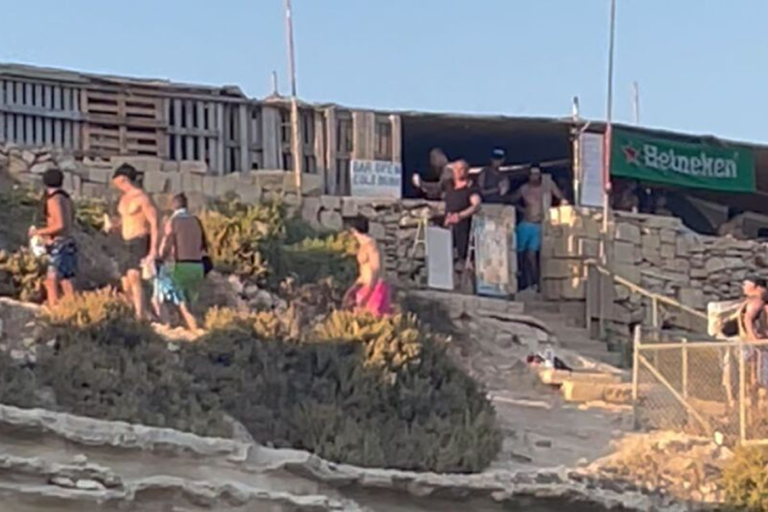
Visitors flock to Malta expecting sun, sea, and relaxation, yet a visit to St Peter’s Pool, one of the island’s most iconic swimming spots, has instead become a lesson in lawlessness. Recent reports and viral videos show tourists and locals alike being subjected to assaults and verbal abuse by the operator of an illegal bar that has long operated with apparent impunity.
The unsettling spectacle has sparked public outrage and drawn attention to the broader failures of Maltese authorities to enforce the law consistently, raising questions about the state of public safety and civic order across the island.
Assaults and intimidation at a popular tourist site
Videos circulating widely on social media depict a scene that would be alarming anywhere: visitors to St Peter’s Pool being attacked with rocks, punches, and verbal insults by the man running the unauthorized bar. The sheer audacity of these attacks—occurring in broad daylight at a location frequented by families, tourists, and swimmers—has left many questioning how such behaviour can continue unchecked.





















As the footage shows, visitors, expecting a tranquil coastal experience, instead find themselves ducking stones and dodging aggression from a man whose actions appear to go unpunished. The incidents are symptomatic of a wider societal tolerance for lawlessness, reflected in the frequency of street fights, public brawls, and escalating violence in other parts of Malta, including busy urban areas and nightlife hubs such as Paceville.
A long history of planning violations ignored
What makes the situation at St Peter’s Pool particularly concerning is the operator’s long-standing record of illegal activity. Since 2016, the site has been synonymous with unauthorized development and flagrant disregard for regulatory oversight. Initially, the area—previously an agricultural field—was converted into a makeshift car park, complete with kiosks, caravans, and informal taxi services.
The Planning Authority responded with its first enforcement notice in 2016, highlighting the unlawful structures and demanding compliance. Yet, subsequent enforcement actions appear to have been inadequate or nonexistent. Over the years, illegal constructions multiplied, the bar business expanded, and the operator continued operations as though regulations did not apply.
Legal experts note that such prolonged inaction sends a powerful, negative message: that rules and regulations are optional, particularly for those willing to assert themselves through intimidation rather than lawful means.
From planning abuse to outright violence
The escalation from regulatory breaches to physical assault is stark and disturbing. While the motivations behind specific attacks remain unclear, the behaviour captured in viral videos is impossible to condone. It underscores the risks posed when private interests operate outside the law unchecked for years.
Observers have described St Peter’s Pool as effectively becoming a personal fiefdom along the Delimara coast, run not by legal permits but by coercion and fear. Whether or not formal charges are eventually filed, the pattern of behaviour is unmistakable: illegal operations are tolerated, and aggressive conduct becomes normalized.
Implications for public safety and Malta’s reputation
The consequences extend beyond the immediate victims. Social media saturation with clips of street fights, assaults, and public disorder has created a perception that Malta is a place where force can substitute for law. The broader societal implications are troubling: if citizens believe that intimidation and aggression yield results, respect for legal frameworks erodes, and the sense of civic responsibility diminishes.
Tourists, in particular, are at risk, and the reputational damage to Malta’s tourism sector is tangible. One visitor on Tripadvisor described St Peter’s Pool as a site “tragedy… littered with filth” and “overcrowded.” Another wrote: “Driving in towards the bay, you find a small road leading to the left that has a sign St Peter’s Pool parking stuck to a pole. This leads to a privately owned field where they not only charge you for parking but you have to pass through the most disgusting dirty ‘snack bar’ I’ve ever seen, to go down a much longer way to the bay. When you see that sign, KEEP DRIVING!!”
Such reports highlight the growing disconnect between the idyllic image often promoted in travel guides and the reality faced by visitors, which could have long-term consequences for Malta’s international tourism reputation.
Enforcement challenges and governmental responsibility
Authorities have long argued that enforcement actions are complex, often involving lengthy legal processes, contested ownership claims, and procedural requirements. While this is true in principle, eight years after the initial enforcement notice, the continued operation of illegal structures at St Peter’s Pool raises serious questions about the effectiveness of regulatory mechanisms.
The Planning Authority, the police, and the government collectively share responsibility for maintaining order. Their apparent inability—or unwillingness—to act decisively has created a precedent where violations are tolerated, and illegal operators feel empowered to escalate their actions. The law’s inaction not only threatens public safety but undermines public confidence in governance and institutional accountability.
Wider implications for Delimara and beyond
The St Peter’s Pool case is far from isolated. Observers note that the wider Delimara peninsula has increasingly become a testing ground for impunity, where illegal structures, unlicensed activities, and aggressive behaviour go unchecked. Similar incidents across Malta’s streets, beaches, and urban centres reflect a broader trend: the erosion of law enforcement and civic oversight.
Unchecked, this culture of impunity risks establishing a dangerous norm: that public spaces can be dominated through force, intimidation, and disregard for legal obligations. This is not merely a threat to tourism; it represents a fundamental challenge to civic life, community trust, and Malta’s broader social fabric.
Public reaction and calls for accountability
Public sentiment online has been overwhelmingly critical. Social media platforms, travel review sites, and forums have seen a surge of negative commentary, expressing shock, dismay, and frustration. The widespread outrage is not just about the assaults themselves but also about the failure of authorities to enforce existing laws.
Legal analysts argue that this situation highlights the need for clear, consistent enforcement, including the removal of illegal structures, proper licensing of commercial operators, and swift action against physical assaults. Only through decisive, transparent action can confidence in law enforcement and civic governance be restored.
Lessons for Maltese society
The St Peter’s Pool controversy illustrates several important lessons for Maltese society. First, that prolonged inaction in the face of illegal operations can lead to an escalation of criminal and aggressive behaviour. Second, that public safety and civic trust depend on consistent and visible enforcement of regulations. Finally, that the image of Malta as a safe, scenic, and welcoming destination is directly linked to the ability of authorities to uphold the law.
If law enforcement fails to intervene, the consequence is more than localized disorder. It risks normalizing a culture of intimidation and aggression, where the loudest voice or the most aggressive actor sets the rules of engagement. Such a precedent undermines the very foundations of a civil society and threatens Malta’s social and economic well-being.
Moving forward: a call for decisive action
For St Peter’s Pool and the Delimara peninsula, the path forward is clear: the Planning Authority, police, and government must act decisively to restore order. Illegal structures must be removed, unlicensed operations must be halted, and any individuals engaging in violent or intimidating behaviour must face appropriate legal consequences.
Only through such measures can Malta ensure that its natural beauty spots are safe, welcoming, and managed according to the law, rather than the whims of individuals operating outside it. The cost of continued inaction is high: harm to visitors, deterioration of public spaces, and damage to Malta’s global reputation.
Conclusion
St Peter’s Pool should symbolize Malta’s natural allure, not lawlessness. The events of recent months, and the ongoing failure to address longstanding planning violations, reflect deeper systemic challenges in enforcement and civic governance. For the island to maintain its appeal as a tourist destination and uphold its social order, decisive action is required to restore the rule of law, safeguard public spaces, and reaffirm that illegal behaviour and violence will not be tolerated.
FAQs
What has happened at St Peter’s Pool recently?
Visitors have been assaulted and verbally abused by the operator of an illegal bar, according to videos circulating on social media.
Has the Planning Authority taken any action?
Yes, enforcement notices were issued as far back as 2016, but the illegal structures and operations continue.
Why is this situation dangerous?
It threatens public safety, encourages lawlessness, and undermines Malta’s reputation as a tourist destination.
Are tourists at risk at St Peter’s Pool?
Yes, visitors have reported attacks and unsafe conditions when accessing the bay.
What kind of illegal activities are happening?
Unauthorized construction, unlicensed commercial operations, and intimidation of visitors.
Has anyone been prosecuted for the assaults?
There are no confirmed reports of prosecutions as of yet, though the videos have drawn public attention.
How does this affect Malta’s tourism?
Negative reviews and public outrage could deter visitors and damage the country’s tourism reputation.
What should authorities do next?
Authorities need to enforce the law, remove illegal structures, and ensure public safety.
Is this problem limited to St Peter’s Pool?
No, similar issues of aggression and lawlessness are reported across other areas in Malta, including Delimara and urban centres.
Why has enforcement been slow?
Complex legal processes, contested ownership, and procedural delays have been cited, though prolonged inaction has emboldened illegal operators.

Ash
I like to keep it short. I am a writer who also knows how to rhyme his lines. I can write articles, edit them and also carve out some poetic lines from my mind. Education B.A. - English, Delhi University, India, Graduated 2017.
Related Posts
Malta luxury travel demand rises
April 11, 2026



Spring travel trends favor Malta
April 10, 2026

Malta welcomes older travellers
April 9, 2026



Malta’s heritage in spring
April 8, 2026