Illegal Gozo Restaurant Disappears Amid Relocation Bid

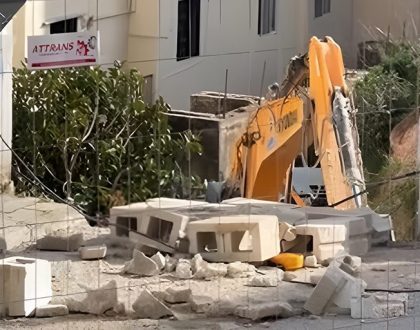
A restaurant that was illegally constructed on public ODZ (Outside Development Zone) land near Gozo’s heliport in Xewkija has mysteriously vanished from the Planning Authority’s (PA) online mapping system. This disappearance is particularly concerning as it coincides with the owner’s application to establish a new eatery in the same vicinity. The situation has raised serious questions about transparency, regulatory oversight, and potential favoritism in the enforcement of planning laws.
The establishment in question, Ta’ Pulla kiosk, has long been a point of contention due to its illegal status. Owned and operated by businessman Manuel Xerri, the restaurant remained operational for years despite lacking the required permits. However, rather than being subject to enforcement action, it now appears to have simply disappeared from official planning records.
A Controversial Owner with a Checkered Past
Xerri, a former soldier who transitioned into the hospitality industry, has been at the center of controversy for reasons beyond his business ventures. He was recently handed a lifetime ban from football after being found guilty of match-fixing. The case, which gained national attention, involved an attempt to bribe an opposing team’s goalkeeper with a secure government job in return for manipulating a football match’s outcome.





















Despite this scandal, Xerri has maintained a significant presence in Gozo’s restaurant scene. His business portfolio includes several dining establishments in Xewkija, such as il-Pjazza (formerly Rendez Vous), Rotunda Café, and another eatery operating from a property owned by the Xewkija parish. His ability to continue expanding his businesses despite his legal troubles has led to speculation about his political connections and potential preferential treatment from authorities.
A New Application Raises Questions
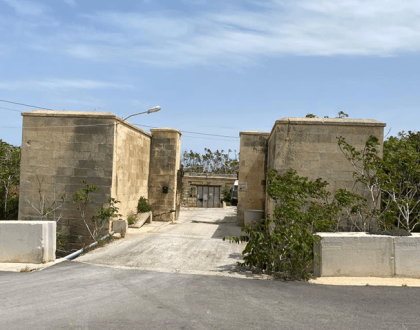
Instead of seeking to legalize his existing illegal structure, Xerri has submitted a fresh application (PA02216/24) for a new kiosk on ODZ land just across the street. The fact that the Planning Authority’s online map no longer shows the existing illegal structure has further complicated the matter. With no visible record of unauthorized development in the area, it appears as if no wrongdoing ever took place, potentially giving Xerri an advantage in securing approval for his new venture.
Further fueling concerns, documents submitted with the new application contain photographs that carefully avoid capturing the illegal restaurant. This has led to speculation that efforts are being made to obscure the true nature of the site’s history and facilitate approval of the new establishment.
Lack of Objections from Government Entities
Despite the contentious nature of the application, no government body has raised objections to the proposed development. Entities that have reviewed the case, including the Environmental Health Directorate—operating under Gozo’s Health Minister Jo Etienne Abela—and the Planning Authority itself, have offered no resistance to the commercial use of ODZ land.
This absence of objections has raised eyebrows, particularly among environmentalists and activists who have long warned against the gradual erosion of ODZ protections. The apparent ease with which public land is being repurposed for private commercial interests has reinforced concerns that Malta’s planning regulations are being selectively enforced.
Strong Opposition from Environmental Groups
Environmental NGO Din l-Art Ħelwa has been vocal in its opposition to the new kiosk application, arguing that ODZ land should be preserved rather than commercialized.
“The proposed placement of a kiosk selling beverages and snacks in ODZ represents unnecessary commercialization that threatens the character and purpose of the area,” the organization stated in its formal objection.
The NGO further warned that approving this project could set a precedent that paves the way for additional commercial developments on protected rural land. The transformation of ODZ zones into business sites undermines environmental conservation efforts and could lead to unchecked urban sprawl in areas meant to remain untouched.
Allegations of Favoritism and Political Influence
Xerri’s business dealings have often been linked to influential political figures, adding another layer of controversy to the case. His match-fixing scandal, for example, exposed his connections to government officials when it was revealed that he had promised a rival team’s goalkeeper a permanent government position in exchange for manipulating a football match’s outcome.
Further reinforcing concerns of political favoritism is the fact that Qala Saints’ president, Noel Mizzi, also serves as the personal driver for Gozo Minister Clint Camilleri. This connection has raised suspicions that Xerri’s ventures are being treated with leniency by the authorities, allowing him to continue his business operations with minimal scrutiny.
Selective Enforcement of Planning Regulations
The case has sparked renewed debate over the inconsistent enforcement of Malta’s planning laws. Many are questioning why the illegal restaurant in Xewkija was allowed to operate for so long without intervention. The fact that the Planning Authority has now erased any digital record of its existence adds to the perception that planning laws are being applied selectively, depending on the individual or entity involved.
If Xerri’s new application is approved without any consequences for his past violations, it could further damage public trust in Malta’s planning system. Critics argue that such cases demonstrate how well-connected individuals can circumvent regulations while others face strict enforcement and penalties for even minor infractions.
Wider Implications for Malta’s Urban Planning
The controversy surrounding Ta’ Pulla kiosk is indicative of a broader problem within Malta’s urban planning framework. The apparent failure to take action against unauthorized developments, coupled with the selective application of planning regulations, has led to growing public discontent. Many fear that unless significant reforms are made, Malta’s ODZ policies will continue to be undermined, leading to unchecked commercial exploitation of public land.
The case also highlights concerns about transparency within the Planning Authority. If an illegal structure can disappear from public records without explanation, it raises serious questions about the integrity of the system. Activists and opposition figures are calling for increased oversight and stricter enforcement mechanisms to prevent similar incidents from occurring in the future.
The Road Ahead: What Happens Next?
The Planning Authority has yet to issue a final decision on Xerri’s latest application. However, the case has already attracted significant media attention, and the outcome is likely to be closely scrutinized by environmental groups, opposition politicians, and concerned citizens.
If the new kiosk is approved without addressing the status of the illegal restaurant, it could further erode confidence in Malta’s planning system. On the other hand, if authorities take decisive action to enforce existing regulations, it could mark a turning point in the country’s approach to land use and environmental protection.
The coming weeks will be critical in determining whether this case serves as another example of regulatory loopholes being exploited or if it leads to long-overdue reforms in Malta’s planning sector.
Conclusion
The case of Ta’ Pulla kiosk raises serious concerns about the integrity of Malta’s planning system and the selective enforcement of regulations. The disappearance of an illegal restaurant from official records just as its owner applies for a new development on ODZ land suggests a troubling lack of transparency. Furthermore, the absence of objections from government entities, despite clear environmental and legal concerns, fuels suspicions of favoritism and political influence.
As Malta continues to grapple with urban planning challenges, this case serves as a crucial test of whether authorities will uphold environmental protections and fair governance or allow well-connected individuals to exploit regulatory loopholes. The outcome of this controversy will not only determine the fate of the new kiosk but could also shape future policies on land use and development in Malta.
FAQs
What is the controversy surrounding the illegal restaurant in Xewkija, Gozo?
An illegally built restaurant on ODZ land has vanished from the Planning Authority’s online map just as its owner applies for a new kiosk nearby.
Who owns the illegal restaurant in Gozo?
The restaurant, known as Ta’ Pulla kiosk, is owned by Manuel Xerri, a former soldier turned businessman with a controversial history.
Why was Manuel Xerri banned from football for life?
Xerri was found guilty of football corruption after attempting to bribe a rival player with a government job in exchange for match-fixing.
What is an ODZ zone, and why is it important?
ODZ (Outside Development Zone) land is protected from development to preserve the environment and prevent over-commercialization.
Has the Planning Authority taken action against the illegal kiosk?
No enforcement action was taken, and the structure has now disappeared from the Planning Authority’s online map, raising transparency concerns.
What objections have been raised against the new application?
Environmental NGO Din l-Art Ħelwa opposes the project, arguing that commercializing ODZ land sets a dangerous precedent for further encroachments.
What role do government entities play in the approval process?
Despite the controversy, all consulted government entities, including the Environmental Health Directorate and the PA, have raised no objections.
Does Manuel Xerri have political connections?
Yes, he has ties to government officials, including the president of his football club, who also serves as the Gozo Minister’s driver.
What impact does this case have on Malta’s planning system?
The case highlights concerns over selective enforcement, lack of transparency, and the commercialization of protected public land.
What are the next steps in the approval process?
The Planning Authority has yet to issue a decision, but the case is being closely monitored by activists and environmental organizations.

Ash
I like to keep it short. I am a writer who also knows how to rhyme his lines. I can write articles, edit them and also carve out some poetic lines from my mind. Education B.A. - English, Delhi University, India, Graduated 2017.