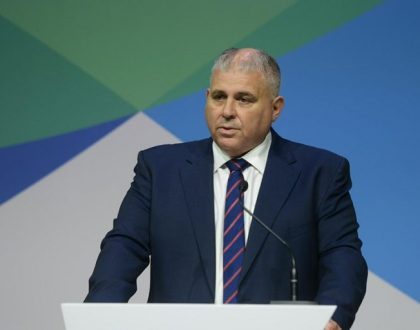
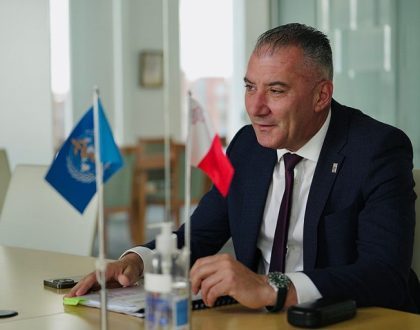
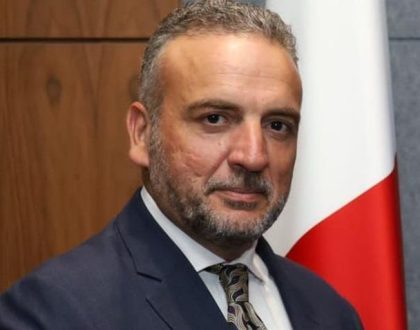
John Borg returns to Ministry for Gozo after retirement

John Borg, the former Permanent Secretary of the Ministry for Gozo, has been reappointed to the public payroll as a politically appointed “person of trust” shortly after reaching the statutory retirement age of 65. This decision has reignited debates around governance, transparency, and accountability in Malta’s public administration.
Despite qualifying for a privileged pension, Borg’s return to a public role includes additional financial benefits, prompting concerns about the appropriateness of rehiring a senior official whose tenure had previously been questioned. The arrangement has drawn criticism from civil servants, opposition figures, and governance advocates, who argue that it raises questions about merit, political favoritism, and the standards expected of senior public office holders.
Career overview and tenure as Permanent Secretary
John Borg was first appointed Permanent Secretary of the Ministry for Gozo in 2014. Over the following decade, he became one of the longest-serving senior civil servants in the Maltese public sector. Throughout his tenure, he served under multiple ministers and successive administrations, maintaining continuity in leadership during a period of significant organizational and administrative changes in the ministry.





















Borg's responsibilities as Permanent Secretary included overseeing the administration of government policies for Gozo, managing public employees, monitoring compliance with procurement regulations, and representing the ministry in international engagements. His experience made him a key figure in the day-to-day functioning of the ministry, but it also placed him under scrutiny for decisions related to public spending, procurement, and administrative oversight.
National Audit Office findings
During Borg’s tenure, concerns were raised regarding the ministry's internal procedures and compliance with public sector rules. Audit reports highlighted irregularities in procurement practices, staff management, and financial oversight. Instances included the splitting of contracts into smaller amounts to circumvent legal thresholds for public tenders, the widespread use of direct orders, and unrecorded overtime payments for employees.
Additionally, the audit reports suggested that internal controls were often weak and that the culture within the ministry favored expediency over compliance. These findings contributed to questions regarding the suitability of Borg’s leadership in ensuring transparent and accountable governance.
Reappointment as a person of trust
Shortly after retiring from his role as Permanent Secretary, John Borg was rehired under a new contract approved by Gozo Minister Clint Camilleri. Unlike a typical consultancy or advisory role, the arrangement designates him as a “person of trust,” a politically appointed position that allows him to continue working for the ministry while receiving a significant salary.
The new contract outlines that Borg will work 25 hours per week and will continue representing the Ministry for Gozo and Planning in international forums, particularly the Conference of Peripheral and Maritime Regions (CPMR). His part-time role carries an annual salary of €46,000, in addition to an “expertise allowance” of €12,500, a government-paid vehicle, and other perks.
Officials within the ministry describe the clauses in the contract as unusual, particularly provisions that compensate Borg for recalling “unwritten arrangements” or “longstanding practices,” which are typically documented in official records. Critics have argued that the arrangement seems excessive, given that much of the work falls within tasks usually covered by civil service staff and formal documentation.
Justification for reappointment
The official rationale for retaining Borg in the ministry emphasizes his decade-long experience representing Gozo in the CPMR, a European organization focused on promoting cooperation among peripheral and maritime regions. Minister Camilleri reportedly accepted Borg’s request to continue in this capacity rather than appointing a new official.
While his experience in the CPMR may have value in providing continuity, critics argue that the justification does not fully align with the significant compensation offered or the exceptional privileges included in the contract. Questions remain over whether the retention of Borg’s expertise could have been achieved through a more transparent and cost-effective mechanism.
Financial and administrative implications
The financial implications of Borg’s reappointment extend beyond his personal remuneration. By reintroducing a recently retired senior official with access to additional pension entitlements, the arrangement effectively allows Borg to draw multiple benefits simultaneously. This practice has prompted discussion regarding equity in public sector employment, particularly in light of fiscal pressures and public scrutiny over government spending.
Administratively, the rehiring also raises questions about the distribution of responsibilities within the ministry. Civil servants have expressed concern that the arrangement may blur lines of authority, create confusion in reporting structures, and undermine the appointment of younger or less politically connected professionals who might otherwise have opportunities to assume leadership roles.
Public and political reactions
Opposition perspectives
The reappointment has sparked criticism from opposition parties, who have questioned the transparency of the hiring process and the justification for retaining an individual with a contentious record. Some argue that the move may set a precedent where political loyalty or previous service takes precedence over merit and compliance with regulations, potentially eroding public confidence in government institutions.
Opposition figures have highlighted that while institutional knowledge is important, it should not be rewarded disproportionately, particularly when the individual’s prior tenure was associated with governance concerns. The criticism underscores broader anxieties about accountability in senior public appointments.
Civil service perspectives
Within the civil service, the rehiring has also raised concerns about workplace culture and fairness. Employees have expressed apprehension that the appointment could reinforce perceptions of favoritism or compromise efforts to improve compliance with regulations. There is concern that younger staff members or reform-minded officials may feel that adherence to rules is secondary to political connections, potentially undermining morale and effectiveness within the ministry.
Governance and transparency concerns
The decision to reappoint Borg has reignited debates about governance, transparency, and accountability in Malta’s public administration. Civil service observers have emphasized that public trust depends on clear processes, adherence to regulations, and a merit-based approach to appointments.
While experience and institutional knowledge are valuable, critics argue that the current arrangement blurs the distinction between political appointments and career civil service positions. This may weaken oversight mechanisms and reduce incentives for transparency, as political decisions could override administrative norms.
The role of the Conference of Peripheral and Maritime Regions
Borg’s continued representation of the Ministry in the CPMR has been cited as a key reason for his reappointment. The CPMR is a European organization that facilitates dialogue and cooperation among regions on issues including economic development, infrastructure, and maritime policy.
Although participation in international forums can provide insights and networking opportunities, the tangible benefits of Borg’s continued involvement are not always evident. Critics question whether the financial and administrative arrangements surrounding his role in the CPMR are justified, particularly given the modest influence of the organization on Malta’s national or regional policymaking.
Broader implications for public sector reform
The rehiring of a senior civil servant under politically influenced terms has broader implications for public sector reform in Malta. It highlights the challenges faced in balancing institutional knowledge with principles of transparency, accountability, and meritocracy.
The case of John Borg underscores the need for clear rules regarding post-retirement appointments, remuneration, and the handling of institutional knowledge. Ensuring that such arrangements are consistent with public expectations is crucial for maintaining confidence in governance structures and the proper functioning of civil service institutions.
Conclusion
John Borg’s reappointment as a “person of trust” within the Ministry for Gozo represents a complex intersection of experience, political decision-making, and public sector governance. While the government emphasizes continuity and expertise as reasons for the arrangement, critics argue that it raises important questions regarding transparency, accountability, and equity.
As Malta continues to address challenges in public administration and governance, cases like Borg’s highlight the importance of implementing clear standards for appointments, compensation, and oversight. Upholding principles of integrity, fairness, and public trust remains essential to ensuring that government institutions serve the best interests of the citizens they are intended to represent.
FAQs
What is John Borg’s new role in the Ministry for Gozo?
John Borg has been rehired as a politically appointed “person of trust,” working part-time while representing the Ministry in international forums.
Why has his reappointment sparked controversy?
Critics argue that rehiring a retired official with a contentious record raises questions about transparency, governance, and merit-based appointments.
What financial benefits does Borg receive?
He earns €46,000 annually for part-time work, plus a €12,500 expertise allowance, a government-paid vehicle, and other perks.
Why was Borg initially censured?
During his tenure as Permanent Secretary, concerns were raised about breaches of procurement rules and other administrative irregularities.
What is the Conference of Peripheral and Maritime Regions (CPMR)?
The CPMR is a European organization that promotes dialogue and cooperation among peripheral and maritime regions.
How long did Borg serve as Permanent Secretary?
He served for over a decade, from 2014 until his retirement in 2025.
What are the concerns within the civil service?
Civil servants worry the rehiring could reinforce perceptions of favoritism and undermine efforts to promote compliance and accountability.
Does Borg’s rehiring affect public trust?
Many critics argue that it could erode public trust by signaling tolerance of political patronage over merit-based governance.
Could the ministry have appointed a successor instead?
Yes, critics suggest that appointing a successor would have been a more transparent and cost-effective way to retain institutional knowledge.
What broader lessons does this case highlight?
It underscores the need for clear rules regarding post-retirement appointments, accountability, and transparency in public sector governance.

Claire
A highly motivated, results-driven, enthusiastic and ambitious writer. I can offer you well researched and high-quality article writing on any topic for your website or blog and can as well re-write your existing web content.