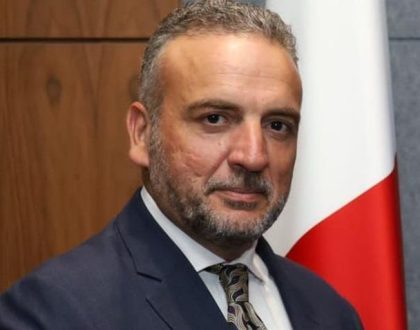
Jon Jon Dalli appointed to LESA petitions board role

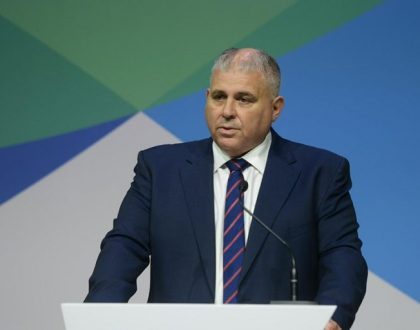
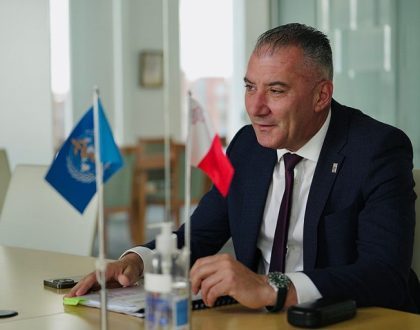
John Mary Dalli, more widely known by his nickname Jon Jon, has recently been appointed to a sensitive part-time role within Malta’s enforcement system. The decision was taken by Home Affairs Minister Byron Camilleri, who named Dalli as a member of the Board of Petitions at the Local Enforcement System Agency (LESA).
The appointment gives Dalli the authority to assess public petitions requesting a pardon from traffic fines issued by LESA wardens. While the position is part-time, it carries influence over matters that directly affect ordinary citizens, as well as a remuneration package of €11,000 annually.
What makes the appointment notable is that Dalli’s only evident qualification for the role is his standing as a familiar local figure in Gudja, which falls within Minister Camilleri’s electoral district.





















How the LESA petitions process works
Although it is referred to as a “board,” the Board of Petitions at LESA does not function as a collective decision-making body. Instead, each appointee operates independently. Every week, members are given a set of petitions submitted by members of the public. These petitions typically involve requests for leniency or the cancellation of fines issued for traffic and enforcement violations.
The responsibility of each appointee is to review the circumstances of the request and decide whether the petition should be accepted or rejected. In effect, this means that individuals like Jon Jon Dalli have direct discretion over whether a fine imposed by the state is upheld or withdrawn.
Given the authority vested in these decisions, appointments to the petitions board carry a degree of public interest and scrutiny. Questions often arise as to whether appointees have been selected on the basis of merit, qualifications, or political affiliation.
Political and partisan connections
The appointment of Dalli has raised eyebrows primarily because of his family background and his long association with Malta’s Labour Party.
Jon Jon Dalli is the son of John Dalli, a former Labour Member of Parliament and a close associate of the late Prime Minister Dom Mintoff. His family has historically wielded influence in Gudja and the surrounding area, often mobilising support for Labour candidates during elections.
The broader Dalli family is well known in business and political circles. Jon Jon’s brother, Patrick, is married to Helena Dalli, a former Labour Minister who went on to serve as the European Commissioner for Equality. His father, John, was also known for his career as a developer and contractor.
Until recently, Jon Jon Dalli managed the Hunters’ Tower restaurant in Marsaxlokk, a business previously associated with his father. Following the sale of the property for development, Dalli has remained active in property-related ventures, including leasing and development.
The presence of such strong partisan ties has led political observers to suggest that the appointment may have been motivated more by electoral considerations than by administrative necessity.
Other comparable appointments
Jon Jon Dalli is not the only figure with political or media links to have been appointed to the LESA petitions structure.
Other appointees have included:
- Silvio Scerri, Chairman of Labour’s ONE TV and Chief Executive of Xjenza Malta.
- Nicole Buttigieg, a former Labour Party reporter who was named to the board by Minister Owen Bonnici in 2018.
Such appointments have drawn scrutiny, with critics arguing that the process risks being perceived as a means of rewarding loyalty or consolidating political networks rather than ensuring impartial adjudication of public petitions.
Minister Camilleri’s electoral strategy
The political backdrop to Dalli’s appointment is the contest within the fourth electoral district, where Minister Byron Camilleri is seeking to consolidate support ahead of future elections.
The district is shaping up to be highly competitive. In recent internal polls commissioned within Labour Party circles, former Deputy Prime Minister Chris Fearne has emerged as the leading candidate. Fearne announced his intention to contest again despite his resignation in 2024 and ongoing legal proceedings concerning allegations connected to the hospitals concession scandal.
Behind Fearne, Justice Minister Jonathan Attard and Byron Camilleri are polling closely, while Transport Minister Chris Bonett is reportedly struggling to maintain traction. The re-entry of Fearne into the district race has heightened concerns that one of the incumbent ministers may fail to secure re-election.
Minister Camilleri’s efforts to strengthen ties with traditional Labour-supporting families, such as the Dallis in Gudja, are therefore seen as part of a broader electoral strategy to secure votes in an increasingly fragmented landscape.
Role of family influence in Maltese politics
The Dalli family’s historical role in Gudja reflects a wider phenomenon in Maltese politics: the enduring importance of familial and local networks. In small, tightly knit communities, the influence of prominent families often extends beyond business into politics. Their ability to mobilise electoral support makes them valuable allies for politicians seeking to secure district seats.
This dynamic has contributed to ongoing debates about political patronage, meritocracy, and transparency in appointments to state-linked roles. While family loyalty and local visibility may enhance electoral prospects, critics argue that state institutions should avoid appointments that risk being perceived as partisan favours.
Wider implications for governance
The appointment of figures such as Jon Jon Dalli raises broader questions about governance and institutional integrity. The LESA petitions process plays a role in ensuring fairness and proportionality in the enforcement of traffic laws. However, if the individuals empowered to decide on such petitions are perceived as being politically aligned, doubts may arise regarding the impartiality of their decisions.
Moreover, given that the Board of Petitions members exercise discretion individually rather than collectively, the public may reasonably expect that such appointments be made transparently, with clear criteria for qualification and accountability.
Future outlook for the fourth district
The forthcoming electoral contest in the fourth district will be closely monitored, not only because of the high-profile candidates involved but also because of what it signals about internal dynamics within the Labour Party.
With Social Accommodation Minister Roderick Galdes also contesting, though his base lies primarily in Qormi within the sixth district, the competition for seats in the fourth is likely to be intense. Any shift in voter alignment could alter the balance of power among incumbent ministers and challengers.
In this climate, even relatively minor appointments—such as that of Jon Jon Dalli to the LESA Board of Petitions—take on broader political significance. They may reflect not only the government’s approach to local governance but also its strategy for maintaining voter loyalty in contested constituencies.
Conclusion
The appointment of Jon Jon Dalli to the LESA Board of Petitions highlights the intricate intersection of governance, politics, and local influence in Malta. On the surface, the role involves administrative tasks such as reviewing petitions related to traffic fines. Yet, in practice, it reflects broader questions about how appointments are made, what qualifications are deemed necessary, and how political loyalty and family networks continue to shape Maltese public life.
For Minister Byron Camilleri, the move appears to serve a dual purpose: filling an administrative role while simultaneously strengthening ties with a family that has long commanded loyalty within his electoral district. While such decisions may bring short-term political benefits, they also raise legitimate concerns about transparency, meritocracy, and the appearance of impartiality in public institutions.
As Malta approaches another competitive electoral cycle, these issues are unlikely to fade from public debate. Instead, they may serve as a litmus test for how political leaders balance electoral strategy with governance standards. The case of Jon Jon Dalli is therefore more than a single appointment—it is part of an ongoing story about political culture, accountability, and the expectations of fairness within Maltese democracy.
FAQs
What is the LESA Board of Petitions?
It is a structure within the Local Enforcement System Agency where members review public petitions requesting pardons for traffic fines.
How are members of the Board of Petitions selected?
They are appointed by the Home Affairs Minister. The role is part-time and comes with an annual remuneration.
Do board members work together as a group?
No, despite the name, each appointee operates individually, reviewing petitions and deciding on them independently.
What is the role of Jon Jon Dalli on the board?
He has the authority to decide whether fines issued by LESA should be waived or upheld when citizens file petitions for leniency.
Why is the appointment controversial?
Critics highlight that Dalli’s appointment may be based more on political and family connections than on professional qualifications.
Does this affect the impartiality of LESA decisions?
Concerns have been raised that political appointments could create a perception of bias in the handling of public petitions.
Who are some other appointees to the board?
Notable figures include Silvio Scerri, Chairman of ONE TV, and Nicole Buttigieg, a former Labour Party reporter.
How does this tie into the fourth electoral district?
Minister Byron Camilleri, who appointed Dalli, is competing in the district, where family loyalties and local influence are electorally significant.
What role does the Dalli family play in Gudja?
They are long-standing supporters of Labour and influential in local politics, historically mobilising votes for party candidates.
What are the wider implications of this case?
The appointment highlights ongoing concerns about political patronage, transparency in governance, and the influence of family networks in Maltese politics.

Anna Amstill
I am an avid Blogger and Writer with more than 6 years of experience with Content Writing. An Online Marketing expert specializing in Blog writing, Article writing, Website content, SEO specific Keyword content and much more. Education B.A. - business management, York University, Canada, Graduated 2016.