Loyalty over merit in Malta ambassador picks

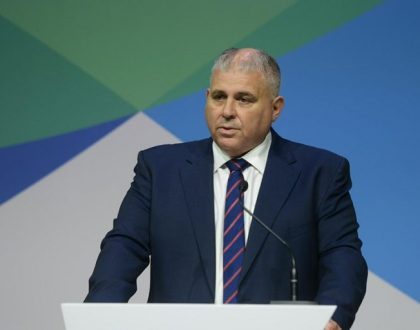
Malta’s foreign policy decisions have once again drawn attention following the nomination of dentist and former Member of Parliament Jeffrey Pullicino Orlando as the country’s non-resident ambassador to Rwanda. The move has raised eyebrows among diplomatic insiders and political observers alike, given Malta’s negligible diplomatic footprint in the East African nation and the growing instability in the region. Pullicino Orlando's appointment will be subject to review by the parliamentary public appointments committee in the coming weeks.
This development highlights several key issues, from political patronage and governmental appointments to Malta’s approach to international diplomacy. The appointment of non-career diplomats to strategic foreign roles continues to fuel debate over meritocracy, transparency, and the politicization of public service.
A political shift from PN to Labour
Jeffrey Pullicino Orlando was first elected to the Maltese parliament under the Nationalist Party (PN) banner. However, his political trajectory took a dramatic turn in the lead-up to the 2013 general election, when he became publicly supportive of the Labour Party, which was poised to win power under Joseph Muscat. The shift earned him the favor of the new administration, eventually resulting in several high-profile government appointments.





















Despite his early prominence in politics, Pullicino Orlando never managed to secure a cabinet position. His political career with the PN was marred by controversy, notably when he attempted to develop a club on environmentally protected land in Mistra, a Natura 2000 site. The backlash from within his own party effectively ended his prospects for advancement within the Nationalist ranks.
After realigning with Labour, he even contested elections under the Labour banner but failed to secure a seat, largely because Labour’s voter base did not fully accept him as a genuine representative of their party values. Nevertheless, his loyalty to the Labour government, particularly through his active presence on social media where he has regularly defended the administration, has not gone unnoticed by those in power.
A long-standing presence on the public payroll
Since Labour’s ascension to government in 2013, Pullicino Orlando has consistently held publicly funded roles. He currently serves as the executive chairman of the National Skills Council, an agency operating under the Ministry of Education. This role earns him an annual remuneration of €70,000.
Prior to this, he was the long-standing head of the Malta Council for Science and Technology (MCST), where he served for thirteen years. His tenure at MCST was marked by efforts to increase Malta’s profile in European research initiatives, although critics argue that his performance was overshadowed by the perception of political patronage.
In addition to his government roles, Pullicino Orlando also maintains his private dental practice in Żebbuġ, raising questions about how he balances a full-time public sector leadership role with private business operations.
The Rwanda connection: strategic or symbolic?
The decision to appoint Pullicino Orlando as Malta’s non-resident ambassador to Rwanda has prompted a wave of speculation, especially given the current geopolitical climate in East Africa. Rwanda’s border tensions with the Democratic Republic of Congo (DRC) have escalated in recent months, raising concerns about potential conflict in the region. The country has also faced criticism over its internal human rights record and its involvement in regional power struggles.
Malta, for its part, maintains only minimal diplomatic and economic ties with Rwanda. There is no embassy or consular representation in either country, and trade relations are virtually non-existent. In light of this, the appointment is seen by many as largely symbolic—an honorific gesture rather than a strategic foreign policy initiative.
Diplomatic sources have indicated that the nomination reflects an effort by Prime Minister Robert Abela to reward political loyalty. Pullicino Orlando has been a vocal supporter of the Labour administration, often posting scathing criticisms of government opponents and defending controversial decisions taken by the ruling party.
Broader trends in ambassadorial appointments
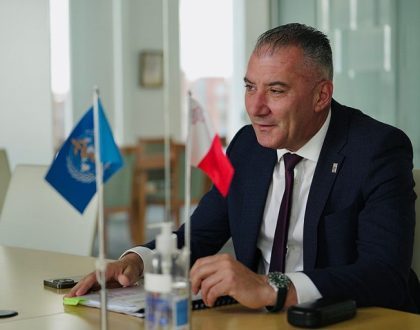
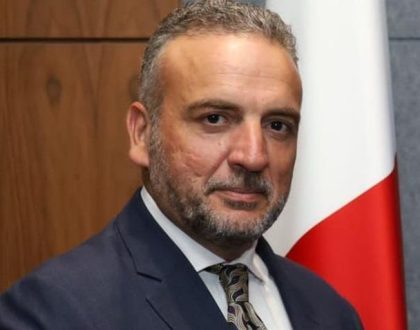
Pullicino Orlando’s nomination is one of several recent diplomatic postings announced by Foreign Minister Ian Borg. These appointments include Labour candidate Lorna Vassallo for the ambassadorship to Cabo Verde, former Transport Malta CEO Jonathan Borg for Panama, former Labour mayor of Xagħra Christian Zammit for Angola, and former Labour International Secretary Marc Vella Bonnici for Iceland.
Critics argue that these nominations reflect a trend of rewarding party loyalists with prestigious foreign assignments, regardless of their background in international affairs or diplomacy. While political appointments are not uncommon in many countries, Malta’s approach has drawn scrutiny due to the apparent lack of transparency and the absence of open competitive processes for such roles.
The government, on the other hand, maintains that ambassadorial appointments are made based on the individuals' abilities to represent Malta effectively and to promote the country’s interests abroad. Still, with a growing number of politically aligned appointees, concerns over nepotism and partisanship remain prevalent.
The parliamentary review process
All ambassadorial nominations must be vetted by the parliamentary public appointments committee before they are finalized. This committee, composed of members from both sides of the political aisle, provides a forum for assessing the qualifications and suitability of nominees.
While the committee holds the power to scrutinize appointments, its influence is largely symbolic when the government commands a majority in parliament. In practice, most nominations are confirmed with limited resistance, particularly when the appointee enjoys the backing of senior government figures.
Nonetheless, the committee proceedings provide an opportunity for public accountability and media scrutiny. Pullicino Orlando’s hearing is expected to draw considerable attention, given his controversial political past and his ongoing dual roles in government and private enterprise.
Implications for Malta’s diplomatic credibility
The nomination of politically connected individuals to ambassadorial posts risks undermining Malta’s credibility on the international stage. Career diplomats, trained in foreign affairs and international negotiations, argue that such appointments can dilute the effectiveness of Malta’s diplomatic engagements.
Furthermore, the symbolic nature of such postings, particularly in countries where Malta lacks a substantial presence or strategic interest, raises questions about the country’s foreign policy priorities. While the establishment of new diplomatic channels can be beneficial, observers suggest that a more coherent and merit-based approach is needed to enhance Malta’s global standing.
Political loyalty versus professional merit
At the core of this issue is the ongoing tension between political loyalty and professional merit in public service appointments. Pullicino Orlando’s case exemplifies how political allegiance can translate into career longevity in the public sector, even in the absence of electoral success or widespread public support.
As Malta continues to navigate its domestic and international challenges, the importance of transparent, accountable governance cannot be overstated. The public’s trust in institutions is closely tied to the perception of fairness and competence in government decisions, particularly those involving high-profile roles.
Conclusion: a nomination that reflects broader governance patterns
The appointment of Jeffrey Pullicino Orlando as Malta’s ambassador to Rwanda, despite the limited relevance of the role and the absence of strong bilateral ties, reflects deeper patterns in Malta’s political and administrative culture. It underscores how personal loyalty and political expediency often outweigh merit-based considerations in the allocation of public roles.
While the government may view the appointment as a reward for service and loyalty, many within the public and diplomatic community see it as a missed opportunity to strengthen Malta’s foreign service with experienced, non-partisan professionals. As the nomination proceeds to the parliamentary review stage, it will serve as a litmus test for how seriously Malta takes the principles of meritocracy, accountability, and good governance.
FAQs
Who is Jeffrey Pullicino Orlando?
Jeffrey Pullicino Orlando is a former Nationalist Party MP who later supported the Labour Party and held multiple government-appointed roles.
What is his current role in government?
He serves as the executive chairman of the National Skills Council, earning €70,000 annually, while also running a private dental practice.
Why was he nominated as ambassador to Rwanda?
He was nominated as a non-resident ambassador, likely as a political reward for his public defense of the Labour government.
Does Malta have strong diplomatic ties with Rwanda?
No, Malta has minimal to no significant diplomatic or economic ties with Rwanda.
Is Pullicino Orlando a career diplomat?
No, he does not have a background in foreign service or international diplomacy.
What controversies has he been involved in?
He attempted to develop protected land in Mistra in 2008, which led to his fallout with the Nationalist Party.
Has he run for office under the Labour Party?
Yes, but he was not elected as Labour voters did not widely embrace him as one of their own.
What other roles has he held?
He was previously the head of the Malta Council for Science and Technology for thirteen years.
How are ambassadorial nominations approved in Malta?
They are reviewed by the parliamentary public appointments committee, although government majorities often secure confirmation.
What concerns have been raised about his nomination?
Critics argue the appointment reflects political patronage and undermines the credibility of Malta’s diplomatic appointments.

Ash
I like to keep it short. I am a writer who also knows how to rhyme his lines. I can write articles, edit them and also carve out some poetic lines from my mind. Education B.A. - English, Delhi University, India, Graduated 2017.