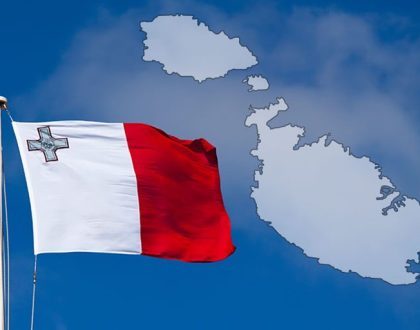
Malta Has Balls! A Masterclass in EU Defiance

If there were an award for the EU’s most audacious member state, Malta would take home the gold every year. This tiny island nation has managed to flip the script on what it means to be a member of the European Union, raking in billions in subsidies while simultaneously telling regulators to buzz off.
Whether it's the iGaming industry, Golden Passport schemes, or its creative approach to financial oversight, Malta has turned bending EU rules into a national sport and gets away with it!
The Art of Playing Both Sides: EU Funds and Defiance
Malta's relationship with the EU is a peculiar one. On the one hand, it has been a net beneficiary of EU funds since joining in 2004, pocketing over €2.4 billion in subsidies. But on the other hand, it continues to operate in direct opposition to the EU’s principles on everything from tax havens to online gambling regulation.





















The country contributes a modest sum to the EU budget, but the return on investment is astronomical. It’s like some teenager borrowing money from their parents while simultaneously breaking curfew every night.
Bill 55: Malta’s Middle Finger to the EU
Then there’s Bill 55, a piece of legal wizardry that effectively shields Malta-based gambling operators from foreign lawsuits. If a German or Austrian player wants to sue a shady online casino licensed in Malta, tough luck, Maltese courts will simply refuse to recognize the ruling.
This is a direct challenge to the Recast Brussels Regulation, which governs cross-border legal enforcement in the EU.
The German gambling regulator (GGL) has already called out Malta, stating that the law “should not be compatible” with EU regulations. Even the European Commission has hinted at legal action.
But does Malta care? Not really.
As long as the iGaming sector continues to bring in billions and fund the island’s lavish economy, EU legal principles are more of a suggestion than an obligation.
The iGaming Industry: A Shell Game at Scale
Malta's economy is heavily reliant on online gambling and the country has perfected the art of licensing dubious operators while pretending to regulate them. A recent #CasinoPapers investigation revealed how Delasport, an international gambling software provider, uses shell companies in Malta and Curaçao to operate hundreds of gambling sites in countries where online casinos are illegal.
These shell company’s obscure true ownership, allowing operators to rake in hundreds of millions of euros from unsuspecting players in Germany, Sweden and Austria markets where such gambling activities are strictly regulated. The same investigation revealed that players were losing six-figure sums, with zero oversight or responsible gambling measures in place.
But Malta's regulator, the Malta Gaming Authority (MGA), insists everything is above board. They even defend Bill 55, arguing that EU law supports the “free movement of services.”
Translation? If an online casino is licensed in Malta, it should be free to operate anywhere in the EU, even if the target country explicitly bans it.
Corruption? Oh, Just a National Tradition
If online gambling is Malta’s economic backbone, then corruption is its nervous system. According to Transparency International’s Corruption Perceptions Index, Malta scored a dismal 51 out of 100, maintaining its lowest ranking ever.
For context, Denmark scores 90, while Hungary, often seen as the EU’s poster child for corruption, sits at 42. Malta’s government, led by Prime Minister Robert Abela, has been embroiled in scandals involving public officials, financial mismanagement and the blocking of transparency laws.
One example? Ministerial asset declarations, which have traditionally been made public for decades, are now mysteriously absent. Abela insists they will be published, just as soon as his administration finishes a “reform.”
Translation? Don’t hold your breath.
The Golden Passport Program: Citizenship for Sale
Malta’s Golden Passport scheme has long been a thorn in the EU’s side. The program allows wealthy foreigners, including Russian oligarchs and controversial business figures, to buy Maltese (and by extension, EU) citizenship for a hefty price tag.
Despite the EU’s efforts to shut it down, Malta continues to run the program under different branding. It’s a simple business model: pay a few hundred thousand euros, get an EU passport and enjoy visa-free travel across Europe.
It’s no surprise that the European Commission has taken Malta to court over this, citing security risks and violations of EU principles.
Laundering Drug Money? Just another Revenue Stream
A recent alert from Canada’s financial intelligence agency (FinTRAC) warns that Malta-based online gambling platforms are being used to launder drug money. Specifically, fentanyl traffickers, who are fueling the opioid crisis, have been using Malta-licensed betting sites to clean their dirty cash.
This is not surprising, given that Malta was previously placed on the FATF’s “grey list” for money laundering concerns. While the country managed to get itself removed, the underlying issues remain unresolved.
Weak enforcement, lax financial regulations and a culture of impunity make Malta a prime location for criminals looking to move illicit funds.
The Debt Crisis: Living Large on Borrowed Money
Despite all this financial trickery, Malta is drowning in debt. The government plans to borrow another €1.5 billion this year, pushing total national debt to nearly €12 billion.
That means that since 2020, Malta’s debt has DOUBLED, an astonishing increase for such a small economy.
Finance Minister Clyde Caruana insists the economy is growing, but if things are so great, why is Malta borrowing at record levels? The answer: spending is out of control and without EU funds; the country would struggle to stay afloat.
Malta: The EU’s Problem Child
So, what does all of this mean?
- Malta receives billions from the EU while actively undermining its laws
- The iGaming sector operates like a legal gray zone, exploiting weak oversight
- Corruption is rampant, with little accountability for government officials
- The country’s financial system is a magnet for money laundering
- Malta defies EU courts with Bill 55, shielding its gambling industry from lawsuits
And yet, Brussels continues to send checks, hoping Malta will play by the rules.
Spoiler alert: it won’t.
As long as there’s money to be made, Malta will continue outsmarting the EU, operating in the gray areas of the law while profiting from legal loopholes and weak enforcement. The European Commission may huff and puff, but at the end of the day, Malta knows it has the upper hand.
After all, if there’s one thing Malta has, it has balls.
If you are investigating financial misconduct or corporate practices of Malta’s iGaming sector and its legal loopholes, TRIDER.UK is here to provide the expertise you need. With extensive experience in investigative research, we specialize in uncovering hidden corporate networks, analyzing regulatory breaches and profiling legal frameworks that allow companies to operate beyond the reach of enforcement.
Don’t let shell companies, money laundering risks and legal loopholes obscure the truth. Contact TRIDER to see how we can support you: [email protected]
FAQs
Why does Malta receive significant EU subsidies?
Malta has been a net beneficiary of EU funds since joining in 2004, receiving over €2.4 billion to support its economy and development.
What is Bill 55, and why is it controversial?
Bill 55 protects Malta-based gambling operators from foreign lawsuits, defying EU regulations on cross-border legal enforcement.
How does Malta’s iGaming industry operate within the EU?
Malta licenses gambling operators under the premise of “free movement of services,” allowing them to target EU countries, even where gambling is restricted.
Why is Malta considered a tax haven?
Malta’s tax system offers substantial benefits to foreign companies, enabling them to pay significantly lower tax rates than in other EU nations.
What is the Golden Passport scheme?
Malta sells EU citizenship to wealthy foreigners, a practice the European Commission opposes due to security and integrity concerns.
How is Malta linked to money laundering?
Reports indicate that Malta-based gambling sites have been used to launder illicit funds, including money from international drug trafficking.
Why is corruption a major issue in Malta?
Malta ranks low on Transparency International’s Corruption Perceptions Index, with scandals involving financial mismanagement and lack of transparency.
Is Malta’s national debt a concern?
Malta’s debt has doubled since 2020, with increasing reliance on borrowing despite claims of economic growth by the government.
How does the EU respond to Malta’s regulatory defiance?
The European Commission has raised legal challenges against Malta’s practices but continues to provide financial support.
What impact does Malta’s financial policies have on the EU?
Malta’s policies create regulatory loopholes that undermine EU financial and legal systems, causing tensions within the bloc.

Michael
With nearly 30 years in corporate services and investigative journalism, I head TRIDER.UK, specializing in deep-dive research into gaming and finance. As Editor of Malta Media, I deliver sharp investigative coverage of iGaming and financial services. My experience also includes leading corporate formations and navigating complex international business structures.