Malta parliament debates new electoral boundaries

The Maltese Parliament has commenced a heated debate regarding proposed changes to the country’s electoral district boundaries. These revisions, put forward by the Electoral Commission, are prompted by constitutional obligations and demographic shifts that have emerged over recent years. At the heart of the debate is a fundamental question: How should Malta’s electoral map evolve to preserve fairness, representation, and democratic integrity?
Population imbalances across districts have created a necessity for redistribution. The Constitution mandates that each of the 13 districts — 12 on the main island and one in Gozo — must not deviate more than 5% above or below the national average in terms of the number of registered voters. The Electoral Commission, tasked with upholding this requirement, has produced two contrasting reports: a majority report advocating for minimal adjustments, and a minority report proposing a more extensive overhaul.
Government’s position: Endorsing minimal change for stability
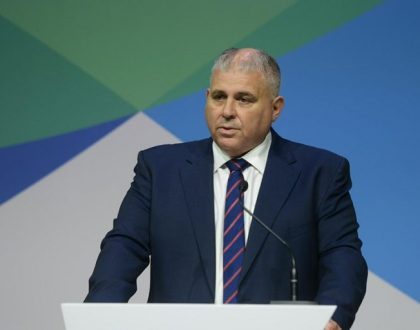
Social Policy Minister Michael Falzon opened the parliamentary debate by offering historical context to Malta’s unique electoral framework. He described the evolution of the Single Transferable Vote (STV) system in Malta, a legacy of British colonial administration. While originally designed to emphasize voter preference for individual candidates over political parties, it remains the cornerstone of the nation’s democratic process.





















Falzon noted that for decades Malta’s electoral law did not formally acknowledge political parties — a reality that only changed in 1984. Even now, the system remains largely candidate-driven, a distinguishing feature that complicates boundary reform debates.
He recounted the transformation of the country’s electoral framework through the 1964 Independence Constitution, which allowed substantial voter variances between districts. This occasionally led to unequal representation, with some districts electing six members of parliament and others five. To rectify this imbalance, the 1974 Republican Constitution imposed stricter standards, creating 13 districts of equal size — each electing five MPs — with limited deviation from the average number of voters.
However, these safeguards did not eliminate all irregularities. Falzon recalled the 1981 general election when the Nationalist Party (PN) received the majority of votes but failed to win a majority of seats — triggering a political crisis. This led to further constitutional amendments in 1987 to ensure that the party with an absolute majority of votes would receive enough additional seats to secure a governing majority.
Subsequent amendments before the 1996 and 2008 elections further reinforced the proportionality of the system. Notably, Gozo was guaranteed to remain a single district regardless of population variances, reflecting its distinct regional identity.
The majority report: A case for continuity and constitutional adherence
Falzon defended the majority report’s preference for minimal district reconfiguration. Under this proposal, approximately 21,000 voters would be affected. He argued that this approach aligns with constitutional standards and preserves the geographic coherence of districts, avoiding major upheaval.
He sharply criticized the minority report, which would impact over 186,000 voters — more than half of Malta’s electorate — calling it an unjustified and disruptive plan. Falzon stated that such a dramatic reshuffle would disregard constitutional limits and disrupt the geographical contiguity of districts.
Specifically, Falzon noted that districts 9 and 10 require additional localities to remain compliant with constitutional thresholds. He added that District 3 already exceeds the permissible 5% variance, highlighting that even under the majority report, adjustments are essential.
Further, he emphasized that the majority report includes 193 points of geographic contact between adjacent localities, compared to only 163 in the minority proposal. Though this metric is not a formal constitutional requirement, it reinforces the logic of maintaining coherent, connected districts.
Falzon implied that even among PN candidates, there is silent approval of the majority report, as it avoids creating electoral disadvantages for specific constituencies.
Opposition’s stance: A call for fairness and logical districting
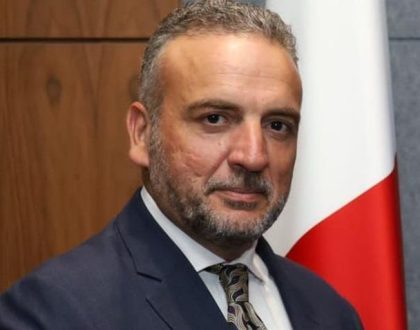
PN MP Beppe Fenech Adami countered the government’s position by drawing attention to Malta’s electoral history, particularly the gerrymandering controversies of the 1980s. According to him, deliberate manipulation of district lines had previously produced “perverse” results that undermined democratic legitimacy.
Fenech Adami warned that despite improvements in electoral laws, the potential for disproportionate outcomes still exists — especially if a third party gains parliamentary representation. He cautioned that the current system, while robust in a two-party environment, may not withstand the complexities of a multiparty contest.
In this context, the PN supports the minority report. The proposal calls for a thorough realignment of district boundaries with an emphasis on maintaining the integrity of localities. Fenech Adami said this would ensure that voters remain within logical and contiguous electoral units, avoiding the arbitrary fragmentation of communities.
Criticism of the current proposals
Fenech Adami criticized specific changes within the Commission’s majority report. He questioned the logic of pairing localities like Pietà with Għargħur or dividing Birkirkara — Malta’s largest locality — between multiple districts. According to him, splitting 4,177 voters from Birkirkara to join areas like Marsa, Floriana, and Valletta undermines geographic and cultural coherence.
Similarly, he objected to the division of Naxxar, which sees around 6,000 voters moved to Birkirkara’s constituency. This reshuffling, he argued, dilutes voter representation and appears to favor Labour Party interests by weakening PN strongholds.
He claimed that these changes result in “perverse outcomes” by redistributing votes from traditionally PN-leaning areas and bolstering Labour dominance in key districts. Fenech Adami cited the case of 4,000 voters from a PL-supporting area of Birkirkara being reassigned to District 1, weakening PN’s presence in District 8.
Additional concerns included the removal of Pietà from Gwardamangia and the attachment of parts of Naxxar to coastal urban areas like Sliema and St. Julian’s, which have distinct socio-political profiles.
Fenech Adami argued that the process must be reset. “People need peace of mind that their vote will be reflected in Parliament, and that we will not face a crisis like in the past,” he said.
The minority report: An alternative vision
The minority report, submitted in Parliament by the PN, outlines an alternative set of electoral districts that aims to preserve all localities intact. The only exceptions are Madliena and Swieqi, where the proposal acknowledges practical constraints.
According to Fenech Adami, these proposals respect constitutional principles: minimal variance in voter numbers across districts, geographic continuity, and the avoidance of gerrymandering. He called for a comprehensive reassessment by the Electoral Commission, arguing that the existing plan undermines public trust in democratic processes.
“We must sit down properly and send this proposal back to the commission because these plans fail to respect the fundamental principles of democracy,” he concluded.
Conclusion
The ongoing debate over Malta's electoral district boundaries reflects the enduring tension between political strategy and constitutional obligation. While the Labour Party supports a cautious approach that limits disruption, the Nationalist Party advocates for a more comprehensive restructuring to preserve the integrity of localities and ensure fairer representation.
At the core of the dispute lies a broader question about the future of Maltese democracy: how to maintain proportionality, avoid historical pitfalls like gerrymandering, and uphold public trust in the electoral process. As demographic realities evolve, the need for periodic boundary adjustments is inevitable. However, such reforms must be grounded in legal principles, transparent methodologies, and respect for the electorate’s right to equal and meaningful participation.
The parliamentary discussion underscores the importance of consensus in electoral matters. Without it, changes risk being perceived as partisan rather than principled. As the debate continues, it remains essential for policymakers to engage constructively, guided not by political expediency, but by the democratic values and constitutional safeguards that underpin Malta’s representative system.
FAQs
What is the Single Transferable Vote (STV) system used in Malta?
STV allows voters to rank individual candidates by preference, promoting personal choice over party affiliation. It's a candidate-centric model.
Why are Malta's electoral boundaries being reviewed?
Population shifts and constitutional requirements necessitate periodic reviews to ensure equal voter representation across districts.
What are the key differences between the majority and minority reports?
The majority report proposes minimal changes, affecting around 21,000 voters, while the minority report suggests a major overhaul impacting over 186,000 voters.
Why is Beppe Fenech Adami critical of the majority report?
He argues it fragments traditional localities and distorts voter representation, potentially favoring the Labour Party in certain districts.
How does the Constitution regulate electoral boundaries?
Each district must be within 5% of the average number of registered voters, and should consist of geographically adjacent localities.
What happened during the 1981 election in Malta?
The PN won the majority of votes but not the majority of seats, leading to significant political unrest and later constitutional amendments.
Why is Gozo treated as a special electoral district?
Despite population variance, Gozo remains a single district to protect its regional identity, as per the 2008 constitutional amendments.
What is the main concern with splitting localities like Birkirkara and Naxxar?
Such divisions disrupt geographic and cultural coherence and can manipulate electoral outcomes by redistributing voter bases.
Can the current system handle more than two political parties?
Not effectively; proportionality guarantees are designed for a two-party system. A third party could disrupt the seat-vote balance.
What is the PN proposing as a solution?
The PN’s minority report calls for logical, locality-based districts that maintain geographic integrity and ensure fair representation.

Ash
I like to keep it short. I am a writer who also knows how to rhyme his lines. I can write articles, edit them and also carve out some poetic lines from my mind. Education B.A. - English, Delhi University, India, Graduated 2017.