Malta Shelves Controversial Cash for Licence Traffic Scheme
Malta's ambitious and highly publicised plan to pay residents €25,000 for surrendering their driving licence and vehicle registration plate has been officially placed on hold, confirming previous reporting by The Shift. The confirmation came from Minister for Transport, Infrastructure and Capital Projects Chris Bonett, during a recent press briefing addressing the status of 45 traffic mitigation measures announced earlier this year.
Initially introduced in March 2025 as the flagship initiative of Bonett’s strategy to reduce the number of private cars on Malta’s congested roads, the cash-for-licence scheme has since encountered considerable bureaucratic and political resistance. The most significant obstacle appears to have come from Finance Minister Clyde Caruana, whose ministry refused to release the €15 million in public funds required to implement the plan.
This internal government resistance effectively stalls what was once promoted as a key innovation in Malta’s approach to traffic reduction. According to multiple government insiders, the current status of the initiative now renders it almost a non-starter, with Transport Malta officials describing the programme as “a dead proposal.”





















Lack of funding or lack of faith?
During the press conference, Minister Bonett insisted that the initiative’s delay is not attributable to funding problems but instead to a strategic decision to reassess the programme’s scope and execution model. However, his reluctance to provide a revised timeline—despite the government’s original promise to launch the scheme by the end of June—suggests deeper structural disagreements.
In lieu of full implementation, Bonett said the scheme may still go forward in the form of a limited pilot project. This pilot would only be available to specific demographic groups rather than all licence holders, deviating from the scheme’s original universal accessibility promise.
Such selective eligibility has raised early concerns among legal observers and stakeholders, with some warning that, if reintroduced in its scaled-down version, the measure could face legal scrutiny on grounds of potential discrimination. While the Transport Ministry has not commented officially on this possibility, internal sources indicate that such risks are contributing to the hesitancy surrounding the scheme's revival.
Cabinet’s cautious stance and internal criticism
According to reporting by The Shift and additional sources familiar with the cabinet’s deliberations, Minister Bonett’s original traffic reduction package was met with considerable scepticism by other members of government. Several ministers reportedly described the cash-for-licence idea as poorly conceived and criticised it for risking the misuse of public resources without delivering meaningful results.
Despite these concerns, Prime Minister Robert Abela initially stood by Bonett, reasoning that the newly appointed minister must be given leeway to show initiative in tackling the country’s worsening traffic problem. Insiders note that while Abela did not wholeheartedly endorse the proposal, his support was essential in preventing its outright rejection at the early stages.
Still, the absence of Finance Ministry approval and the ensuing inaction have left the proposal effectively suspended, casting doubt on the entire traffic reduction strategy outlined in March.
Road congestion remains a pressing issue
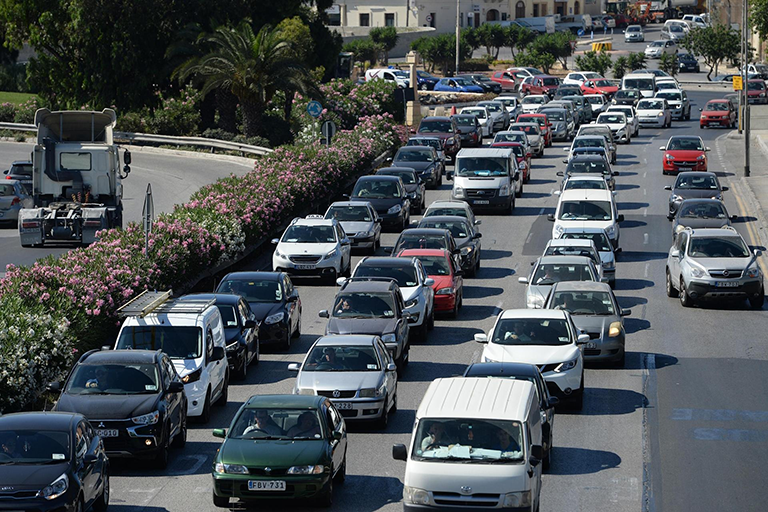
Traffic congestion has been a perennial concern in Malta, with studies routinely placing the country among Europe’s most gridlocked nations. Critics of the government’s transport policies argue that successive administrations have relied excessively on car-centric infrastructure development while failing to introduce credible long-term solutions for public transport reform and sustainable mobility.
The cash-for-licence scheme was marketed as a radical break from past approaches, intended to reduce private vehicle usage and encourage the uptake of alternative modes of transport. However, the implementation challenges it has faced highlight the complexities of turning vision into action, especially when coordination among ministries is lacking.
Bonett highlights smaller initiatives as signs of progress
Despite the setback, Minister Bonett used the occasion to provide an update on other components of his traffic management strategy. Among the 45 measures he had previously announced, Bonett highlighted the following achievements:
- Expansion of public transport routes to underserved areas.
- Introduction of a new agreement among governmental bodies to prevent road cleaning during peak rush hours, a frequent cause of unnecessary congestion.
- Continuing efforts to simplify traffic flows in high-density regions through better signage and intersection design.
While these initiatives are modest in scale, Bonett framed them as evidence of his ministry’s commitment to incremental but meaningful progress on traffic mitigation.
Fast ferry project still lacks concrete developments
The Minister also reiterated his earlier commitment to launch a new fast ferry service linking Bugibba, Sliema, and Gozo—a project initially slated to commence by early summer. However, despite the announcement being made over three months ago, no public tenders have been issued to date.
This lack of progress has attracted criticism from transport analysts and stakeholders in the maritime sector, who argue that without transparent procurement and a detailed operational timeline, the ferry proposal risks suffering the same fate as the cash-for-licence scheme.
The underlying policy contradiction
The stalled implementation of these two high-profile projects—cash-for-licence and the inter-harbour ferry—underscores what many observers view as a deeper issue: a lack of cohesive, multi-ministerial coordination when it comes to Malta’s transport policy.
While political will has been rhetorically expressed at the highest levels, tangible execution continues to lag, raising questions about whether government transport policy is driven more by short-term public relations considerations than by long-term strategic planning.
Public and expert reaction
Members of the public have expressed a mixture of confusion and frustration at the unfolding situation. For some, the cash-for-licence scheme represented a rare opportunity to transition away from car dependency with state support. For others, particularly those outside the initial eligibility criteria hinted at for the pilot phase, the measure appeared fundamentally inequitable.
Experts in transport economics have also weighed in. Speaking anonymously, one senior academic from the University of Malta’s Transport Studies unit questioned the underlying assumptions of the programme. “Offering financial incentives without accompanying infrastructure reform—such as major investment in cycling lanes, pedestrian zones, and reliable public transport—does little to change long-term behaviour,” the academic noted.
What next for Malta’s transport policy?
As Malta continues to grapple with serious congestion, air pollution, and urban planning challenges, the effectiveness of any traffic reduction programme depends on coherent policy integration and durable political commitment. With the cash-for-licence scheme effectively mothballed and the ferry proposal stagnating, it remains unclear whether the government has the tools—or the consensus—to deliver transformative results.
Unless structural reforms are made, there is a risk that Malta’s transport policy will continue to revolve around piecemeal efforts, occasionally disrupted by political tension and fiscal caution. Minister Bonett’s recent experience serves as a reminder of the gap that often exists between high-level vision and the practical realities of implementation.
Conclusion
The suspension of Malta’s high-profile cash-for-licence scheme highlights the complex and often contentious nature of policymaking in areas that require inter-ministerial cooperation and significant public expenditure. While the initiative was initially introduced with strong rhetoric and a promise of bold change, its abrupt postponement—amid funding refusals and cabinet scepticism—reveals the underlying challenges in implementing large-scale transport reforms in Malta.
Minister Chris Bonett’s efforts to address traffic congestion are undoubtedly grounded in a real and pressing national concern. However, the fate of the scheme, along with the unfulfilled promise of a new fast ferry service, underscores a broader issue of policy execution and political consensus. Without a clear, coordinated strategy supported across government ministries and accompanied by robust infrastructure planning, even the most ambitious proposals risk being sidelined.
As the country continues to face mounting transport-related pressures, including congestion, pollution, and urban sprawl, long-term solutions will require more than one-off incentives. What Malta needs is a comprehensive, integrated, and sustainable transport vision—one that not only reduces dependence on private vehicles but also fosters public trust through transparent planning and reliable delivery. Whether Minister Bonett or his successors can achieve this remains to be seen, but the current developments serve as a critical lesson in the importance of aligning vision with practicality.
FAQs
What is the cash-for-licence scheme announced by Minister Bonett?
It was a government initiative to pay drivers €25,000 over five years if they surrendered their driving licence and vehicle number plate.
Why has the cash-for-licence scheme been postponed?
The plan was suspended due to internal objections, particularly from the Finance Ministry, which refused to release €15 million in public funds for the scheme.
Is the scheme completely cancelled?
Not officially. Minister Bonett has stated that the initiative may be reintroduced in a reduced, pilot format for select population segments.
What were the goals of the scheme?
The scheme aimed to reduce private car usage in Malta by financially incentivising citizens to relinquish their cars and switch to alternative transport.
Did the public support the initiative?
Reactions were mixed. Some welcomed it as a bold step, while others viewed it as unfair or lacking necessary support infrastructure.
Why did the Finance Ministry oppose the plan?
Sources indicate the ministry had concerns over public spending efficiency and whether the initiative would achieve meaningful results.
Has Prime Minister Robert Abela supported Bonett’s proposals?
Yes, although he did not fully endorse every detail, the Prime Minister expressed support for Bonett’s efforts to address traffic issues.
Are any parts of the March traffic strategy being implemented?
Yes, minor measures such as expanding public transport routes and adjusting road cleaning times have been implemented.
What is the status of the new ferry service?
Despite promises that a fast ferry between Bugibba, Sliema, and Gozo would launch by summer, no tenders have been issued yet.
What is the broader challenge facing Malta’s transport reform?
The main issue appears to be inconsistent coordination across ministries, limited public infrastructure investment, and lack of long-term strategic planning.

Ash
I like to keep it short. I am a writer who also knows how to rhyme his lines. I can write articles, edit them and also carve out some poetic lines from my mind. Education B.A. - English, Delhi University, India, Graduated 2017.