Malta to enforce strict drug driving penalties
Malta is preparing to introduce a sweeping legal reform that will adopt a strict zero-tolerance approach to driving under the influence of drugs. The measure, which forms part of the government’s broader road safety strategy, comes in the wake of several fatal accidents and growing public concern over reckless driving.
Once the new legislation comes into force, the use of random roadside drug tests will be implemented, and offenders will face harsher penalties, including the possibility of mandatory prison sentences for serious cases. The move marks a significant shift in Malta’s traffic enforcement framework, which until now has primarily focused on alcohol consumption.
Current framework and legal gap
At present, Malta’s laws provide specific limits for alcohol consumption but remain silent on thresholds for drugs. The legal blood alcohol concentration is capped at 0.5g/l for the majority of motorists, reduced to 0.2g/l for both new and professional drivers, while bus and coach operators are required to maintain an absolute zero level. However, no equivalent system exists for drugs, including cannabis, which has been partially legalised in recent years.





















In practice, drug testing is only carried out in exceptional circumstances. According to lawyers Adreana Zammit and Franco Debono, who specialise in criminal law, current procedures only allow for blood tests when authorised by an inquiring magistrate in serious incidents. This limitation has created what legal experts describe as a lacuna — a gap in the law that fails to address the challenges posed by drug use and driving.
The absence of clear legal thresholds has made enforcement inconsistent. Unlike alcohol, where limits can be measured and compared against defined standards, drug detection often reveals the presence of a substance without indicating the level of impairment.
New proposals and enforcement strategy
The government’s proposed reform seeks to address this gap by introducing random roadside drug tests conducted by police officers. These tests will involve the use of saliva-based devices capable of providing on-the-spot results for substances such as cannabis and cocaine.
A police spokesperson explained that the device will indicate whether a specific substance is present in the driver’s system, although the detection window varies depending on the type of drug, the method of consumption, and the individual’s metabolism.
“The role of the police remains that of enforcing the legislation as approved by parliament,” the spokesperson emphasised, underscoring that officers will follow the rules as defined by lawmakers rather than exercising independent discretion.
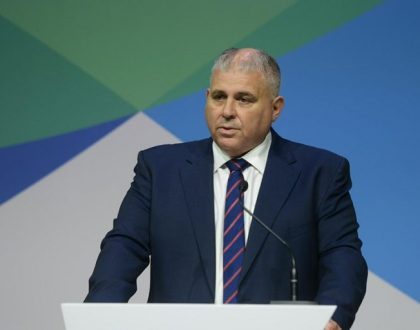
Home Affairs Minister Byron Camilleri confirmed that under the new framework, prosecutors will also have the authority to request the suspension of a driver’s licence during ongoing court proceedings. This measure is designed to prevent individuals charged with serious driving offences from continuing to operate vehicles while awaiting trial.
Concerns among cannabis users
The introduction of zero-tolerance drug testing has raised concerns among Malta’s cannabis users, particularly in light of the substance’s partial legalisation. In contrast to alcohol, which the body processes within a shorter timeframe, traces of cannabis may linger in saliva and remain detectable for as long as two days after use.
Advocates argue that a strict zero-tolerance approach risks penalising individuals who may not be impaired at the time of driving but still test positive due to lingering metabolites. This, they say, creates a potential conflict between Malta’s cannabis decriminalisation policies and its road safety strategy.
Cannabis associations have highlighted that the presence of the substance in a driver’s system does not always correlate with actual impairment, making the risk of false positives a contentious issue.
International comparisons and policy context
Malta’s decision to pursue a zero-tolerance stance reflects similar measures introduced in a number of European countries, where strict drug-driving regulations have been implemented to address growing road safety issues. Countries such as Sweden and Norway enforce absolute bans on driving with any detectable trace of drugs in the body, while others like the United Kingdom have introduced specific limits for certain substances.
The policy shift reflects broader European trends towards prioritising road safety, particularly in light of increasing concerns about recreational drug use and its impact on public health. Malta’s strategy, however, appears more closely aligned with the Scandinavian model of zero tolerance rather than the more flexible threshold-based approach.
Balancing safety and individual rights
Legal experts caution that while stricter rules are intended to enhance public safety, they must also withstand legal scrutiny. The principle of proportionality remains central to Maltese and European law, requiring that restrictions on personal freedoms must be justified and not excessive.
Some lawyers argue that applying a zero-tolerance approach without distinguishing between levels of impairment could be challenged in court. The reliance on saliva testing, which does not always provide a reliable indication of intoxication levels, may complicate prosecutions.
Nevertheless, government officials maintain that the reforms are necessary to reduce the risks posed by drug-impaired driving, which they say can have devastating consequences for victims and families.
Political and social context
The proposed legislation is anticipated to be presented before parliament after the conclusion of the summer break. Its introduction follows heightened public debate about road safety after a series of tragic accidents involving young victims.
Public sentiment has increasingly demanded tougher enforcement against reckless drivers, with civil society groups calling for stronger deterrents. The government has positioned the new law as a direct response to these concerns, aiming to reassure communities that decisive action is being taken.
Minister Camilleri has framed the reforms as part of a broader strategy to modernise Malta’s transport and enforcement systems. In his public remarks, he has emphasised the need to send a clear message that irresponsible driving will no longer be tolerated.
Technological challenges and reliability of tests
One of the practical challenges lies in the reliability and accuracy of roadside saliva tests. Studies in other countries have shown that while these devices can quickly detect substances, they are not foolproof. False positives or negatives can occur, leading to contested results in court.
Experts note that saliva tests should ideally be used as preliminary screening tools, followed by confirmatory laboratory analyses to establish definitive evidence. Questions remain as to how Malta will integrate these procedures into its judicial framework, particularly given the already heavy caseload of criminal courts.
Looking ahead
While the details of the proposed bill remain under discussion, the government’s public statements suggest that alcohol limits will remain unchanged, but drug driving will be subject to absolute prohibition. The success of the policy will likely depend on its implementation, the clarity of the legal framework, and the balance struck between enforcement and individual rights.
If the reforms proceed as planned, Malta could soon join the ranks of European nations that enforce some of the continent’s strictest drug-driving laws. Whether the measures will reduce accidents and save lives, or generate legal controversies and unintended consequences, will become clearer only after their enactment and enforcement.
Conclusion
Malta’s decision to adopt a zero-tolerance approach to drug driving marks a turning point in the country’s road safety policy. By introducing roadside saliva tests, granting prosecutors expanded powers, and establishing tougher penalties, the government is signalling its determination to confront a persistent and dangerous issue.
At the same time, the reform raises important legal and social questions, particularly regarding cannabis users who may test positive long after the effects of the substance have worn off. Balancing road safety with fairness and proportionality will be critical to ensuring that the law is both effective and just.
As the proposed bill moves toward parliamentary debate, Malta faces the challenge of aligning its enforcement practices with European standards while addressing the concerns of civil society and legal experts. The ultimate measure of success will not only be in the reduction of accidents but also in the law’s ability to uphold public trust, protect individual rights, and deliver justice in a clear and consistent manner.
FAQs
What does zero-tolerance drug driving mean in Malta?
It means that drivers will face penalties if any trace of an illegal drug is detected in their system, regardless of the amount.
Will alcohol driving limits change under the new law?
No, current alcohol limits remain the same, with zero tolerance applying only to bus and coach drivers.
How will the new drug tests be conducted?
Police officers will use saliva-based devices to screen drivers during roadside checks.
Can cannabis users be penalised even if they are not impaired?
Yes, under a zero-tolerance system, the mere presence of cannabis residues may lead to penalties.
Are roadside saliva tests reliable?
They provide quick results but may require confirmation through laboratory analysis for accuracy.
Why is Malta introducing these rules now?
The move follows a series of fatal accidents and growing public demand for tougher road safety measures.
What penalties could drivers face under the new law?
Penalties may include fines, licence suspension, and in severe cases, mandatory prison sentences.
Will prosecutors have more powers under the new framework?
Yes, they will be able to request the suspension of a driver’s licence during ongoing court proceedings.
Does Malta’s approach align with other European countries?
Yes, Malta’s policy is similar to Scandinavian countries that enforce strict zero-tolerance laws.
When will the new rules come into effect?
The bill is expected to be tabled in parliament after the summer recess, but no exact date has been announced.

Ash
I like to keep it short. I am a writer who also knows how to rhyme his lines. I can write articles, edit them and also carve out some poetic lines from my mind. Education B.A. - English, Delhi University, India, Graduated 2017.