Malta urged to strengthen laws against digital abuse
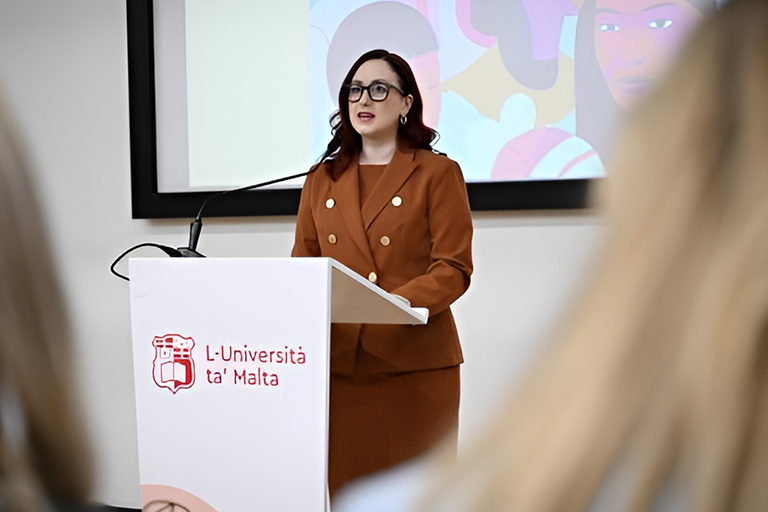
In a strongly-worded call for reform, Rebecca Buttigieg, Malta’s Parliamentary Secretary for Equality and Reforms, has advocated for a more robust legal framework to confront the escalating issue of online abuse, particularly that which targets women involved in politics and public discourse. Her statements were delivered during a conference hosted at the University of Malta, jointly organized by the Gender Equality and Diversity Committee and the Department of Gender & Sexuality within the Faculty for Social Wellbeing.
Addressing the silent silencing of women in public life
The focus of the event was on the increasing prevalence of gender-based digital harassment, with a particular emphasis on how women in political roles are disproportionately subjected to online hostility. Buttigieg pointed out that this hostile environment has become a significant barrier to female participation in politics, where derogatory comments, threats, and psychological abuse are far too common.
Drawing from personal experience, she revealed that she has not been spared from such attacks. This trend, she argued, does more than just harm individuals—it has wider implications for democratic engagement. When women are targeted and discouraged from taking public roles, a serious democratic shortfall emerges, one where not all voices are equally heard.





















Social media platforms as enablers of abuse
Social media has transformed public communication, giving citizens and politicians alike a platform for expression. However, the same platforms have also become hotspots for toxic behavior. According to Buttigieg, the majority of gendered abuse occurs online, where the anonymity and reach provided by platforms such as Facebook, X (formerly Twitter), Instagram, and TikTok allow abusers to spread hate with relative impunity.
Unlike traditional forms of public criticism, online abuse is often relentless, personal, and psychologically damaging. Its effects can be long-lasting, not just professionally but emotionally as well. Buttigieg warned that this environment creates a culture of fear and self-censorship, particularly among women aspiring to lead or participate in the public sphere.
A global epidemic with local consequences
While the issue is pressing in Malta, Buttigieg emphasized that this is a global problem that transcends national borders. Countries including the United Kingdom, Germany, and Australia have faced similar challenges. Reports from these nations show parallel patterns of abuse: women in leadership positions are frequently targeted with gendered insults, threats of violence, and coordinated online harassment campaigns.
This growing phenomenon raises the question of whether national efforts alone are sufficient to tackle a problem that thrives on global digital infrastructure. Buttigieg’s remarks underscore the need for both local and international frameworks to address the challenges posed by digital violence.
The emerging threat of artificial intelligence in digital abuse
An emerging concern that featured in Buttigieg’s speech was the role of artificial intelligence (AI) in proliferating abusive content online. AI tools, especially those driven by machine learning and large-scale language models, have the ability to generate convincing and targeted messages at scale. This capability is increasingly being misused to harass individuals, spread misinformation, and amplify harmful narratives.
She noted that as AI becomes more integrated into content creation, moderation, and communication systems, the risk of automated abuse targeting vulnerable groups—including women and children—also increases. The sheer speed and volume at which AI can operate may overwhelm existing moderation tools and expose users to even greater harm.
Legislative change as a path forward
Buttigieg stressed that Malta must modernize its legal arsenal to combat this fast-evolving threat landscape. Current laws, she argued, do not provide adequate protection for victims of online abuse and often lag behind the technological capabilities of those who spread harmful content.
To bridge this gap, she called for the introduction of clear, enforceable regulations that address both the content and the platforms that host it. This includes holding technology companies accountable for the role their algorithms play in promoting or failing to remove abusive content.
She also pointed to the need for judicial and law enforcement bodies to be better equipped to deal with cases involving digital abuse. This may involve specialized training, digital forensic tools, and a dedicated framework for reporting and prosecuting such offenses efficiently.
Building consensus through a national stakeholder conference
In her address, Buttigieg outlined plans for a national stakeholder conference that would bring together experts from various sectors to craft a coordinated response to online abuse. The initiative aims to unite IT professionals, educators, child protection advocates, legal experts, parents, mental health specialists, and civil society organizations.
This multidisciplinary approach is designed to foster dialogue and create actionable recommendations that can inform government policy. Among the issues expected to be addressed are digital education in schools, the role of social media companies, the legal rights of victims, and mechanisms for prevention and enforcement.
Online abuse as a threat to democratic integrity
At its core, the issue of online abuse is not merely one of individual protection—it represents a broader threat to the functioning of democratic institutions. When women and other marginalized voices are intimidated into silence, public discourse becomes skewed and less reflective of the society it serves.
Buttigieg’s argument highlights the democratic costs of inaction. Equal representation requires not just the right to run for office or express one’s views, but also the ability to do so without fear of targeted harassment or systemic discrimination. Protecting these rights in the digital age requires a legal and cultural shift that prioritizes safety and inclusion.
The role of the education system in prevention
An integral part of Buttigieg’s vision involves investing in education to instill values of respect and digital responsibility from a young age. She called for schools to integrate digital citizenship into their curricula, teaching students about online ethics, cyberbullying prevention, data privacy, and the importance of empathy in digital interactions.
Parents, too, must be engaged in this process. Buttigieg emphasized the importance of equipping families with the tools and knowledge to guide children’s online behavior and to recognize early signs of victimization or abusive conduct.
Public awareness campaigns could also play a significant role in shifting societal attitudes. These campaigns would seek to normalize respectful online behavior, inform users of their rights, and highlight the consequences of digital abuse—both for victims and perpetrators.
Platform accountability and international regulation
While national legislation is critical, Buttigieg acknowledged that platform accountability must be addressed on a broader scale. Many social media companies operate outside Malta’s jurisdiction, making enforcement of local laws difficult without international cooperation.
She cited recent European regulatory initiatives like the Digital Services Act (DSA) as positive steps toward creating shared responsibilities for tech companies. The DSA imposes new duties on digital platforms to remove illegal content swiftly, improve transparency, and enhance user protection mechanisms.
Such international efforts could serve as a model for Malta’s own legislation, ensuring that the country is aligned with broader European and global standards in the fight against digital harm.
A vision for a safer digital future
In closing, Buttigieg presented a vision for a more inclusive and secure digital environment—one in which every citizen, regardless of gender, has the freedom to participate in public life without facing online intimidation. This vision is grounded in three pillars: strong legislation, education, and collaborative action.
She reiterated the government's commitment to addressing the issue, emphasizing that meaningful change requires the involvement of all sectors of society. Through sustained dialogue, targeted policy, and coordinated implementation, Malta can become a regional leader in safeguarding digital rights and promoting equality.
Conclusion
Rebecca Buttigieg’s appeal for enhanced legal protections against online abuse reflects a growing awareness of the profound societal harm caused by unchecked digital harassment. Her advocacy underscores the need for immediate, coordinated action to safeguard democratic participation and ensure that all citizens—particularly women—can engage in public life without fear of intimidation. As Malta looks to reform its legal and educational systems while fostering collaboration across sectors, the country has an opportunity to set a precedent in the region for digital rights and inclusive governance. The path forward is clear: meaningful change requires not only stronger laws but also a cultural shift that prioritizes respect, accountability, and equality in the digital age.
FAQs
What issue is Rebecca Buttigieg addressing in her recent speech?
She is advocating for stronger laws in Malta to combat social media abuse, particularly abuse targeting women in politics and public life.
Why is online abuse considered a threat to democracy?
Online abuse discourages diverse participation in public discourse, particularly by women, resulting in unequal representation and a weakened democracy.
What is the significance of social media in this context?
Social media is a key platform for communication but also a major source of digital harassment due to anonymity and unregulated interactions.
How does artificial intelligence contribute to the problem?
AI technologies can generate and spread abusive content quickly and on a large scale, making moderation and prevention more difficult.
What solutions is the government considering?
The government plans to host a national conference with IT experts, educators, and other stakeholders to develop comprehensive strategies.
What role do schools play in combating online abuse?
Schools are encouraged to include digital citizenship education to teach respectful online behavior and raise awareness about cyberbullying.
Is this a problem unique to Malta?
No, countries like the UK, Australia, and Germany are facing similar challenges with online abuse and are seeking regulatory solutions.
What legal changes are being proposed?
Stricter national laws, better law enforcement tools, and increased accountability for social media platforms are being considered.
What is the purpose of the proposed national conference?
The conference aims to bring together experts to develop practical solutions for preventing online abuse and supporting victims.
What kind of support is needed from technology companies?
Platforms must improve content moderation, respond swiftly to reports of abuse, and ensure their algorithms do not promote harmful content.

Ash
I like to keep it short. I am a writer who also knows how to rhyme his lines. I can write articles, edit them and also carve out some poetic lines from my mind. Education B.A. - English, Delhi University, India, Graduated 2017.