Malta youth demand withdrawal of Bills 143 and 144

A newly established youth-led organization in Malta, Front Żgħażagħ Għall-Ambjent (FŻA), has entered the national debate by strongly opposing Bills 143 and 144, which were tabled in Parliament last month. The group argues that these legislative proposals, introduced without prior public consultation, represent a direct threat to both democratic governance and environmental justice in the country.
The establishment of FŻA comes at a time when Prime Minister Robert Abela’s administration is facing mounting scrutiny regarding its approach to planning policies and environmental governance. The group’s emergence reflects a wider trend of civic mobilization, particularly among younger generations, who are increasingly vocal about protecting Malta’s fragile natural and urban landscapes from unchecked development.
Concerns over parliamentary democracy
In its official statement, FŻA argued that the proposed laws risk undermining the very foundations of parliamentary democracy. One of the central criticisms is the suggestion that the new laws would effectively place Parliament under the authority of the Planning Authority, a regulatory body that already wields significant influence in development decisions.





















According to the youth group, such subordination would weaken the independence of elected representatives, thereby reducing the role of Parliament to a mere rubber-stamping institution. Critics have stressed that democratic institutions must retain oversight powers over regulatory authorities to maintain checks and balances in governance.
FŻA further warned that Bills 143 and 144 would also erode the powers of the Court of Appeal. This weakening of judicial oversight could limit the public’s ability to challenge controversial planning decisions, effectively reducing legal recourse for citizens and organizations seeking justice.
Environmental impact concerns
The most contentious aspect of the proposed Bills, according to FŻA, lies in their environmental implications. The organization highlighted three specific changes that would, in their view, endanger Malta’s environmental protection framework:
Removal of environmental impact obligations – The Bills propose eliminating the mandatory requirement to assess the environmental impact of new developments. Environmentalists argue that such assessments are a cornerstone of sustainable planning, ensuring that projects do not inflict irreversible damage on ecosystems and communities.
Increased power for the Planning Board – The new legislation would empower the Planning Board to disregard established planning policies. This provision, critics say, risks creating a system in which ad hoc decisions are made without adherence to long-term environmental or urban planning strategies.
Obstacles to amending planning policies – The Bills introduce new hurdles to revising planning policies in favor of environmental protection. This could make it more difficult for future administrations or civic groups to strengthen environmental safeguards.
FŻA’s statement was unambiguous: “We believe that these Bills would dismantle essential environmental safeguards and undermine the rule of law.”
Government response and ministerial remarks
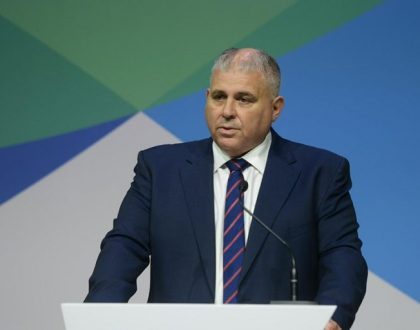
The controversy around Bills 143 and 144 intensified following comments by Clint Camilleri, Malta’s Minister for Planning. Camilleri acknowledged that the government had adopted a rushed approach in presenting the draft laws, a move that has been criticized across political and civic platforms. He further pledged that the government would revise the proposals in response to the widespread public backlash.
However, FŻA expressed strong doubts about the possibility of amending the Bills to address their fundamental flaws. “Youths are not in a position to negotiate their environmental rights. We are therefore calling for the complete withdrawal of the Bills,” the organization declared.
This uncompromising stance reflects the group’s belief that any attempt to revise the legislation would be insufficient, as the core principles of the Bills themselves conflict with democratic and environmental standards.
The mission of Front Żgħażagħ Għall-Ambjent
FŻA has set out an ambitious mission: to build a sustained youth movement that prioritizes environmental protection and promotes governmental accountability. The group emphasizes that young people, who will inherit the consequences of present-day policy choices, must play a leading role in shaping Malta’s environmental future.
In their public statement, FŻA explained that they intend to act as a watchdog over policy developments, ensuring that decision-makers are held accountable for actions that could compromise the natural environment or weaken democratic processes. Their campaign against Bills 143 and 144 is the organization’s first major public initiative, but it is clear that the group intends to remain active in the broader environmental and political discourse.
Broader context: Environmental activism in Malta
The rise of FŻA comes at a time when Malta has witnessed an escalation in grassroots activism concerning planning, urban development, and environmental protection. In recent years, community organizations, municipal authorities, and citizens have consistently voiced concerns about uncontrolled development, the steady loss of open spaces, and the pressure of urban expansion on cultural heritage areas.
While established organizations and NGOs have long been engaged in environmental advocacy, FŻA represents a generational shift in activism. Its youth-led nature highlights the growing sense of urgency among younger citizens, who feel that their future quality of life is at stake.
Observers note that youth-led movements often bring fresh perspectives, innovative communication strategies, and a more uncompromising stance compared to established organizations. FŻA’s direct demand for the withdrawal of the Bills, without entertaining amendments, is a case in point.
Legal and democratic implications
Legal experts have weighed in on the debate, suggesting that if implemented, Bills 143 and 144 could create significant constitutional and legal challenges. The curtailing of judicial powers, particularly those of the Court of Appeal, raises concerns about the separation of powers in Malta’s governance structure.
From a democratic perspective, the Bills have been criticized for being introduced without adequate prior consultation or public debate. Analysts argue that such an approach undermines transparency and weakens public trust in the legislative process.
For many critics, the controversy is not merely about environmental regulation but about the broader principles of good governance, accountability, and respect for democratic norms.
The growing pressure on the government
The public criticism directed at the Abela administration has added to the mounting pressure to retract the Bills entirely. Opposition politicians, civil society organizations, and local activists have echoed FŻA’s concerns, further amplifying the call for accountability.
The government now faces a delicate balancing act between supporting economic development and addressing environmental sustainability, while also ensuring democratic safeguards remain intact. Whether Prime Minister Abela’s administration will ultimately choose to revise or completely withdraw the legislation remains uncertain.
Conclusion
The emergence of Front Żgħażagħ Għall-Ambjent marks an important moment in Malta’s civic landscape. By directly challenging controversial legislative proposals, the group has placed itself at the forefront of the national debate on democracy and environmental justice.
The controversy surrounding Bills 143 and 144 has not only highlighted pressing environmental concerns but has also underscored broader questions about democratic governance and the rule of law in Malta.
As FŻA continues to push for the complete withdrawal of the Bills, the organization’s uncompromising stance reflects a growing determination among young people to assert their role as defenders of both the environment and democratic values. The outcome of this debate will likely shape not only the future of Malta’s planning laws but also the role of youth in its political and environmental discourse for years to come.
FAQs
What is Front Żgħażagħ Għall-Ambjent?
It is a youth-led organization in Malta advocating for environmental protection and democratic accountability, recently launched in response to Bills 143 and 144.
Why is FŻA opposing Bills 143 and 144?
The group argues that the Bills threaten parliamentary democracy, weaken judicial oversight, and dismantle environmental safeguards.
What changes do the Bills propose?
The Bills would remove mandatory environmental impact assessments, allow the Planning Board to disregard policies, and introduce barriers to stronger environmental laws.
What did Planning Minister Clint Camilleri say about the Bills?
He admitted the laws were rushed and promised revisions, but FŻA insists only full withdrawal is acceptable.
How does the organization view environmental rights?
FŻA argues that young people cannot negotiate their environmental rights and must demand full protection through strong safeguards.
Are other groups opposing the Bills?
Yes, various civil society organizations, local councils, and opposition politicians have also raised concerns about the draft legislation.
What are the legal concerns about the Bills?
Legal experts warn that the Bills could undermine the separation of powers by limiting the authority of the Court of Appeal.
Why is youth activism significant in this case?
The emergence of FŻA reflects a generational shift in activism, with younger citizens demanding greater accountability and stronger environmental protections.
Could the Bills still be passed with amendments?
The government may attempt revisions, but FŻA maintains that amendments are insufficient and full withdrawal is necessary.
What impact could this debate have in Malta?
The outcome will influence the balance between development and environmental protection, as well as public trust in democratic governance.

Anna Amstill
I am an avid Blogger and Writer with more than 6 years of experience with Content Writing. An Online Marketing expert specializing in Blog writing, Article writing, Website content, SEO specific Keyword content and much more. Education B.A. - business management, York University, Canada, Graduated 2016.