Malta’s Acting Presidency stirs Labour Party tensions
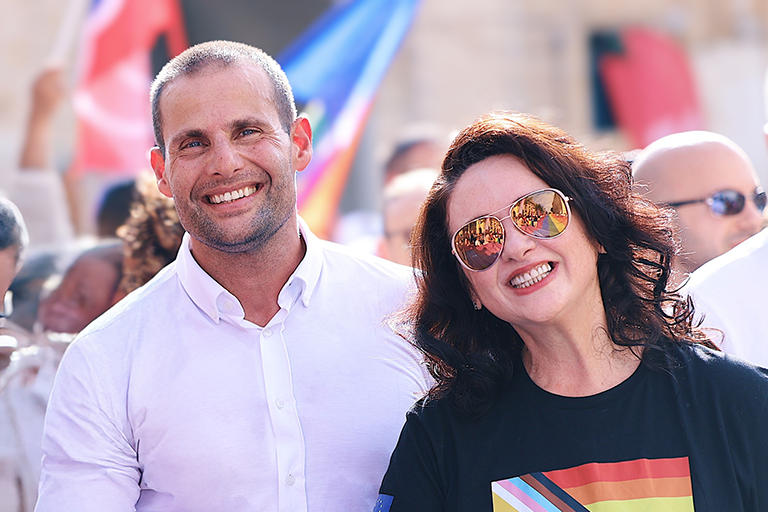
In a significant, albeit symbolic, political move, Maltese Prime Minister Robert Abela appointed Helena Dalli as Acting President of Malta, bypassing long-standing conventions and drawing renewed scrutiny over internal Labour Party tensions. While the role is temporary and largely ceremonial, the appointment’s timing and context reveal a deeper narrative of strained alliances, leadership calculations, and unresolved ambitions within the governing Labour Party.
Breaking with tradition: Appointment without Opposition consultation
Prime Minister Abela's decision deviated sharply from Malta’s political custom, which for years maintained an informal but respected agreement between Government and Opposition: when the President of the Republic is indisposed—whether due to travel, illness, or other reasons—the acting head of state is typically chosen from Opposition ranks. This arrangement functioned as a symbolic expression of national cohesion and reciprocal respect.
Nevertheless, Prime Minister Abela independently declared Helena Dalli’s interim appointment in the wake of the passing of veteran Nationalist politician Francis Zammit Dimech. Opposition Leader Bernard Grech later affirmed that the Government had neither sought input from nor engaged in any discussion with the Opposition prior to the announcement. Instead, the Labour-led administration communicated the decision via a formal letter—after the news had already been leaked to the media.





















While the role of Acting President does not carry a salary or substantive executive power, its political implications were not lost on observers. The symbolic break with bipartisan norms and the specific choice of Dalli signaled a layered strategy—one that combines appeasement, pre-election positioning, and internal reconciliation.
A pattern of strategic appointments
This is not the first time Abela has disregarded established political convention regarding the acting presidency. In 2023, Abela selected Professor Frank Bezzina, a largely unfamiliar academic figure, to temporarily assume the President’s duties during George Vella’s absence abroad. That appointment coincided with a critical juncture: the Government needed to enact controversial amendments to Malta’s abortion legislation, and President Vella had previously expressed deep moral reservations. The temporary substitution allowed the legislation to proceed unhindered, raising serious questions about institutional balance and executive overreach.
Observers noted the strategic convenience of Bezzina’s appointment. Similarly, Dalli’s elevation—though temporary—follows this pattern of using the acting presidency as a tool for tactical governance and political optics rather than symbolic neutrality.
Internal Labour rifts: Rebuilding a damaged alliance
According to high-ranking Labour Party sources, the appointment of Helena Dalli must be viewed in light of her long-standing tensions with Abela. Dalli, who served as Equality Commissioner in the European Commission and previously as a minister under former Prime Minister Joseph Muscat, reportedly experienced a sharp decline in influence under Abela’s leadership.
In 2024, Dalli sought to succeed President George Vella. Despite her expressed interest and lobbying, she was not even shortlisted during Government consultations with the Opposition. Abela instead nominated Miriam Spiteri Debono, a veteran political figure who had been largely absent from active political life. Dalli, having been excluded from consideration, was notably frustrated. Her absence from the candidate list was perceived by some as a deliberate political slight.
The situation escalated when the role of Malta’s European Commissioner became vacant after Chris Fearne—originally nominated by Abela—was forced to step down following formal charges related to the controversial Vitals / Steward Health Care deal. Dalli, already experienced in European affairs and seeking a second term, seemed a logical successor. Yet Abela once again bypassed her, instead selecting Glenn Micallef, a former Chief of Staff with minimal public recognition and no electoral base. That choice further deepened existing tensions.
Public dissent from the Dalli family
The political snubs triggered vocal dissent within the Dalli household. Patrick Dalli, Helena’s husband, reportedly expressed private disdain for the Prime Minister’s conduct in conversations with Labour activists. Their son, Luke Dalli—a prominent figure in the party’s media arm through his role as a presenter on One TV—resigned his position in protest.
Luke’s resignation was widely interpreted as a calculated message. His public statement that he would return to his post “when the circumstances were right” hinted at deeper disapproval of the party’s direction under Abela, and more pointedly, its treatment of his family.
According to sources within the Labour Party, Abela has since made deliberate attempts to rebuild bridges. One notable gesture was the appointment of Luke Dalli as CEO of the Arts Council Malta—a move reportedly opposed internally, including by Minister Owen Bonnici. This appointment was followed by the symbolic offering of the acting presidency to Helena Dalli. Together, these gestures appear to be part of an orchestrated effort to repair political relationships ahead of potential national elections.
Calculated timing ahead of possible general elections
With speculation mounting that Malta may head to the polls sooner rather than later, Abela’s focus appears increasingly centered on party unity. Senior figures who feel sidelined or alienated—particularly those linked to the Muscat administration—remain influential among party members and within media structures.
By appointing Helena Dalli to a ceremonial yet high-profile post, Abela may be seeking to neutralize internal dissent without making more substantive concessions. While Dalli’s appointment does not reverse her exclusion from the presidency or the European Commission, it grants her public visibility and affirms her symbolic standing within the party. For Abela, it’s a low-cost, high-impact political move: temporary, non-binding, and unlikely to upset Labour’s electoral base.
A legacy of muted political relevance
Helena Dalli’s time at the European Commission was not without merit but was also not especially prominent. As Commissioner for Equality, she held a politically important but operationally limited portfolio. Her tenure included support for gender equity and minority rights initiatives, but these received little attention on the domestic political stage.
Domestically, her close association with former Prime Minister Joseph Muscat—who remains a polarizing figure in Maltese politics—may have limited her acceptability as a unifying candidate. In 2024, she openly criticized the Opposition for blocking presidential candidates tied to Muscat’s government, a stance that only reinforced perceptions of partisanship and made consensus less likely.
Despite her international experience, Dalli’s political future in Malta appears diminished. Her recent acting role may serve more as closure than a stepping stone.
Institutional implications and the erosion of conventions
Beyond the personalities involved, the move to appoint Dalli without bipartisan consensus further illustrates a broader erosion of democratic conventions in Malta. The informal understanding between Government and Opposition on such appointments, while not legally binding, reflects a political culture of mutual respect. When that is sidelined repeatedly, the underlying fabric of democratic process weakens.
Former Presidents and legal scholars have previously voiced concern about the increased politicization of the presidency—particularly when temporary appointments are used to facilitate controversial legislative action or to reward political allies.
While the appointment of an Acting President carries no legal authority to enact constitutional reforms or bind Parliament, it carries symbolic weight. Disregarding political custom for strategic gain, even temporarily, risks setting a precedent for future administrations to follow suit, potentially destabilizing the delicate balance between Malta’s institutions.
Conclusion
Prime Minister Robert Abela’s appointment of Helena Dalli as Acting President of Malta may appear, at face value, as a routine administrative decision. However, when viewed within the broader context of political dynamics, party relations, and the erosion of established conventions, the move takes on far greater significance. It represents a calculated effort to ease internal frictions within the Labour Party, particularly with a politically influential family that has felt increasingly sidelined.
By bypassing traditional consultations with the Opposition, Abela has once again prioritized short-term political maneuvering over established democratic norms. While the temporary post carries no legislative authority, the implications for institutional trust and political transparency are substantial. It reflects an ongoing pattern of executive decision-making that is increasingly centralised and strategic—sometimes at the expense of long-standing bipartisan understandings.
For Helena Dalli, the appointment may offer a moment of recognition but is unlikely to revive her diminished role in national politics. For Abela, the gesture may help shore up party unity as elections loom, but it also signals a growing willingness to disregard tradition in favor of internal consolidation. As Malta approaches another potential electoral cycle, the episode underscores the delicate balancing act between political pragmatism and institutional integrity—a tension that continues to shape the country’s democratic trajectory.
FAQs
What is the role of Malta's Acting President?
The Acting President temporarily assumes the duties of the President when the latter is unavailable due to travel, illness, or other commitments. The role is ceremonial and carries no salary or permanent power.
Why was Helena Dalli appointed Acting President?
Prime Minister Robert Abela appointed Helena Dalli without consulting the Opposition, reportedly to mend internal Labour Party tensions and signal reconciliation.
Is this appointment legally binding?
Yes, the Prime Minister has the legal authority to appoint an Acting President. However, political tradition encouraged consultation with the Opposition, which was bypassed in this case.
Has Abela broken this tradition before?
Yes, in 2023, he appointed Professor Frank Bezzina as Acting President to facilitate the passage of controversial abortion amendments while President George Vella was abroad.
Why did Dalli not become Malta’s full President?
Despite her aspirations, Dalli was not included on the shortlist for the presidency. Miriam Spiteri Debono was chosen instead, reflecting shifting internal priorities within the Labour Party.
Did Helena Dalli want another term in the European Commission?
Yes, Dalli lobbied for a second term but was ultimately bypassed in favor of Glenn Micallef after Chris Fearne’s resignation.
What is the relationship between Dalli and former PM Joseph Muscat?
Dalli served as a minister in Muscat’s Cabinet and remains associated with his political legacy, which remains controversial in some quarters.
Why did Luke Dalli resign from One TV?
He resigned amid growing frustration over his family's treatment by the Labour leadership and said he would return when conditions were “right.”
How did Abela try to reconcile with the Dalli family?
Abela appointed Luke Dalli as CEO of the Arts Council Malta and later named Helena Dalli Acting President—both interpreted as reconciliatory gestures.
Does this move affect upcoming elections?
It may help solidify party unity ahead of possible early elections, but it also risks criticism for undermining bipartisan norms and procedural traditions.

Anna Amstill
I am an avid Blogger and Writer with more than 6 years of experience with Content Writing. An Online Marketing expert specializing in Blog writing, Article writing, Website content, SEO specific Keyword content and much more. Education B.A. - business management, York University, Canada, Graduated 2016.