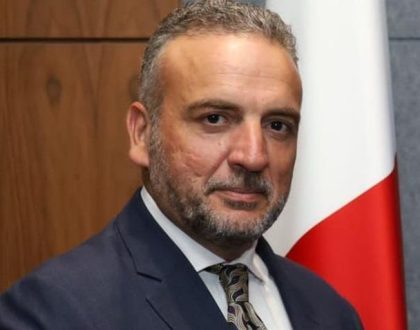
Malta’s EU Commissioner Given Weak Portfolio

Malta’s political landscape has seen a significant development following the nomination of Glenn Micallef, Prime Minister Robert Abela’s inexperienced chief of staff, as the country's next European Commissioner. However, what appeared to be a gamble by Abela has backfired as Micallef was handed a seemingly insignificant portfolio by European Commission President Ursula von der Leyen. Micallef, just 34 years old, has been assigned the portfolio for Intergenerational Fairness, a newly introduced area with limited practical scope, sparking criticism and raising questions about the efficacy of Abela's nomination.
An Unexpected Nomination and its Aftermath
Micallef’s surprise nomination to the European Commission during the summer raised many eyebrows, not least because he lacked political experience and had minimal backing from key figures within Prime Minister Abela’s Cabinet. His appointment was an unprecedented move that highlighted Abela’s confidence in Micallef’s abilities, despite his youth and lack of a strong political resume.
Yet, the lack of support from within the government may have foreshadowed what was to come. Micallef’s assignment as the Commissioner for Intergenerational Fairness, a relatively undefined and novel portfolio, has been viewed by many as a form of symbolic sidelining. While the European Commission stated that this new portfolio would cover cross-cutting topics related to fairness across generations, its exact responsibilities remain vague.





















Unlike other commissioners, Micallef will not be in charge of a Directorate-General, which effectively diminishes the scope of his role within the European Union's complex administrative framework. His additional responsibilities over youth, culture, and sport, traditionally matters handled at the national level, are perceived as further evidence of his reduced influence within the Commission.
A Weak Portfolio in EU Affairs
The Intergenerational Fairness portfolio has left many political observers questioning its real significance within the wider scope of EU governance. Typically, the most powerful commissioners oversee portfolios that command substantial legislative influence, such as economic affairs, trade, or foreign policy. In contrast, Micallef’s portfolio does not command significant resources or political weight within the EU's institutional machinery.
His other areas of responsibility—youth, culture, and sport—are similarly seen as minor, as these topics are generally considered the domain of national governments rather than the European Commission. The fact that Micallef will not oversee a Directorate-General only reinforces the belief that his role will be limited to advisory functions or ceremonial duties.
This contrasts sharply with the expectations of Prime Minister Abela, who had reportedly lobbied for Micallef to be given a portfolio tied to Mediterranean Affairs. This portfolio was ultimately assigned to Dubravka Suica, the Croatian nominee, indicating that Malta’s position within the Commission has been somewhat downgraded, particularly when compared to other Mediterranean countries such as Cyprus. Cyprus, often seen as Malta’s peer within EU circles, was assigned the fisheries and maritime affairs portfolio, which carries considerably more weight in EU negotiations, especially for Mediterranean countries.
Political Ramifications for Abela and Malta
Micallef’s weak portfolio could have broader political implications for Prime Minister Robert Abela. The assignment has been seen by some as a snub by Ursula von der Leyen, particularly given the fact that Abela had previously refused her request to nominate a different candidate. Von der Leyen's decision to assign Micallef a relatively minor role may have been influenced by this defiance, signaling the European Commission’s dissatisfaction with the Maltese government's decision-making.
In 2019, Malta’s then-nominee Helena Dalli faced a similar situation when she was assigned the Equality portfolio, another area seen as lacking influence. Like Micallef, Dalli was considered a marginal figure within the Commission during her term, raising concerns about Malta’s ability to secure influential positions in Brussels. Micallef’s appointment thus represents a continuation of this trend, where Malta's commissioners are relegated to less consequential roles within the EU.
The Road Ahead: European Parliament's Grilling
Before assuming his role, Micallef must face one final hurdle: his hearing before the European Parliament. This process, colloquially known as the “grilling,” is an intense questioning session by Members of the European Parliament (MEPs) to evaluate the competence and vision of each Commissioner-designate. Given Micallef’s inexperience and lack of political background, he is likely to face tough questions from MEPs who may seek to highlight his deficiencies.
However, some observers believe that the insignificance of his portfolio may actually work in his favor. With more attention likely to be focused on other nominees in key portfolios, MEPs may not spend as much time scrutinizing Micallef, allowing him to pass through the hearing relatively unscathed.
Despite this potential advantage, Micallef’s inexperience remains a significant obstacle, and his performance during the grilling will be crucial in determining whether he secures the Commission position and the substantial monthly salary that comes with it.
The Future of the Intergenerational Fairness Portfolio
The creation of the Intergenerational Fairness portfolio reflects the European Commission’s desire to address long-term issues, such as demographic changes, social inequality, and the sustainability of welfare systems. However, given the portfolio’s vague remit and Micallef’s lack of a dedicated Directorate-General, it remains unclear how much influence he will be able to wield on these issues.
Moreover, the absence of substantial resources or legislative authority within the portfolio raises doubts about its capacity to drive meaningful change. While the concept of intergenerational fairness is a noble one, its implementation will likely depend on Micallef’s ability to navigate the complex political terrain of the European Commission and gain the support of more powerful commissioners.
Conclusion: A Missed Opportunity for Malta?
In summary, Glenn Micallef’s assignment as Commissioner for Intergenerational Fairness has been widely viewed as a missed opportunity for Malta to secure a more influential role within the European Union. Prime Minister Robert Abela’s gamble on nominating his young, inexperienced chief of staff appears to have backfired, with Micallef being sidelined into a minor portfolio with limited political clout.
While Micallef’s appointment could still be beneficial for addressing long-term social issues related to intergenerational justice, the lack of direct authority and resources attached to his role suggests that his impact may be limited. The political ramifications of this decision will likely resonate within both Maltese and European circles in the months to come, especially as Micallef prepares to face his hearing before the European Parliament.
FAQs
Who is Glenn Micallef?
Glenn Micallef is the chief of staff to Malta's Prime Minister Robert Abela and was nominated as Malta’s next European Commissioner.
What portfolio was Glenn Micallef assigned?
Micallef was assigned the portfolio for Intergenerational Fairness, along with responsibilities for youth, culture, and sport.
Why is Glenn Micallef’s portfolio considered insignificant?
The portfolio for Intergenerational Fairness is a new, vague area with limited resources and authority, lacking a Directorate-General, reducing its influence.
How was Glenn Micallef’s nomination received in Malta?
Micallef’s nomination was met with surprise and skepticism, even within Prime Minister Abela’s own Cabinet, due to his inexperience.
What is the European Parliament grilling?
The grilling is an intense questioning session by MEPs to assess each Commissioner-designate’s competence before they take office.
Why was Micallef’s portfolio seen as a snub to Prime Minister Abela?
It is believed that Ursula von der Leyen’s assignment of a minor portfolio to Micallef was a response to Abela’s refusal to nominate a different candidate.
How does Micallef’s role compare to other EU Commissioners?
Compared to commissioners with significant portfolios like economic affairs or trade, Micallef’s role is considered marginal and less influential.
Did Malta secure a strong position within the European Commission?
No, Malta’s nominee was assigned a weak portfolio, while other small member states like Cyprus received more significant roles.
What impact could Micallef’s portfolio have on Malta?
Micallef’s portfolio may not significantly impact Malta’s standing in the EU due to its limited scope and authority.
What are the broader implications of Micallef’s appointment for Malta?
Micallef’s assignment could suggest a decline in Malta’s ability to secure influential positions within the European Union.

Esther
I am a professional writer with 8 years of experience in this field and I can provide you with the best-written content you can find. Education B.A. - English, George Washington University, United States, Graduated 2011.