Malta’s Migration Policy Reviewed to Meet Realities
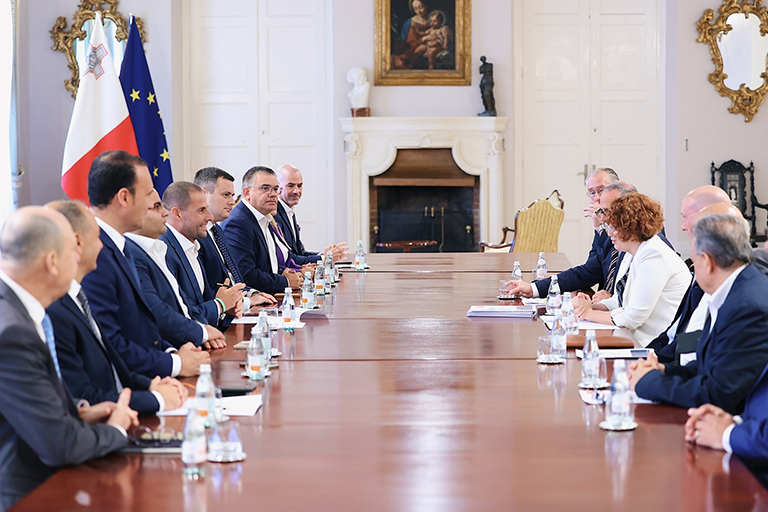
Prime Minister Robert Abela recently announced a comprehensive review of Malta's migration policy, aligning it with the country's evolving economic landscape. Speaking at a pre-budget meeting with the Malta Employers' Association (MEA) at the historic Auberge de Castille, Abela stressed that the government’s strategy is designed to address the demands of both the present and the future. The policy overhaul aims to ensure that Malta remains well-positioned to meet its economic challenges while fostering sustainable growth and improving the quality of life for its citizens.
Abela’s address comes at a pivotal time as Malta continues to experience significant economic success. However, with such success come new challenges, particularly in terms of employment, infrastructure, and social wellbeing. In response, the government is recalibrating its approach to migration and employment policies, focusing on key areas such as reskilling the workforce, protecting workers' rights, and incentivising employers to adapt to these changing dynamics.
Economic Success and its Implications for Migration
Malta’s economy has grown rapidly in recent years, driven by sectors such as tourism, finance, and information technology. This growth has led to a significant influx of foreign workers, who now form a critical part of the country's workforce. However, the Prime Minister acknowledged that the success has created a dual challenge: while the economy benefits from an abundant labour supply, this oversupply can strain resources and infrastructure, especially in certain sectors.





















During his speech, Abela underscored that economic growth must go hand in hand with sustainable migration policies. “Our success cannot be measured by economic numbers alone,” he remarked. “We must also ensure that this success translates into a better quality of life for our people, improved infrastructure, and sustainable employment opportunities.”
The Prime Minister pointed to the importance of targeting value-added industries that bring higher-quality jobs to Malta. He mentioned the government’s ongoing efforts to attract foreign direct investment (FDI) in areas such as technology, research, and sustainable energy, which could create more high-skilled employment for both Maltese and migrant workers.
Supporting Employers in a Changing Labour Market
Abela reiterated the government’s commitment to supporting employers, especially in the face of the rapid changes brought about by global economic shifts and technological advancements. He noted that during the COVID-19 pandemic, the government had acted decisively to support businesses, most notably through the Covid Wage Supplement scheme, which helped companies retain employees during a period of significant uncertainty.
Moving forward, Abela emphasised that the government would continue to provide support while also incentivising productivity and innovation. One of the key measures discussed was the introduction of tax cuts aimed at boosting disposable income for middle-class households, which, in turn, could enhance their quality of life. He highlighted how this approach could simultaneously benefit employers by encouraging a more motivated and productive workforce.
“These tax cuts will have a twofold impact,” Abela explained. “On one hand, they will strengthen the income of middle-class families, leading to better living standards. On the other hand, they will incentivise employees to be more productive, which ultimately benefits both workers and businesses.”
Revising Malta’s Migration Policy: Four Key Principles
At the heart of Abela’s address was a detailed outline of the government’s revised migration policy. The new strategy is built around four key principles, which the Prime Minister described as essential to ensuring that Malta’s workforce is capable of meeting the challenges ahead:
Upskilling and Reskilling Workers: As technological advancements continue to reshape industries, it is critical for Malta to invest in training programs that equip workers with the skills needed in emerging sectors. The Prime Minister emphasised that reskilling initiatives would not only benefit Maltese citizens but also ensure that migrant workers can integrate into higher-skilled roles, contributing more effectively to the economy.
Protecting Workers’ Rights: Abela stressed the importance of safeguarding the rights of all workers, regardless of their nationality. Ensuring fair wages, safe working conditions, and access to benefits are vital components of the government’s broader strategy to enhance the labour market.
Enhancing Stability and Retention Rates: In an effort to reduce turnover and foster greater job stability, the government will introduce measures to retain workers for longer periods. The Prime Minister explained that high turnover rates in some industries have led to inefficiencies, and stabilising the workforce would be crucial for future economic growth.
Recognising the True Need for Workers: The government’s policy will also focus on accurately assessing the country’s labour market needs. Abela acknowledged that while some sectors are oversupplied with workers, others continue to face shortages. A more targeted approach will be implemented to attract the right talent to industries that are most in need.
The Role of Foreign Direct Investment and Infrastructure
One of the key elements of Abela’s speech was the government's continued focus on foreign direct investment (FDI). As Malta seeks to attract higher-value industries, FDI will play a crucial role in shaping the country's economic future. Abela highlighted the importance of bringing in investments that contribute to the development of sustainable infrastructure and create quality jobs.
“The success of our economy has allowed us to pursue more ambitious goals,” Abela stated. “Now, we must ensure that our growth is supported by infrastructure that can handle the increasing demands of both residents and businesses.”
He noted that improving Malta’s infrastructure would be a priority in the coming years. This includes upgrading transport networks, digital infrastructure, and utilities to support both the growing population and the expanding business landscape.
Government’s Continued Commitment to a Balanced Approach
Abela concluded his address to the Malta Employers' Association by reiterating the government's commitment to taking a balanced approach to economic growth, migration, and employment policies. He assured employers that the government would continue to work closely with businesses to ensure that Malta remains competitive in the global market while also prioritising the wellbeing of its citizens.
“We are navigating a rapidly changing world,” Abela said. “But by working together, we can ensure that our country’s success continues, and that this success benefits everyone who calls Malta home.”
As Malta prepares for its upcoming budget, the government’s focus on reviewing and refining its migration policy is a clear signal that it is ready to tackle the challenges of the future head-on, ensuring that the country’s economic growth is both sustainable and inclusive.
Frequently Asked Questions (FAQ)
What is the focus of Malta’s revised migration policy?
Malta’s revised migration policy focuses on upskilling workers, protecting their rights, enhancing job stability, and addressing labour shortages in key industries.
Why is Malta reviewing its migration policy now?
Malta is reviewing its migration policy to ensure it aligns with the country’s current economic realities and future challenges, including workforce oversupply in some sectors.
How will the tax cuts benefit Malta’s middle class?
The tax cuts aim to increase the disposable income of middle-class households, enhancing their quality of life and incentivising greater productivity.
What sectors are driving Malta’s economic success?
Sectors such as tourism, finance, and technology are key drivers of Malta’s economic success, contributing to job creation and foreign direct investment.
How does the government plan to improve infrastructure?
The government is prioritising infrastructure upgrades, including transport, utilities, and digital networks, to support economic growth and population demands.
What role does foreign direct investment play in Malta’s economy?
Foreign direct investment is crucial for driving higher-value industries and creating quality jobs, supporting Malta’s long-term economic development.
How will reskilling programs help workers in Malta?
Reskilling programs will equip workers with the skills needed for emerging industries, ensuring they can adapt to changes in the global economy.
What measures are being taken to protect workers’ rights?
The government is focusing on fair wages, safe working conditions, and access to benefits to ensure the rights of all workers are protected.
How does the government plan to retain workers in key sectors?
The government aims to reduce turnover by introducing policies that enhance job stability and retention rates in industries facing high employee turnover.
What is the government’s approach to economic growth?
The government’s approach balances economic growth with sustainability, aiming to create quality jobs, improve infrastructure, and ensure a better quality of life.

Anna Amstill
I am an avid Blogger and Writer with more than 6 years of experience with Content Writing. An Online Marketing expert specializing in Blog writing, Article writing, Website content, SEO specific Keyword content and much more. Education B.A. - business management, York University, Canada, Graduated 2016.