Malta’s Tax Relief Plans for 2025 Budget
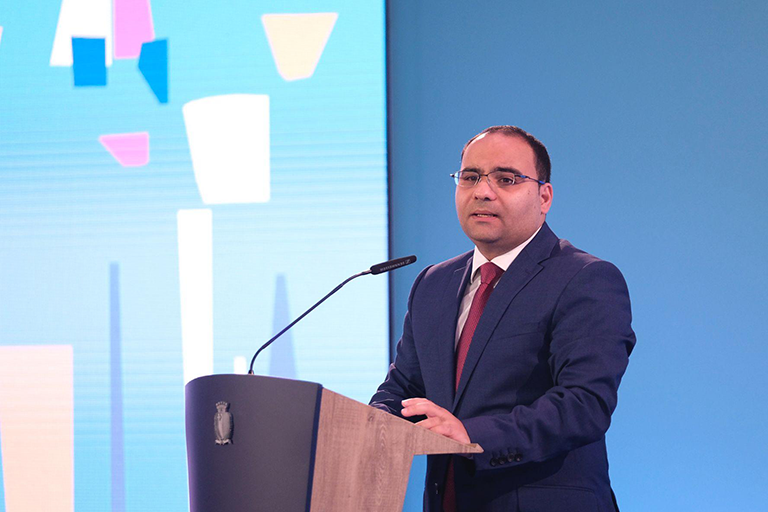
In a recent press conference, Malta's Finance Minister Clyde Caruana presented the pre-Budget consultation document for 2025, highlighting the nation's robust economic performance and its promising outlook. With a decreasing deficit and a strong economy, Malta is poised to announce tax reductions without jeopardizing fiscal stability. This article delves into Malta's economic achievements, compares its performance with other EU countries, and explores the implications of the upcoming budget.
Economic Outlook for 2025
Malta's economy has shown impressive stability and growth in recent years, a trend that is expected to continue into 2025. Finance Minister Clyde Caruana provided an optimistic outlook, indicating that the global economic environment will improve slightly in the coming year. The world’s major economies are anticipated to experience marginally better conditions than in the previous year. This optimistic global forecast provides a favorable backdrop for Malta's economic strategies.
Caruana highlighted that Malta’s economic real growth, excluding inflation, was steady in 2024 at 4.6%. For 2025, growth is projected to stabilize around 4.3%. This consistent performance underscores Malta’s resilience and adaptability in a challenging global economic landscape. Caruana emphasized that Malta’s growth trajectory places it ahead of many other EU nations, reflecting the country's strong economic fundamentals and effective policy measures.





















Comparative Analysis: Malta vs. Other EU Economies
When comparing Malta's economic performance with other EU member states, the country stands out for its remarkable achievements. Despite being a smaller economy, Malta has outperformed several larger economies, including Germany. Germany's economic growth, for instance, fell short of 5% and was significantly impacted by disruptions in its supply chain.
Caruana pointed out that Malta's ability to maintain a steady growth rate while navigating global economic uncertainties is commendable. The country's success in achieving economic stability and growth is attributed to prudent fiscal policies and strategic reforms. This performance positions Malta as a leader among EU countries in terms of economic resilience and growth.
Employment Trends and Achievements
One of Malta's most notable achievements is its impressive employment rate. Over the past 11 years, Malta has undergone a significant transformation in its labor market. By the first quarter of 2024, the country recorded an overall employment participation rate of 82.4%. This figure stands in sharp contrast to the EU average of 75.3%, placing Malta among the top performers in the EU.
Caruana highlighted that Malta’s employment rate is second only to the Netherlands, showcasing the country’s success in creating job opportunities and fostering a robust labor market. With a rate 7% higher than the EU average, Malta is on track to potentially achieve the highest employment rate in the EU by the end of the current legislative term, provided it maintains its current trajectory.
Unemployment Rates and Fiscal Decisions
In addition to a high employment rate, Malta has also achieved a notably low unemployment rate. As of July 2024, Malta recorded an unemployment rate of 3.1%, making it the third lowest in the EU. This figure is significantly below the EU average of 5.8% and the Euro Area (EA) average of 6.3%.
Caruana attributed this positive outcome to the government’s strategic fiscal decisions and timely interventions. By implementing effective policies and reforms, the government has managed to maintain an unemployment rate that is less than half of the EU average. Caruana expressed confidence that Malta's unemployment rate will remain stable in the foreseeable future, reflecting the effectiveness of the country’s labor market policies.
Fiscal Policy and Tax Reductions
With a strong economic performance and a decreasing deficit, Malta's government is in a favorable position to introduce tax reductions in the 2025 Budget. Caruana emphasized that these tax cuts will be implemented without compromising fiscal stability. The government's ability to balance tax reductions with sound fiscal management underscores its commitment to supporting economic growth while maintaining financial discipline.
The proposed tax reductions are expected to stimulate further economic activity and enhance the overall business environment in Malta. By easing the tax burden, the government aims to boost consumer spending and encourage investment, contributing to sustained economic growth and development.
Conclusion
Malta's economic outlook for 2025 reflects a nation that has navigated global challenges with remarkable resilience and success. With a stable growth rate, high employment, and low unemployment, Malta stands out as a leader among EU countries. The upcoming Budget for 2025 is set to introduce tax reductions that will further support economic growth while maintaining fiscal stability. As Malta prepares for the future, its strong economic fundamentals and effective policy measures position it for continued success.
FAQs
What is Malta's projected economic growth rate for 2025?
Malta’s economic real growth is expected to stabilize around 4.3% in 2025, following a 4.6% growth rate in 2024.
How does Malta’s economic growth compare to other EU countries?
Malta’s economic growth is projected to outperform many larger EU economies, such as Germany, and place it among the top performers in the EU.
What is Malta's current employment rate?
As of the first quarter of 2024, Malta’s overall employment participation rate is 82.4%, which is significantly higher than the EU average of 75.3%.
How does Malta's employment rate compare to other EU countries?
Malta’s employment rate is second only to the Netherlands in the EU and is 7% higher than the EU average.
What is Malta's unemployment rate as of July 2024?
In July 2024, Malta’s unemployment rate was 3.1%, making it the third lowest in the EU.
How does Malta’s unemployment rate compare to the EU average?
Malta’s unemployment rate of 3.1% is significantly lower than the EU average of 5.8% and the Euro Area average of 6.3%.
What fiscal policies has the Maltese government implemented recently?
The Maltese government has made timely fiscal decisions and implemented strategic reforms to maintain economic stability and low unemployment rates.
What are the anticipated tax reductions in the 2025 Budget?
The 2025 Budget is expected to include tax reductions aimed at stimulating economic activity and supporting growth while maintaining fiscal stability.
How has Malta managed to achieve a high employment rate?
Malta’s high employment rate is attributed to effective labor market policies and economic reforms implemented over the past decade.
What impact are the proposed tax reductions expected to have?
The proposed tax reductions are anticipated to boost consumer spending, encourage investment, and contribute to sustained economic growth in Malta.

Lisa
Welcome. I am an experienced writer and I am ready to help you with all forms of writing needs you require. Education B.A. - linguistics, University of Wisconsin-Whitewater, United States, Graduated 2006.