Marco Gaffarena’s Kirkop ODZ plan faces rejection

The controversial Maltese developer Marco Gaffarena, a name long associated with political scandal and public criticism, is once again under the spotlight—this time over his ongoing attempt to convert agricultural land in Kirkop into an industrial complex. Despite years of legal maneuvering and appeals, indications now suggest that Gaffarena’s latest proposal is unlikely to succeed.
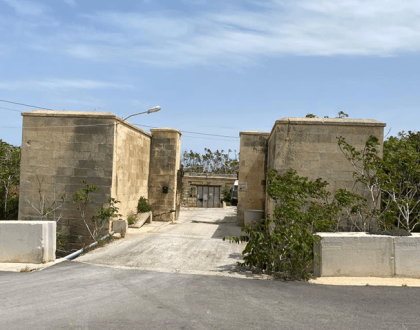
His application to build a series of warehouses on Outside Development Zone (ODZ) land near the Malta International Airport has reignited public debate over environmental protection, land use, and the influence of major developers within the country’s planning system.
A project rooted in controversy
Marco Gaffarena has remained one of Malta’s most polarizing figures in property development. He was previously linked to Labour’s first major scandal under the administration of former prime minister Joseph Muscat, involving the controversial Old Mint Street expropriation deal, which drew public outrage and parliamentary scrutiny.





















Now, Gaffarena finds himself entangled in another contentious planning issue. His ambition to transform a cultivated field in Kirkop into a complex of roughly 15 warehouses has met fierce resistance from both environmental advocates and regulatory bodies.
The Environment and Planning Review Tribunal (EPRT) had previously issued a ruling that seemed to reopen the door for the development, suggesting that the Planning Authority (PA) should reconsider its earlier refusal if the plans were amended. However, growing opposition has since shifted the momentum against the project.
Environmental and political pushback
Public awareness of the Kirkop project has intensified amid Malta’s broader debate on environmental degradation and land mismanagement. The Environment and Resources Authority (ERA) issued strong objections, warning that the proposed development would cause irreversible damage to the agricultural character of the area and undermine national planning policies that prohibit industrial expansion on ODZ sites.
At a recent Planning Authority board meeting, members reaffirmed that agricultural land designated as ODZ must be preserved for its intended use. The consensus was clear: allowing such a development would set a dangerous precedent for future commercial projects in protected zones.
The meeting, attended by PA chairman Manuel Camilleri, also involved architect Giorgio Schembri, who submitted the application on behalf of Gaffarena. Schembri, himself a Nationalist Party election candidate, argued that the revised proposal was consistent with the EPRT’s ruling and that the PA was therefore “obliged to issue the permit” with suitable conditions.
Despite his insistence, the board’s tone had changed. The atmosphere reflected the increasing tension between Malta’s rapid urbanization and its dwindling open spaces.
The long history of Gaffarena’s Kirkop plans
Gaffarena’s ambition to develop the Kirkop site dates back to 2004, when he first submitted proposals for an industrial plant near the airport. Over the following two decades, he made repeated attempts to secure approval for different types of facilities, including a batching plant and later a warehousing complex.
Each time, the applications faced opposition due to the site’s ODZ classification, which is meant to protect rural and agricultural land from urban or commercial sprawl.
In 2014, shortly after a change in government, Gaffarena sought approval for a larger version of the project—around 33 warehouses. That proposal was decisively rejected.
However, in 2020, under the chairmanship of architect Roderick Spiteri, the EPRT ruled that while the original proposal was too large, the PA could reconsider a smaller-scale development. This ruling gave Gaffarena an opening to revise and resubmit his plans.
Following the tribunal’s guidance, the developer reduced the scope of his proposal to 15 warehouses, an office block, and a car park. Yet, even this scaled-down version has drawn criticism for being incompatible with environmental and planning policies.
A changing political environment
When the revised plans were first introduced, the Planning Authority appeared sympathetic to the developer’s argument that the tribunal’s decision required them to issue the permit under specific conditions. However, the situation shifted dramatically as public pressure mounted.
Environmental groups, local residents, and civil society organizations began voicing strong objections, accusing the authorities of failing to uphold Malta’s environmental commitments.
The broader political climate also played a role. The government’s Planning Bills, spearheaded by Prime Minister Robert Abela, faced criticism for allegedly favoring major developers at the expense of public interest. Protest movements and environmental campaigns intensified, leading the PA to adopt a more cautious approach to controversial projects.
By early October, reports indicated that the PA board members were preparing to vote unanimously against the Kirkop application. The final decision is expected later this week and is likely to confirm that the ODZ permit will not be granted.
Broader implications for Malta’s planning system
The Kirkop controversy highlights deeper issues within Malta’s urban planning framework—particularly the perceived imbalance between economic development and environmental protection.
Over the past decade, the island has seen extensive construction activity, often in sensitive areas. Critics argue that the Planning Authority and the Environment and Resources Authority have not always acted in unison, leading to inconsistent decisions and public mistrust.
The Gaffarena case may therefore mark a turning point. If the PA formally rejects the application, it could signal a renewed commitment to protecting ODZ land and restoring credibility to the planning process.
Conversely, if approval were to be granted despite objections, it would likely provoke a strong backlash from environmental activists and residents who fear continued encroachment on green spaces.
Parallel controversy: DB Group’s Pembroke towers
The upcoming PA meeting is also expected to address another contentious development—the DB Group’s proposal to raise the height of its Pembroke towers by an additional 13 storeys.
Unlike Gaffarena’s Kirkop project, the PA has reportedly recommended approval for the DB Group’s request, further fueling perceptions of unequal treatment among major developers.
Observers note that both cases test the government’s stated commitment to sustainable development. While the DB project involves urban expansion, Gaffarena’s proposal touches directly on ODZ principles, where restrictions are typically non-negotiable.
Environmental and social consequences
If approved, the Kirkop project would fundamentally alter the landscape of the area. The proposed site currently consists of fertile agricultural land, providing ecological value and serving as a natural buffer near the airport’s perimeter.
Environmental experts warn that converting such land into concrete structures would contribute to habitat loss, increase flooding risks, and worsen air quality due to additional vehicular traffic.
Local communities have expressed concerns about noise, traffic congestion, and declining property values. Residents argue that industrial expansion in ODZ areas undermines the quality of life and contradicts Malta’s obligations under European environmental directives.
Public sentiment and the road ahead
The case of Marco Gaffarena has become symbolic of a larger struggle over governance, transparency, and environmental accountability. Public sentiment appears overwhelmingly against further ODZ development, reflecting growing environmental consciousness among Maltese citizens.
As the Planning Authority prepares its final ruling, expectations are high that the board will uphold existing planning policies and reject the permit. Such a decision would represent a clear message that ODZ land is not open for commercial exploitation, regardless of political or financial influence.
For Gaffarena, the outcome could mark yet another failed chapter in his long and controversial record of development proposals. However, his persistence suggests that legal appeals or alternative applications may follow if the rejection is formalized.
Conclusion
The upcoming decision on the Kirkop ODZ project stands as a critical test for Malta’s planning authorities and their ability to enforce environmental safeguards in the face of political and commercial pressures.
While the Planning Authority appears poised to deny Marco Gaffarena’s permit, the broader challenge remains: ensuring that the country’s limited green spaces are protected for future generations.
Whether this case becomes a defining precedent or another episode in Malta’s ongoing land-use controversies will depend on the resolve of policymakers to uphold the principles of sustainable and transparent development.
FAQs
What is the Kirkop ODZ development project?
It is a proposal by developer Marco Gaffarena to build around 15 warehouses, an office block, and a car park on agricultural land near the airport in Kirkop.
Why is the project controversial?
The site is located on Outside Development Zone (ODZ) land, where construction is heavily restricted to protect agricultural and environmental areas.
What has the Environment and Resources Authority said about it?
The ERA has objected to the proposal, warning that it would harm agricultural land and contradict national planning policies.
Who is Marco Gaffarena?
He is a Maltese developer previously linked to political controversy, notably the Old Mint Street expropriation case involving the Labour government.
What did the EPRT decide in 2020?
The tribunal ruled that while the original plan was too large, a revised and smaller proposal could be reconsidered by the Planning Authority.
Why has public opposition increased?
Public concern over Malta’s environmental degradation and government policies perceived to favor large developers has intensified in recent years.
What role did the Planning Authority play?
The PA initially seemed open to reconsidering the project but shifted toward rejection following political and environmental pressure.
When will the final decision be made?
The Planning Authority is expected to make its final ruling later this week.
What are the environmental risks of the project?
Potential risks include loss of agricultural land, habitat destruction, increased traffic, and worsened air quality.
Could Gaffarena appeal a negative decision?
Yes, he could pursue further legal appeals if the permit is officially denied, though such efforts would face strong public and institutional resistance.

Ash
I like to keep it short. I am a writer who also knows how to rhyme his lines. I can write articles, edit them and also carve out some poetic lines from my mind. Education B.A. - English, Delhi University, India, Graduated 2017.