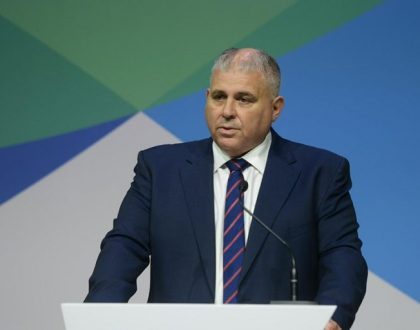
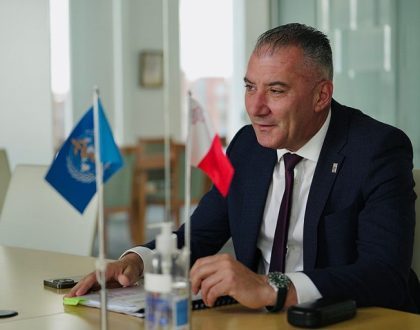
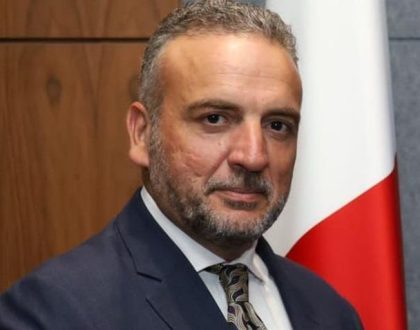
Mariah Meli appointed new mayor of Għargħur

Mariah Meli has been appointed as the new mayor of Għargħur following a motion of no confidence against her predecessor, Helen Gauci. The recent shift in leadership within the local council has not only reshaped its political structure but also rekindled rivalry between Malta’s two dominant parties, the Labour Party and the Nationalist Party.
The Labour Party made the announcement via an official statement, confirming that two Labour councillors, alongside an independent councillor who was previously affiliated with the Nationalist Party, voted to remove Gauci from office. The vote represents a significant shift in local governance and reflects underlying tensions that have been brewing within the council for some time.
Background to the leadership change
The motion of no confidence was reportedly triggered by concerns over questionable financial practices during Gauci’s administration. Although specific details about the alleged spending irregularities have not been disclosed publicly, the issue was serious enough to prompt a coalition of councillors to take formal action.





















The pivotal vote came after Francesca Attard, who was elected as a Nationalist councillor during the last local elections, announced that she would leave the party and continue her tenure as an independent member. In a Facebook post, Attard explained her decision, stating, “I want to work free from political pressure.” Her move significantly altered the political balance within the council, resulting in two Labour councillors, two Nationalists, and one independent.
The rise of Mariah Meli
Following the approval of the no-confidence motion, the Labour Party secured effective control of the Għargħur council, combining its two councillors with the support of an independent member. This new majority enabled the council to appoint Mariah Meli as the locality’s new mayor.
Meli’s ascension marks a new chapter for the locality and underscores a shift in political control that may influence the council’s future decisions and governance style. While her policy priorities have yet to be fully articulated, her party’s endorsement and the circumstances surrounding her appointment suggest a renewed focus on transparency and accountability.
Labour Party defends the move as democratic
In its official statement, the Labour Party stressed that the vote followed democratic procedures and upheld the principles of good governance. It accused the Nationalist Party of undermining the process by refusing to acknowledge the legitimacy of the new leadership.
“Instead of ensuring its councillors act with good governance and transparency in this locality,” the statement read, “the Nationalist Party is attempting to disrupt the course of a democratic process in a way that suits its preferred council composition.”
Labour emphasized that similar council reshuffles had occurred in other localities and had been respected by all parties involved. It also reiterated its belief that the decision to replace Gauci was made in the best interests of Għargħur residents, asserting that the town deserves to be governed with “full transparency.”
Nationalist Party denounces the no-confidence motion
The Nationalist Party, on the other hand, issued a strongly worded rebuttal, characterizing the motion as “an attack on democracy.” The party pointed to Gauci’s strong electoral performance, emphasizing that her individual vote count surpassed the total number of votes received collectively by the three councillors who opposed her.
“In the June election, Gauci alone received more votes than those obtained collectively by the two Labour Local Councillors and the Independent Councillor who submitted the motion of no confidence against her,” the statement read. “Nevertheless, in an attack on democracy driven purely by political motives, today Robert Abela’s Labour betrayed the interests of the people of Ħal Għargħur.”
The party emphasized that its representatives were chosen with a clear mandate, securing over 62% of the overall vote. Helen Gauci alone obtained 869 votes—representing 43% of all ballots cast—whereas the trio of councillors who voted to oust her garnered a combined total of only 783 votes. According to the Nationalist Party, this discrepancy proves that the council’s new leadership does not reflect the popular will.
Democratic procedure versus popular mandate
The controversy has reignited debate over how local councils in Malta interpret democracy. While the Labour Party argues that procedural democracy was respected, the Nationalist Party asserts that the popular mandate has been undermined.
This difference in interpretation raises fundamental questions about the nature of democratic governance at the local level. Is democracy merely about following established procedures, or should the outcome also reflect the express will of the majority as measured by vote counts?
This debate is especially relevant in cases like Għargħur’s, where internal shifts—such as a councillor becoming independent—alter the power dynamics without a new public vote.
Independent councillors and the balance of power
Francesca Attard’s move to independence proved decisive. Though elected on a Nationalist ticket, her choice to align with Labour councillors enabled them to form a new majority. This shift has been heavily criticized by the Nationalist Party, which accused her of betraying the voters who elected her as a Nationalist representative.
However, Attard maintained that her decision was driven by a desire to serve without partisan interference. Her statement emphasized autonomy and a focus on local governance, distancing herself from broader party politics.
In practice, her role as an independent councillor now makes her a power broker within the local government, one who could continue to hold the balance in any future council decisions or political disputes.
A broader political context
Though this may appear to be a localized event, the developments in Għargħur reflect broader political strategies at play in Malta. The Labour Party has, in recent years, expanded its influence at the local level through alliances and tactical motions. At the same time, the Nationalist Party has struggled to maintain unity among its ranks.
The use of procedural mechanisms like no-confidence motions illustrates the extent to which political control can shift even after elections, depending on internal party dynamics and councillor allegiances.
Reactions from the public and implications for residents
Public opinion in Għargħur appears divided. Some residents support the change, citing a need for more transparent governance, while others feel that the ousting of Gauci undermines their electoral choice.
The council’s decisions in the coming months—particularly those related to budgeting, infrastructure, and community initiatives—will be scrutinized closely by residents and political observers alike. Mariah Meli’s leadership will be evaluated based on her ability to stabilize the council and address the concerns that led to Gauci’s removal.
What lies ahead for the council
With a new mayor and a freshly configured council majority, the Għargħur Local Council faces both opportunities and challenges. The council will need to demonstrate unity and competence to regain public trust, especially given the politically charged circumstances surrounding the leadership transition.
The Labour Party’s promise of transparency and good governance will be tested by how the new administration handles day-to-day issues and long-term planning. For the Nationalist Party, the focus may now shift toward holding the new leadership accountable while preparing for the next election cycle.
In the meantime, residents of Għargħur will be watching closely to see whether this political shift translates into tangible improvements in local governance—or whether it merely ushers in a new round of political maneuvering.
Conclusion
The recent leadership change in the Għargħur Local Council marks a significant political shift that underscores the complexities of local governance in Malta. While Mariah Meli’s appointment as mayor follows established democratic procedures, the surrounding controversy reveals deeper tensions between procedural legality and the spirit of electoral representation.
For some, the move reflects a much-needed correction driven by transparency and accountability. For others, it appears as a political maneuver that disregards the majority vote expressed during the last election. At the heart of this dispute lies the delicate balance between representative mandates and council dynamics, especially when independent councillors hold decisive power.
As Mariah Meli steps into her role, she faces the challenge of unifying a divided council and addressing the scrutiny that inevitably follows such a contentious transition. Her ability to lead effectively, promote good governance, and serve the interests of Għargħur’s residents will determine whether this leadership change proves beneficial or simply adds another chapter to the ongoing partisan discord.
FAQs
Why was Helen Gauci removed as mayor of Għargħur?
She was removed through a no-confidence motion due to concerns about suspicious spending during her administration.
Who is the new mayor of Għargħur?
Mariah Meli, a Labour Party councillor, has taken over as mayor after the motion against Gauci was approved.
What led to the shift in council power?
The shift occurred after Francesca Attard, elected as a Nationalist, became an independent councillor and voted with Labour members.
Was the process of replacing the mayor legal?
Yes, the motion followed procedural rules and was carried out through a legal vote in the local council.
How did the Labour Party justify the change?
Labour stated that the motion was in the interest of transparency and governance, reflecting a democratic process.
How did the Nationalist Party react?
The Nationalist Party condemned the move, calling it undemocratic and arguing that it goes against the voters’ will.
How many votes did Helen Gauci receive in the last election?
Gauci received 869 votes, accounting for 43% of the total, which was more than the combined votes of those who ousted her.
Why did Francesca Attard become an independent councillor?
She said she wanted to work free from political pressure and better serve the locality without party constraints.
What impact will this change have on residents?
The impact will depend on how the new administration governs and whether promised transparency and reforms are delivered.
Could this situation repeat in other councils?
Yes, similar realignments have occurred in other Maltese councils when independents shift the balance of power.

Ash
I like to keep it short. I am a writer who also knows how to rhyme his lines. I can write articles, edit them and also carve out some poetic lines from my mind. Education B.A. - English, Delhi University, India, Graduated 2017.