Marsa Racetrack concession withdrawn after years of delays

A multi-million-euro public concession, originally granted during the Labour government led by former prime minister Joseph Muscat, has now come to an unexpected standstill. The project, which involved the redevelopment of the historic Marsa horse racing track, has been left in limbo after the concessionaires, Marsa Racetrack Ltd, withdrew their long-promised development application at the very moment it was set for refusal by the Planning Authority.
The withdrawal was formally communicated by the project’s architect, Edwin Mintoff, on the same day the Planning Authority was expected to reject the application on the grounds that it was incomplete and failed to provide the necessary documentation for proper assessment.
Planning Authority report highlights serious deficiencies
The Planning Authority’s case officer report on the application — which had been lodged in 2019 — concluded that the proposal lacked crucial documents, technical studies, and other essential details, making it impossible for the authority to carry out a comprehensive evaluation. The report recommended outright refusal, describing the submission as inadequate and “half-baked.”





















This procedural collapse underscores the broader concerns about how the concession was awarded and managed. Despite the scale and significance of the project, and despite public commitments by both the government and the investors, the plans failed to advance beyond the preliminary stages in more than five years.
Background to the Marsa Racetrack concession
The concession was granted in 2017, following a request for proposals issued by the Maltese government. The tendering process drew only a single bidder — a consortium made up of foreign investors and a Maltese contractor. The lack of competing bids at the time sparked concerns over the fairness and openness of the awarding process.
As outlined in the agreement, the consortium’s responsibility was to transform the current horse racing track into a contemporary venue built to meet international standards. The government promoted the project as a transformative investment for the local horse racing community, with the potential to attract prestigious international races, similar to those held in Dubai.
The vision included new grandstands, upgraded track infrastructure, hospitality facilities, and training areas, all aimed at elevating Malta’s profile in the equestrian sports sector.
Additional land granted for commercial development
In addition to the racetrack redevelopment, the government modified the concession to include an extra parcel of land outside the racecourse perimeter. This bonus allocation allowed the concessionaires to develop commercial offices and retail spaces — elements that were not part of the original publicly disclosed concession terms.
Such amendments were intended to provide the investors with an additional revenue stream to help offset the costs of their promised investment. However, this commercial element also drew criticism from those who argued that it diverted focus from the core sporting purpose of the concession.
Missed deadlines and unfulfilled promises
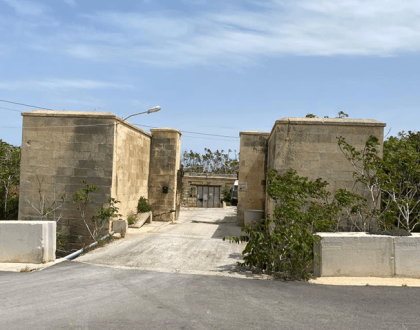
The entire redevelopment was supposed to be completed by 2023. Yet, as of 2025, there is no evidence of any physical work having started on site. The racecourse remains in its pre-concession state, and the much-heralded transformation has not materialised.
Government statements over the years have reiterated the investors’ commitment, but progress has remained elusive. The fact that the project is still at the design stage — two years after its contractual completion date — highlights the scale of the delay.
Government’s reluctance to enforce concession terms
Despite the apparent breaches of the concession agreement — including the failure to meet deadlines — the government has not moved to terminate the deal or enforce penalties. This inaction has been met with frustration by stakeholders in the racing community, who feel that their sport has been sidelined.
Critics note that the lack of enforcement mirrors a wider pattern in which major public-private concessions awarded under previous administrations have faced delays, controversies, or complete collapse without significant consequences for the concessionaires.
Ownership structure of Marsa Racetrack Ltd
Marsa Racetrack Ltd is owned by four distinct shareholders. The majority shareholding is held by Hugh Morshead, Vice Chairman of Henley & Partners Holdings Ltd and Head of the company’s Government Advisory Practice. Henley & Partners has previously been contracted by the Maltese government to manage its citizenship-by-investment programme.
The second-largest shareholder, with a 40% stake, is the Maltese road construction firm F. Schembri & Sons — more widely known locally as id-Dobbu.
The remaining shares are split between True and Type Ltd, an Irish company, and Kusam Sharma, a British passport holder. This blend of local and foreign interests was originally presented as a strength of the consortium, offering both domestic know-how and international expertise.
Impact on Malta’s horse racing community
For years, local horse owners, jockeys, and racing enthusiasts have been told that a complete revamp of the Marsa racecourse was imminent. Many invested time and resources into preparing for a new era of Maltese horse racing, one that would bring in foreign competitors, increase prize money, and modernise the facilities.
The repeated delays have left the community disillusioned. Without upgraded infrastructure, Malta struggles to attract higher-tier international events, which in turn limits the sport’s growth and revenue potential.
The significance of the withdrawal
The sudden withdrawal of the development application — just before an official refusal — marks a major turning point in the saga. While it spares the concessionaires the formal stigma of rejection, it also leaves the project with no active pathway to approval.
Unless a revised application is submitted and successfully processed, the concession risks becoming another example of an ambitious but ultimately unfulfilled public-private partnership in Malta’s recent history.
Questions over the future of the site
The Marsa racecourse remains one of Malta’s most iconic sporting venues, but its facilities are aging and in need of significant investment. With this concession now stalled, uncertainty looms over whether the redevelopment will ever take place.
Possible scenarios include the government reclaiming control of the site, reissuing a new tender, or renegotiating the concession terms with the existing consortium — though the latter option may be politically contentious given the delays and missed targets.
Wider context: Public concessions under scrutiny
This case is not isolated. Several other high-value public concessions awarded in recent years have faced similar problems: a lack of competition in bidding, amendments to agreements after award, failure to deliver promised investments, and weak enforcement of contractual obligations.
These recurring issues have fuelled public debate over whether Malta’s concession system adequately safeguards the public interest and ensures accountability for large-scale projects involving public land and resources.
Conclusion
The collapse of the Marsa Racetrack redevelopment marks another setback in Malta’s recent history of large-scale public concessions that fail to deliver on their ambitious promises. What was presented in 2017 as a transformative, multi-million-euro investment for the country’s horse racing community has, after years of delays and missed deadlines, reached a standstill without a single brick laid.
The Planning Authority’s anticipated refusal — and the last-minute withdrawal of the application — have left the project in a state of uncertainty, with no clear plan for moving forward. For the racing community, the government, and the public at large, this outcome raises pressing questions about accountability, transparency, and the protection of the public interest when valuable national assets are entrusted to private operators.
Unless decisive steps are taken — whether by reclaiming the concession, enforcing contractual obligations, or reissuing a transparent tender — the Marsa racecourse risks remaining a symbol not of sporting excellence, but of opportunity lost.
FAQs
What was the Marsa Racetrack project meant to achieve?
It aimed to transform the existing horse racing track into a modern, international-standard facility capable of hosting global events.
Who owned Marsa Racetrack Ltd?
The company was owned by Hugh Morshead, F. Schembri & Sons, True and Type Ltd, and Kusam Sharma.
Why did the Planning Authority recommend refusal?
The application lacked essential documents and technical details required for proper assessment.
When was the project supposed to be completed?
The redevelopment was meant to be finished by 2023.
What extra land was included in the concession?
A parcel outside the racecourse was added for commercial offices and retail development.
Why has the government not intervened?
The reasons remain unclear, though the lack of enforcement has drawn criticism.
Has any work started on the site?
No physical redevelopment work has taken place to date.
What impact has the delay had on horse racing in Malta?
It has limited the sport’s growth and its ability to attract higher-level international events.
Can the concession still go ahead?
It could, if a new application is submitted and approved, but no such plans have been confirmed.
What happens if the concession fails completely?
The government could reclaim the site, issue a new tender, or consider alternative uses for the land.

Anna Amstill
I am an avid Blogger and Writer with more than 6 years of experience with Content Writing. An Online Marketing expert specializing in Blog writing, Article writing, Website content, SEO specific Keyword content and much more. Education B.A. - business management, York University, Canada, Graduated 2016.