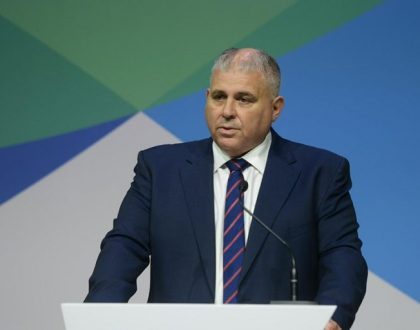
Matrenza’s Appointment Sparks Legal and Public Debate

The recent appointment of Richard Matrenza, an 89-year-old veteran of the Labour Party, to the Contracts Appeals Board has sparked significant controversy in Malta. Many legal professionals, business leaders, and political observers have raised concerns over the implications of this decision, particularly regarding judicial independence, transparency in public procurement, and the suitability of an individual of advanced age for such a crucial role.
Prime Minister Robert Abela’s decision to appoint Matrenza comes in the wake of recent legislative changes that have expanded the executive's control over appeals related to government contract awards. These developments have further fueled suspicions that political favoritism is playing a role in public procurement processes, undermining fairness and trust in the system.
Matrenza’s Background: A Long Yet Controversial Career
Born in October 1936, Richard Matrenza has been involved in industrial relations for decades. He previously served as a consultant to the General Workers Union (GWU), one of Malta’s most influential trade unions, and held the position of Chair of the Industrial Tribunal. Throughout his career, he has been regarded as a staunch Labour Party supporter, which has led to speculation that his latest appointment is politically motivated rather than based on merit.





















His tenure at the Industrial Tribunal was marred by criticism. In 2019, a leading association of lawyers publicly voiced concerns over his handling of cases, describing his decision-making as erratic and inconsistent. Some legal professionals even called for his removal, citing procedural irregularities and a lack of coherence in his rulings. Given this history, his appointment to a board responsible for deciding appeals on multimillion-euro public contracts has been met with considerable skepticism.
Concerns Over Judicial Independence and Age Factor
One of the most pressing concerns surrounding Matrenza’s appointment is his age. At 89, he is significantly older than the mandatory retirement age for judges in Malta, which is set at 68. Many countries enforce strict age limits for judicial roles, with the majority capping appointments at 70 or 75. While exceptions exist—such as in the United States, where some judges serve into their 80s or beyond—these cases are rare and often involve individuals who have been in the judiciary for decades.
Legal experts have raised valid concerns about whether Matrenza can effectively handle the demanding responsibilities of the role, which requires a deep understanding of complex legal and financial matters. A senior lawyer who frequently appears before the Public Contracts Review Board (PCRB) expressed concern, noting that “we have absolutely nothing against active ageing. However, the appointment of an 89-year-old to a quasi-judicial role is a bit too much.” Many have questioned whether he can keep up with the heavy caseload and intricate contractual disputes that come before the board.
Beyond the age factor, critics argue that the appointment raises broader concerns about the transparency and fairness of the selection process for such positions. In an environment where public contracts are worth millions of euros, it is crucial that those overseeing disputes are chosen based on expertise and impartiality rather than political affiliation.
The Role of the Public Contracts Review Board (PCRB)
The PCRB plays a vital role in Malta’s procurement system, serving as the primary body that reviews appeals from companies that feel they have been treated unfairly in the allocation of public tenders. The board is responsible for ensuring that contract awards adhere to fair competition principles, are free from favoritism, and comply with legal and regulatory frameworks.
However, members of the PCRB are directly appointed by the prime minister, raising concerns that political considerations may influence key decisions. The independence of the board is paramount, as its rulings can impact the business landscape in Malta, affecting both local and international companies seeking government contracts.
Although the PCRB’s decisions can be challenged in the Court of Appeal, the process is often costly and time-consuming. This makes the board’s initial rulings especially consequential, as many businesses lack the financial resources or legal capacity to pursue lengthy appeals.
Political Influence in Public Procurement
The perception that Malta’s public procurement system is susceptible to political interference is not new. Over the years, various reports and analyses have pointed to irregularities in the tendering process, with concerns over favoritism and opaque decision-making. The appointment of Matrenza has reignited debates about the extent of political influence in public contract awards.
Government critics argue that recent changes to procurement laws have given the prime minister unprecedented control over appeals against contract decisions. These changes have led to accusations that the administration is attempting to consolidate power and reduce independent oversight in public procurement.
Business leaders have also voiced concerns about the potential implications for Malta’s economic reputation. If international companies perceive the procurement process as biased or politically driven, they may hesitate to invest in the country, ultimately harming economic growth and competitiveness.
Reactions from Legal and Business Communities
Matrenza’s appointment has drawn strong reactions from various sectors, with legal professionals and business leaders expressing alarm over the potential ramifications. Senior lawyers have emphasized the need for impartiality in the appeals process, warning that political appointments could undermine trust in the system. “This appointment seems to reflect a worrying trend of political favoritism taking precedence over merit and expertise,” one lawyer stated.
Industry representatives have echoed these concerns, stressing that businesses require a fair and transparent procurement process to operate confidently. A senior executive in the construction sector remarked, “Public procurement must be transparent and fair. Any perception of bias or political influence in contract awards can damage Malta's reputation as a competitive and reliable business environment.”
Calls for Reform: A Push for Transparency
In response to the controversy, calls for reform have intensified. Many stakeholders are advocating for a more transparent selection process for PCRB members, arguing that appointments should be based on qualifications and experience rather than political connections.
One proposal gaining traction is the establishment of an independent commission to oversee the appointment of board members. This would ensure that legal and financial experts, rather than politically affiliated individuals, are selected for these critical roles. Additionally, there have been calls to introduce an age limit for appointments to align with international best practices.
Legal experts have also suggested implementing stricter oversight mechanisms to enhance accountability in public procurement decisions. By introducing greater checks and balances, Malta could improve investor confidence and demonstrate a commitment to fair business practices.
Government’s Response and the Path Forward
Despite mounting criticism, the government has defended Matrenza’s appointment, emphasizing his extensive experience in industrial relations. A spokesperson for the Office of the Prime Minister dismissed concerns over his age, stating that “his expertise and decades of service to the country make him well-suited for the role.”
However, the government has yet to directly address concerns about political interference and the need for a more transparent selection process. As scrutiny from legal professionals, business leaders, and political observers continues to grow, pressure is mounting for meaningful reforms that ensure fairness and independence in Malta’s procurement system.
Conclusion: A Test for Malta’s Governance
The appointment of Richard Matrenza to the Contracts Appeals Board has reignited concerns about political influence in Malta’s public procurement system. With serious questions being raised about his age, past controversies, and the integrity of the selection process, the decision has underscored the urgent need for greater transparency and reform.
As the debate unfolds, the Maltese government faces a critical test: will it heed calls for change and strengthen governance in public procurement, or will it continue to prioritize political considerations over accountability and fairness? The outcome of this controversy may have lasting implications for Malta’s reputation, both domestically and internationally, in the realm of public sector integrity.
FAQs
Why is Richard Matrenza's appointment controversial?
His appointment has raised concerns due to his age, past controversies, and the perceived political influence in Malta's public procurement appeals process.
What is the Public Contracts Review Board (PCRB)?
The PCRB is responsible for reviewing appeals related to public contracts and ensuring fairness in the tendering process.
How old is Richard Matrenza?
Matrenza is 89 years old, which is significantly older than the standard retirement age for judges in Malta.
What are the concerns about his age?
Critics argue that his advanced age may affect his ability to handle complex legal matters efficiently and that it sets a questionable precedent.
Has Matrenza faced criticism before?
Yes, in 2019, a lawyers' association criticized his handling of the Industrial Tribunal, calling his decisions erratic and unfit for the role.
How are members of the PCRB appointed?
Members are appointed by the prime minister, leading to concerns over political influence in public procurement appeals.
Can PCRB decisions be overturned?
Yes, decisions made by the PCRB can be challenged in the Court of Appeal, but this process can be time-consuming and expensive.
What changes to the law preceded this appointment?
Recent legislative amendments have given the prime minister greater control over appeals against contract assignment decisions.
What reforms are being suggested?
Critics propose an independent commission to appoint PCRB members based on merit and an age cap for such roles to align with international standards.
What has been the government’s response?
The government has defended Matrenza's experience, dismissing concerns about his age and political connections while avoiding discussions on systemic reforms.

Anna Amstill
I am an avid Blogger and Writer with more than 6 years of experience with Content Writing. An Online Marketing expert specializing in Blog writing, Article writing, Website content, SEO specific Keyword content and much more. Education B.A. - business management, York University, Canada, Graduated 2016.