MFSA reports €4.6M loss despite state funding in 2024

The Malta Financial Services Authority (MFSA), tasked with overseeing and regulating Malta’s financial sector, has reported a considerable financial loss of €4.6 million for the year 2024. This stark result comes despite the authority receiving a sizeable €17.7 million government subvention, raising renewed concerns about governance, fiscal discipline, and long-term sustainability.
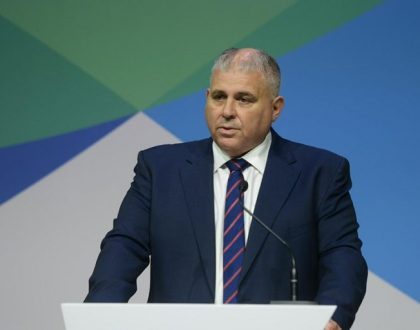
The MFSA’s latest financial report, released earlier this month and discussed during a press conference led by current Chief Executive Officer Kenneth Farrugia, marks a dramatic reversal from the previous year. In 2023, the regulator recorded a surplus of €2.3 million—a figure that had been cautiously welcomed given years of financial turbulence and restructuring.
Curiously, during the press conference, there was no explicit reference to the substantial losses reported. While broad operational highlights and reform narratives were presented, the deficit of nearly €5 million was notably absent from public remarks—an omission that has drawn criticism from observers advocating greater transparency in public financial management.





















The collapse of the independence pledge
The MFSA’s inability to generate sufficient revenue internally is particularly significant in the context of a public commitment made in 2019. That year, then-CEO Joseph Cuschieri declared that the authority would become financially self-sustaining within five years, eliminating the need for reliance on taxpayer funds. Cuschieri’s assertion was widely circulated at the time and formed part of a broader pitch to elevate Malta’s standing as a reputable financial jurisdiction.
However, that ambition appears to have unraveled. The regulator not only failed to reduce its dependence on government funding but is now recording escalating losses despite the financial support. The €17.7 million subvention in 2024—the largest ever granted to the authority—was insufficient to stem the financial decline, leaving the MFSA with a shortfall of €4.6 million.
This development has renewed scrutiny over past leadership decisions, especially those made under the stewardship of Cuschieri. His tenure at the MFSA ended under a cloud following allegations of misconduct and controversial associations, including a Las Vegas trip financed by businessman Yorgen Fenech. Although Cuschieri has denied any wrongdoing, his departure prompted internal reviews and a series of operational reforms.
Executive compensation and leadership appointments
Current CEO Kenneth Farrugia, appointed by Finance Minister Clyde Caruana, now finds himself at the helm of an organisation facing both reputational and operational challenges. Farrugia’s annual remuneration package is reported to be €175,000. In addition to leading the MFSA, Farrugia was also made chairman of the Financial Intelligence Analysis Unit (FIAU), Malta’s anti-money laundering agency.
Farrugia’s dual roles have generated debate, particularly given his previous tenure as FIAU CEO coinciding with Malta’s greylisting by the Financial Action Task Force (FATF). The FATF’s decision, which cited strategic deficiencies in Malta’s anti-money laundering framework, caused reputational damage and economic uncertainty across the country’s financial and gaming sectors.
Within the MFSA’s executive committee, remuneration remains high. Each member reportedly earns in excess of €120,000 annually. Among the retained members is Edwina Licari, a figure previously linked to the same controversial Las Vegas trip involving the former CEO. While the MFSA has defended its leadership structure, critics argue that the high salaries and lack of significant reform at the senior level are inconsistent with the authority’s current financial state.
A communications overhaul amid reputational strain
In the wake of Malta’s greylisting, and in response to broader criticism about regulatory performance, the MFSA launched a reputational recovery campaign. The Authority sought to rebrand and rebuild public confidence through a targeted communications strategy.
Christine Cachia, a former staff member within Prime Minister Robert Abela’s private secretariat, was appointed to lead this initiative as head of communications. The campaign itself has been outsourced to a UK-based agency through a direct order valued at €2.7 million.
The use of public funds for international public relations services has not gone unnoticed. Some stakeholders have questioned the appropriateness of allocating such resources to image enhancement during a period of budgetary losses and legal controversies. Government officials have defended the initiative as necessary to restore trust and attract foreign investment, particularly within the financial services sector.
Increase in supervisory fees introduced discreetly
In an apparent effort to increase revenue and address its financial deficits, the MFSA implemented higher supervisory fees at the start of 2025. The changes were introduced through legal notices published on Christmas Eve, a timing that has been criticised as opaque and designed to limit public scrutiny.
The revised fees were not publicly announced by the government or the Authority itself. Instead, the changes came to light only after the Opposition raised the matter in Parliament. Critics have accused the government of lacking transparency and using the holiday period to discreetly introduce financial burdens on regulated entities.
Legal battles and tribunal decisions
Compounding the MFSA’s ongoing difficulties, the authority was recently held liable for overstepping its powers in the unjust termination of former Chief Officer Reuben Fenech. The court concluded that the termination was unlawful and ordered the Authority to pay €414,000 in compensation for loss of income and reputational harm.
In a subsequent parliamentary exchange, Opposition MP Ryan Callus questioned whether taxpayer funds would be used to cover this court-mandated payout. Finance Minister Clyde Caruana confirmed that the compensation would indeed be financed using public money, effectively holding taxpayers accountable for what the court deemed to be misconduct by the Authority’s leadership.
Outsourcing despite a large workforce
Despite employing more than 550 staff—including a significant number of legal professionals—the MFSA has continued to outsource legal and consultancy services. Over the past two years, external legal and professional costs have amounted to €1.3 million.
Observers have expressed concern over the justification for such expenditures, given the internal human resources already available. While some outsourcing may be necessary for specific technical expertise or conflict-of-interest mitigation, the scale and consistency of external contracting have raised questions about internal inefficiencies and value for money.
A regulatory body under growing scrutiny
The MFSA is central to Malta’s financial infrastructure, responsible for licensing, supervision, and enforcement across a wide range of sectors including banking, insurance, investment services, and financial technology. However, the recent series of controversies—from legal defeats to financial losses and reputational crises—have prompted calls for a more fundamental overhaul.
Although recent leadership has pledged commitment to reform and modernization, the results thus far have been mixed. The Authority's credibility has been undermined not only by past leadership failures but also by continuing concerns regarding transparency, fiscal governance, and ethical standards.
Outlook for 2025 and beyond
As the MFSA moves into 2025, its primary challenges remain restoring financial stability, rebuilding trust among stakeholders, and delivering consistent regulatory oversight in line with international expectations. The increase in supervisory fees may offer short-term fiscal relief, but long-term sustainability will depend on structural reforms and improved financial management.
Efforts to enhance transparency, uphold governance standards, and address public perception are likely to remain central to the Authority’s strategy. However, critics argue that without meaningful accountability for past actions and a clear break from legacy practices, these efforts may fall short of achieving their intended impact.
Conclusion
The Malta Financial Services Authority finds itself at a critical juncture. Once envisioned as a self-sustaining regulatory pillar of Malta’s economy, the Authority is now grappling with serious financial, reputational, and operational challenges. The €4.6 million loss recorded in 2024—despite a record €17.7 million in state funding—underscores structural issues that cannot be resolved through superficial adjustments or public relations efforts alone.
The misalignment between past promises of financial independence and the current reliance on taxpayer funds raises legitimate concerns about fiscal management and strategic planning. Coupled with legal setbacks, controversial leadership decisions, and rising executive compensation, the MFSA risks further erosion of public trust if these issues are not addressed transparently and decisively.
Moving forward, meaningful reform must go beyond optics. To restore its credibility and carry out its responsibilities effectively, the MFSA must implement a strong system of accountability, streamline its internal operations, and demonstrate sound financial management. As the body tasked with upholding the integrity of Malta’s financial sector, the Authority has a duty to both the industry and the public to uphold elevated standards of governance—anchored in transparency, consistency, and strategic foresight.
FAQs
What was the MFSA’s financial outcome in 2024?
The MFSA recorded a financial loss of €4.6 million in 2024, despite receiving a state subsidy of €17.7 million.
Why did the MFSA suffer losses despite public funding?
The loss was attributed to increased operational costs and financial inefficiencies, despite the substantial government support.
Who is Kenneth Farrugia, and what roles does he hold?
Kenneth Farrugia is the CEO of the MFSA and also serves as Chairman of the Financial Intelligence Analysis Unit (FIAU).
Was the MFSA previously expected to be financially independent?
Yes, in 2019, former CEO Joseph Cuschieri claimed the MFSA would be self-sustaining within five years, a goal that has not been achieved.
What was the court ruling regarding Reuben Fenech?
The court ruled that Fenech was wrongfully dismissed and awarded him €414,000 in compensation, which will be paid from public funds.
Has the MFSA increased its fees?
Yes, supervisory fees were quietly increased in early 2025 through legal notices issued during the Christmas period.
What is the controversy surrounding executive pay at the MFSA?
Despite the authority's financial losses, executive committee members continue to receive salaries exceeding €120,000 annually.
Why is the MFSA outsourcing legal work?
Despite employing over 550 staff, the MFSA has spent €1.3 million on external legal and professional services over the past two years.
What is the communications rebranding effort about?
The MFSA hired a UK-based firm for €2.7 million to improve its image following reputational damage linked to governance failures.
How has the Opposition responded to MFSA operations?
Opposition MPs have criticised the regulator’s lack of transparency, legal misconduct, and use of taxpayer funds to cover court penalties.

Ash
I like to keep it short. I am a writer who also knows how to rhyme his lines. I can write articles, edit them and also carve out some poetic lines from my mind. Education B.A. - English, Delhi University, India, Graduated 2017.