MMH bonds remain suspended amid uncertainty

The Mediterranean Maritime Hub (MMH), a company holding the Marsa Shipbuilding concession, has confirmed that its bonds will remain suspended from trading on the Malta Stock Exchange until at least the end of the current year. This decision follows the company’s failure to meet a third deadline for the publication of its audited accounts for 2024.
The development has heightened fears within Malta’s relatively small financial market, with analysts and investors warning that the situation could lead to the island’s first-ever bond default. Such an outcome would not only affect hundreds of small bondholders but also risk undermining confidence in Malta’s broader capital markets.
Missed deadlines and investor concerns
MMH had committed to publishing its audited financial statements by several deadlines during 2024. The company missed its latest deadline last week, marking the third consecutive postponement. In a public statement, MMH explained that the delay was linked to “ongoing due diligence on a possible financial injection through new investors,” noting that discussions remain active but incomplete.





















The repeated failure to provide updated accounts has left investors uncertain about the company’s true financial standing. Bondholders—many of whom are retail investors relying on fixed-income securities for retirement planning or savings—remain unable to trade their holdings on the stock exchange, effectively locking up their capital.
Financial pressure and risk of default
According to its last available audited accounts, MMH is facing significant financial strain. The company had issued a €15 million bond in 2016, with repayment due in 2025. With no audited accounts for 2024 available and mounting concerns over liquidity, market observers believe the likelihood of a default is increasing.
A default of this nature would mark the first time that a bond listed on the Malta Stock Exchange has failed to meet repayment obligations. Such an event could reverberate across the country’s financial ecosystem, potentially affecting the reputation of Malta as a destination for investment.
Investors behind the scenes
Sources familiar with the situation told The Shift that the delays are not merely administrative. Instead, they stem from two interlinked challenges facing MMH.
First, the group of potential investors exploring a takeover or injection of new capital is reportedly hesitant to proceed. While the consortium initially expressed interest in reviving the business, the discovery of substantial existing debts during the due diligence process has led to second thoughts. These investors, some of whom are understood to have close ties to government, are reportedly concerned about the scale of liabilities they would inherit.
Second, negotiations are ongoing with government officials regarding the scope of the company’s concession. In 2016, MMH was granted control of the Marsa Shipbuilding site, with the concession intended to focus mainly on supporting oil and gas service activities. However, some potential investors are said to be lobbying for amendments that would allow alternative uses of the site, particularly for real estate and other commercial ventures.
Government’s role and political dimension
Prime Minister Robert Abela has reportedly held back from formally widening the scope of the concession, though he is understood to be quietly encouraging dialogue in an effort to sustain the prospective investment. His government recently commissioned a master plan for the Grand Harbour area, which includes the Marsa site under MMH’s control.
The consortium engaged in the talks is believed to include prominent players in the local construction sector, among them Paul Attard of GAP, as well as Famalco and the Bonnici Brothers. These companies have been linked to large-scale development projects in Malta and are believed to see strategic potential in the Grand Harbour site if the concession terms were broadened.
The political and economic stakes are therefore intertwined. On one hand, the government faces pressure to safeguard Malta’s financial reputation and avoid a market default. On the other, it is balancing requests from influential business groups seeking flexibility in how the concession may be used.
Historical context of the Marsa concession
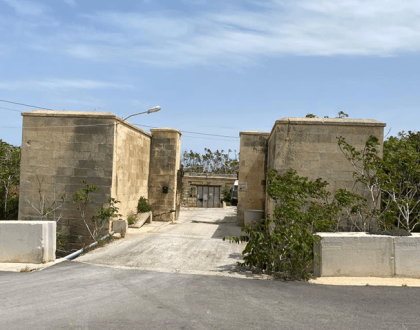
The Marsa Shipbuilding site has long been a focal point for industrial and commercial activity. Once a hub of ship repair, it transitioned under the MMH concession to focus on servicing offshore oil and gas operations. The decision to grant the concession in 2016 was presented as a way to revitalise the site, create jobs, and attract international investment.
However, the shift in global energy markets, combined with the company’s financial structure, has placed the concession under strain. The demand for oil and gas servicing has not grown as anticipated, leaving MMH exposed to high costs and limited revenues. The current bond crisis therefore reflects both company-specific financial issues and broader structural changes in the maritime and energy sectors.
Implications for bondholders
The suspension of MMH bonds has trapped investors in a precarious position. With trading halted, those wishing to exit their investments cannot do so. At the same time, the uncertainty over repayment raises the risk that they may lose a substantial portion of their capital.
Some financial commentators have warned that the case highlights the risks faced by small investors who often rely on local bond markets for steady returns. Unlike larger international markets, Malta’s financial system offers fewer diversified options, meaning local investors are more vulnerable when a single issuer encounters difficulties.
The future of the Grand Harbour site
Much of the debate now centres on the long-term use of the Grand Harbour site. The potential investors reportedly see greater commercial opportunity in repurposing the land for real estate or mixed-use developments, rather than limiting its function to oil and gas servicing.
Such a shift would align with broader trends in Malta’s economic planning, where waterfront and harbour areas have increasingly been earmarked for tourism, residential, and commercial projects. However, the transformation of a concession designed for industrial use into one serving private development raises questions of governance, transparency, and public interest.
For now, the government has not formally agreed to alter the concession terms, though the commissioning of a master plan for the Grand Harbour suggests that changes in land use could be considered in the future.
Broader implications for Malta’s financial market
The MMH case is closely watched by regulators, financial advisors, and institutional investors, as it could set a precedent for how Malta handles distressed bond issuers. If MMH defaults, it may trigger tighter regulatory scrutiny over corporate bond issuance, potentially leading to higher standards of disclosure and stronger safeguards for investors.
Furthermore, the case underlines the importance of timely financial reporting. Audited accounts are a fundamental requirement for transparency in financial markets, and repeated delays can undermine confidence not only in the company involved but also in the overall regulatory framework.
Conclusion
As MMH struggles to resolve its financial difficulties, the suspension of its bonds has become a symbol of the tensions between private business interests, public governance, and the integrity of Malta’s financial system. With the €15 million bond maturing in 2025, the months ahead will be crucial in determining whether investors face a landmark default or whether new capital and revised agreements can avert such an outcome.
For now, uncertainty continues to overshadow the future of MMH, the Marsa site, and Malta’s reputation as a secure environment for bondholders.
FAQs
What are MMH bonds?
MMH bonds are debt securities issued in 2016 by Mediterranean Maritime Hub to raise €15 million, with repayment due in 2025.
Why are the bonds suspended?
The Malta Stock Exchange suspended trading in MMH bonds due to the company’s failure to publish audited accounts for 2024.
How many deadlines has MMH missed?
The company has missed three deadlines in 2024 to publish its audited accounts.
What happens if MMH defaults?
If MMH defaults, it would be the first bond default in Malta’s financial market history, potentially impacting investor confidence.
Why are new investors hesitating?
Potential investors are reportedly concerned about the scale of MMH’s debts, which have become more apparent during due diligence.
Is the government involved in the situation?
The government has not directly intervened but is said to be informally facilitating discussions while considering long-term planning for the Grand Harbour area.
What is the significance of the Grand Harbour site?
The site is a large waterfront property in Marsa, historically used for shipbuilding and currently under concession to MMH for oil and gas servicing.
Why is the master plan for Grand Harbour important?
The new master plan could shape future land use, potentially allowing development beyond the original industrial purpose of the concession.
Are small investors at risk?
Yes, many bondholders are retail investors whose capital is currently locked due to the suspension of bond trading.
What lessons might regulators draw from this case?
Regulators may review corporate bond issuance rules, strengthen disclosure requirements, and enhance safeguards for investors to prevent similar cases.

Claire
A highly motivated, results-driven, enthusiastic and ambitious writer. I can offer you well researched and high-quality article writing on any topic for your website or blog and can as well re-write your existing web content.