















OKTO launches real-time A2A payments in Peru
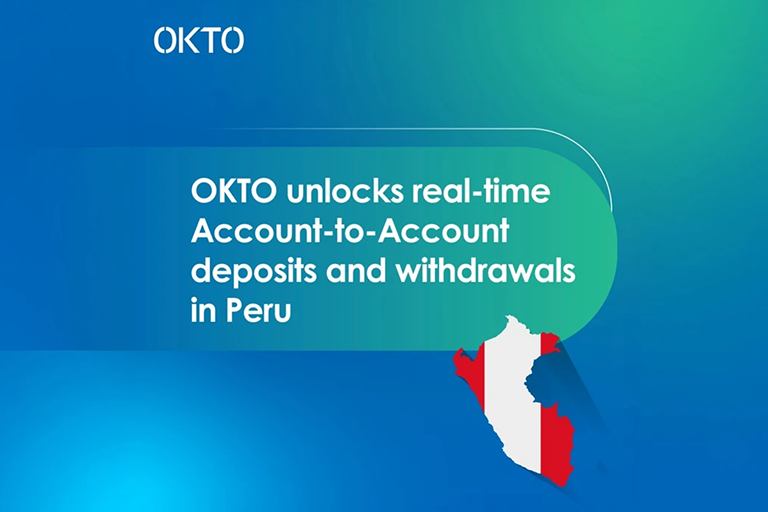
OKTO has introduced a significant development in Peru with the launch of real-time account-to-account (A2A) deposits and withdrawals. This move comes at a time when digital financial services across Latin America are expanding rapidly, driven by growing demand from both consumers and businesses for faster, more reliable, and cost-effective transaction methods.
This initiative marks a strategic milestone for the company in its mission to create more seamless payment journeys for both merchants and consumers. By integrating interoperable QR-based wallets into its payment ecosystem, OKTO is positioning itself at the forefront of Peru’s rapidly evolving digital payment infrastructure.
Real-time A2A payments explained
Account-to-account payments, often referred to as A2A, involve money transfers directly between bank accounts without the use of traditional card networks. In practical terms, this means a consumer can move funds to a merchant instantly through digital channels, reducing reliance on intermediaries.





















With OKTO’s latest rollout, this process becomes more efficient in Peru. Consumers can fund their accounts or pay merchants by simply scanning a QR code with widely used digital wallets such as Yape, Plin, and Bim. These wallets are already familiar to millions of Peruvians, making adoption far more accessible from day one.
The system also supports real-time withdrawals, enabling customers to move money from merchant accounts back to their wallets instantly. This feature strengthens trust in digital transactions, as users no longer have to wait days for withdrawals to clear.
Driving financial inclusion in Peru
Peru has been at the center of digital wallet adoption in Latin America. Platforms like Yape and Plin, developed by leading banks, have become household names. Bim, the first interoperable mobile wallet in the country, has also played a key role in extending digital financial services to underserved communities.
By integrating these established wallets into its ecosystem, OKTO is expanding opportunities for financial inclusion. Small businesses, in particular, can now tap into a broader customer base by offering seamless digital payments, eliminating barriers that cash-only transactions have traditionally created.
For merchants, this represents an immediate chance to access millions of wallet users across the country without requiring expensive infrastructure. For customers, it means a faster and safer way to pay, using tools they already trust.
Benefits for merchants and consumers
The launch of real-time A2A deposits and withdrawals delivers several tangible advantages for both sides of the transaction.
Increased conversion and reduced drop-offs
One of the main challenges merchants face in e-commerce and digital services is incomplete checkouts. Customers may abandon purchases if the payment process is complicated or slow. With QR-based real-time payments, transactions are completed within seconds, significantly increasing checkout success rates.
Lower costs and fewer risks
Traditional card payments often come with fees, delays, and the risk of chargebacks. In contrast, A2A payments reduce transaction costs and offer real-time confirmation. Merchants benefit from improved financial predictability, while chargeback exposure is minimized.
Seamless integration
OKTO’s platform is designed to integrate smoothly into existing merchant systems. Payment flows remain consistent across mobile, in-app, or online environments, reducing operational complexity. Finance teams gain from faster reconciliation and improved cash flow visibility.
Industry perspective from OKTO
Thomas Georgopoulos, Chief Operating Officer at OKTO, emphasized the importance of this development for merchants and customers alike.
“By enabling real-time A2A deposits and withdrawals in Peru, we’re helping our merchant partners increase checkout completion, retain loyal customers and convert more first-time users,” Georgopoulos said. “This isn’t just another box to tick, it’s a practical way to win more revenue every day. Real-time A2A and QR payments are already the journeys Peruvians know and trust. With OKTO, they’re packaged into a single orchestrated pay-in and payout platform for LatAm that delivers measurable gains, from lower cost-to-serve to faster reconciliation – without adding complexity for product or finance teams.”
His comments underscore the company’s broader vision: to simplify the financial journey while empowering businesses with scalable tools for revenue growth.
Peru’s digital payments momentum
Peru has become one of the most dynamic fintech markets in Latin America. Mobile wallets such as Yape and Plin are widely used not only for peer-to-peer transfers but also for everyday purchases. According to recent industry data, QR-based payments are already entrenched in consumer behavior, and interoperability between wallets is making the ecosystem even stronger.
This momentum provides fertile ground for OKTO’s expansion. By integrating with the country’s leading wallets, the company is leveraging existing consumer habits rather than trying to change them. This approach may allow for smoother adoption and quicker scaling compared to markets where QR-based systems are less established.
Broader implications for Latin America
While the current launch is focused on Peru, the broader Latin American region faces similar challenges and opportunities in digital payments. Cash remains prevalent in many markets, yet consumers are increasingly shifting to mobile-based solutions. By rolling out interoperable, real-time A2A transactions, OKTO positions itself to replicate this model in other countries where QR wallets and mobile payments are gaining traction.
The success of this initiative in Peru could serve as a blueprint for expansion into other Latin American nations with similar consumer payment preferences.
Ensuring compliance and security
Any innovation in the financial sector requires a strong focus on compliance, regulation, and consumer protection. OKTO’s orchestrated pay-in and payout solution is designed to operate within the regulatory frameworks of the markets in which it functions.
Security also remains a central concern. Real-time authorizations reduce the risk of fraud, and interoperable QR codes minimize opportunities for manipulation. For merchants and consumers alike, this ensures that the system remains both safe and trustworthy.
Looking ahead
The introduction of real-time A2A deposits and withdrawals in Peru signals a significant step forward in the modernization of the country’s financial infrastructure. By combining technological efficiency with consumer familiarity, OKTO has created a system that benefits merchants, customers, and the broader economy.
As digital transformation continues across Latin America, the company’s approach may help redefine how payments are conducted in both established urban markets and underserved rural areas.
Conclusion
The launch of OKTO’s real-time account-to-account payment solution in Peru highlights the rapid modernization of the country’s financial ecosystem. By combining interoperability, speed, and consumer familiarity, the initiative bridges the gap between merchants and millions of digital wallet users who increasingly prefer cashless transactions. For merchants, it offers tangible benefits such as reduced operational costs, greater payment security, and improved conversion rates. For consumers, it ensures convenience, instant access to funds, and trust in a system they already use daily.
This development goes beyond streamlining payments—it also contributes to broader financial inclusion by enabling small businesses and underserved communities to participate more fully in the digital economy. As Peru strengthens its role as a hub of fintech adoption in Latin America, OKTO’s model of real-time A2A and QR payments may serve as a benchmark for other markets across the region. In many respects, the initiative represents not just a step forward in payments innovation, but a foundation for long-term growth in digital financial services.
FAQs
What is an account-to-account payment?
It is a direct transfer of money between two bank accounts, bypassing traditional card networks, which reduces costs and speeds up transactions.
Why is OKTO’s solution important in Peru?
It integrates with leading local wallets like Yape, Plin, and Bim, providing instant deposits and withdrawals familiar to millions of users.
How does this benefit merchants?
Merchants gain faster payments, reduced transaction fees, fewer abandoned checkouts, and real-time reconciliation of funds.
What advantages do consumers have?
Consumers enjoy instant payments, real-time withdrawals, and the convenience of using wallets they already trust.
Are A2A payments safe?
Yes, transactions use secure QR codes and real-time authorization, reducing risks of fraud and chargebacks.
How does this support financial inclusion?
It allows small businesses and underserved communities to engage in digital commerce without expensive infrastructure.
What role do QR wallets play in this system?
They act as the primary payment interface, enabling seamless deposits and withdrawals through widely used local apps.
Is this system limited to online commerce?
No, it can be used at physical points of sale, in mobile applications, and across online platforms.
Could this model expand beyond Peru?
Yes, the launch in Peru may serve as a foundation for similar expansions across Latin America where QR-based payments are popular.
How does this align with Peru’s payment ecosystem?
It complements existing consumer behavior, leveraging widespread QR wallet adoption rather than requiring users to change habits.

Claire
A highly motivated, results-driven, enthusiastic and ambitious writer. I can offer you well researched and high-quality article writing on any topic for your website or blog and can as well re-write your existing web content.
Related Posts



Onlyplay launches Hot Dunk basketball slot with free spins
April 10, 2026


Italy reconsiders gambling ad ban to boost football funding
April 10, 2026