Prime Minister Abela Promises Stronger Budget

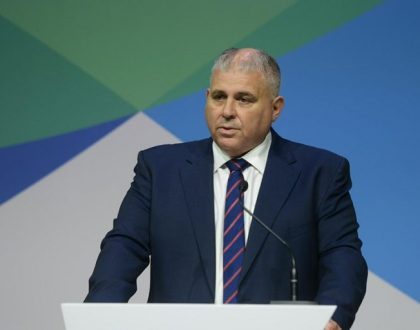
Prime Minister Robert Abela has pledged that the upcoming Budget will surpass the previous one in its benefits for the Maltese population, despite no looming election. His message came during the Labour Party’s general conference, which introduced a new group of party officials. The Prime Minister’s speech, which lasted 40 minutes, emphasized the need for unity, economic stability, and progress on social issues. Abela painted a vision for Malta that includes both economic growth and improvements in the quality of life for its citizens.
A New Chapter for the Labour Party
Addressing the delegates, Abela described the day as a “new chapter” for the Labour Party. Despite the lack of an upcoming election, he reassured attendees that the next Budget will be an improvement on the previous one, aligning with his government's continued focus on social and economic stability. He stressed that the biggest societal transformations can only occur when there is collective unity within the party.
Continued Social Achievements
Abela reiterated the Labour Party’s commitment to social welfare, saying that the government remains the primary driver of Malta's social successes. He emphasized that the government would continue to increase pensions and child allowances while ensuring energy prices remain stable. This approach, Abela argued, is part of the Labour Party’s broader responsibility to safeguard the livelihoods of the Maltese people.





















His appeal to unity was also a call to focus on common objectives. He underscored that positive change comes when people work together, asserting that the Labour Party must stay united in order to push through these important social reforms.
Honoring Key Figures and Reflecting on Maturity in Discourse
During his address, Abela paid tribute to three prominent figures who passed away recently: former Labour Party deputy leader Joe Brincat, Malta’s former European Commission representative Lorenzo Vella, and former Nationalist Party MP Karl Gouder. Abela refrained from delving into details about Gouder’s passing but used the moment to reflect on the importance of maintaining civility and maturity in public discourse.
The Prime Minister called for a more dignified public conversation, urging people to rise above personal attacks and vitriol. He warned against what he described as a “small clique” of individuals who, despite their differing alliances and beliefs, are united by hate and hidden agendas. This group, he said, works to “break good people.”
National Unity and Independence Day Celebrations
Abela used his speech to make a strong case for national unity ahead of Malta’s 60th Independence Day celebrations. Traditionally, the Nationalist Party has been associated with Independence Day, while the Labour Party has been tied to Republic Day. Abela argued that such divisions are unproductive and outdated. Instead, he insisted, Malta’s national celebrations should be seen as events that unite the country rather than divide it.
“This is Malta together,” Abela declared, urging citizens to embrace a shared national identity that transcends partisan divisions.
Addressing Economic and Social Challenges
Looking ahead, the Prime Minister acknowledged the legitimate concerns of the Maltese people regarding a variety of social issues. He specifically mentioned the challenges posed by foreign workers, housing affordability, environmental sustainability, and transport enforcement. These are all pressing issues, he noted, that the government is actively working to address.
In response to these challenges, Abela emphasized the importance of moving forward. He expressed the belief that the government should not merely wait for the future but actively shape it. His message was one of ambition, urging his party to continue striving for progress.
Key Economic Principles for the Future
The Prime Minister outlined five key economic principles that will guide the government’s future policies. First, he stated, the economy must be capable of providing a high standard of living for all citizens. Second, the economy must grow in accordance with Malta’s strategic needs. Third, economic growth must be sustainable and meet the highest regulatory standards.
Fourth, Abela stressed the importance of reducing the economy’s dependency on low-skilled foreign labor and minimizing its impact on national infrastructure. Finally, he called for an economy that offers value-added contributions, directly improving the quality of life for Maltese citizens.
Education and Healthcare: Recent Milestones
Abela highlighted recent achievements in the education and healthcare sectors. He referred to the government’s agreement with independent schools, which aims to prevent fee increases for families by funding educators’ salary raises. In the healthcare sector, Abela pointed to a recent magisterial inquiry that exonerated medical staff in the death of a patient at Mater Dei Hospital. He criticized the Opposition’s silence on both matters, framing it as evidence of their reluctance to engage with complex policy issues.
The Prime Minister expressed his continued support for health professionals who have faced unfounded accusations and insults. He noted that despite the inquiry’s findings, no one had issued an apology for the unfair criticism aimed at the healthcare workers.
Unity and Leadership Changes in the Labour Party
Abela concluded his speech by once again stressing the importance of unity within the Labour Party. He warned that any disunity would only benefit the Nationalist Party, who have historically capitalized on internal divisions within their opponents. He reiterated that the major changes the party seeks to implement will not be possible without a united front.
The Labour Party’s general conference also marked the election of new top officials. Ian Borg was elected Deputy Leader for Parliamentary Affairs with 95.8% of the vote, while Alex Agius Saliba was elected Deputy Leader for Party Affairs with 92% of the vote. In a closely contested race for PL President, Alex Sciberras narrowly defeated Norma Saliba by 14 votes.
Ian Borg's Vision for a Fourth Consecutive Electoral Victory
In his first address as Deputy Leader for Parliamentary Affairs, Ian Borg outlined his ambition for the Labour Party to secure a fourth consecutive electoral win. He acknowledged that such an achievement would not be easy but argued that it is possible if the party remains united. Borg emphasized that the Labour Party has the best ideas and the best people to continue leading the country.
Borg also spoke about the need to develop a long-term vision for Malta, focusing on areas like mass transport, quality tourism, and the improvement of working conditions. He expressed a belief in prioritizing Maltese workers in job opportunities where possible, while continuing to address broader economic and social challenges.
Alex Agius Saliba: Building Bridges with Floater Voters
Newly elected Deputy Leader for Party Affairs, Alex Agius Saliba, emphasized the importance of reconnecting with floater voters who have become disillusioned with both major political parties. Saliba acknowledged that the party’s message may not be reaching certain segments of the population, and pledged to ensure that their concerns are addressed moving forward.
He argued that this group of voters is not just composed of young people but includes long-time Labour supporters who feel disconnected from the party. Saliba stressed that the Labour Party must work to regain their trust if it is to maintain its electoral dominance.
Conclusion
Prime Minister Robert Abela’s speech at the Labour Party’s general conference emphasized unity, economic progress, and social improvement. With a focus on moving Malta forward, the Prime Minister outlined a vision for a better future while addressing the concerns of the Maltese people. The Labour Party’s new leadership team now faces the task of carrying this vision forward, as they work to secure another term in office and continue shaping Malta’s future.
FAQs
What did Prime Minister Abela promise in his speech?
Prime Minister Robert Abela promised a better Budget than the previous one, emphasizing economic stability and social progress.
What was the significance of the Labour Party’s general conference?
The conference marked a change in the party’s leadership and reaffirmed its commitment to unity and progress.
What are the key challenges mentioned by Abela?
Abela acknowledged concerns about housing affordability, foreign workers, the environment, and transport enforcement.
What is the Labour Party’s stance on Independence Day?
Abela argued that national celebrations, such as Independence Day, should unite the country rather than be associated with one party.
What are the government’s key economic principles?
The government’s principles include a strong economy, sustainable growth, minimal reliance on low-skilled foreign labor, and improved quality of life.
How did the government address concerns in the education sector?
The government signed an agreement with independent schools to fund salary increases for educators, preventing fee hikes for families.
What did Abela say about the healthcare sector?
Abela defended healthcare workers, referring to a magisterial inquiry that exonerated them in a recent case.
What changes in leadership occurred at the conference?
Ian Borg and Alex Agius Saliba were elected as deputy leaders, while Alex Sciberras was elected as PL President.
What is Ian Borg’s vision for the Labour Party?
Borg aims for a fourth consecutive electoral victory, focusing on unity and long-term goals such as mass transport and quality tourism.
How does Alex Agius Saliba plan to reconnect with floater voters?
Saliba emphasized the importance of addressing the concerns of disillusioned voters to regain their trust in the Labour Party.

Claire
A highly motivated, results-driven, enthusiastic and ambitious writer. I can offer you well researched and high-quality article writing on any topic for your website or blog and can as well re-write your existing web content.