Public Media Under Pressure as EU Media Law Nears
As the European Union prepares to implement a landmark piece of legislation aimed at strengthening media independence, Reporters Without Borders (RSF) has issued a stern warning. In a detailed report released ahead of the European Media Freedom Act (EMFA) coming into force on August 8, RSF paints a sobering picture of the state of public media across Europe. The organization argues that politicised interference, financial instability, and systemic editorial compromises are increasingly undermining the essential role of public service broadcasters in safeguarding democratic norms.
Titled “Pressure on Public Media: A Decisive Test for European Democracies”, the RSF report outlines a pattern of decline in editorial autonomy and institutional resilience across EU member states. While the upcoming EMFA contains critical provisions to counter such threats—particularly Article 5, which obliges governments to uphold the editorial and operational independence of public service media—RSF insists that legislation alone will not be enough. Without robust enforcement and genuine political will, public broadcasters may continue to function less as guardians of the public interest and more as instruments of political influence.
Public broadcasters at a crossroads: autonomy versus control
One of the central themes in the RSF report is the growing conflict between the ideal role of public broadcasters—to serve as impartial providers of information—and the practical reality in many EU countries, where these entities are increasingly beholden to government interests. Thibaut Bruttin, Director General of RSF, underscored this concern by posing a critical question: “Serve the public or the party?”





















His rhetorical query encapsulates the dilemma faced by many public media institutions. In theory, public broadcasters are expected to function as independent watchdogs, ensuring transparency and diversity of viewpoints in the public sphere. In practice, however, their leadership is often appointed through opaque or politically motivated processes, their funding is subject to governmental discretion, and their editorial choices are frequently influenced—or constrained—by external pressures.
According to Bruttin, these developments represent a dangerous attempt to manipulate public opinion and distort democratic discourse. “The attacks we are seeing — often financial or political in nature — reflect a broader attempt to manipulate public opinion,” he warned. “They demand a sharp European awakening.”
Spotlight on Malta and other high-risk countries
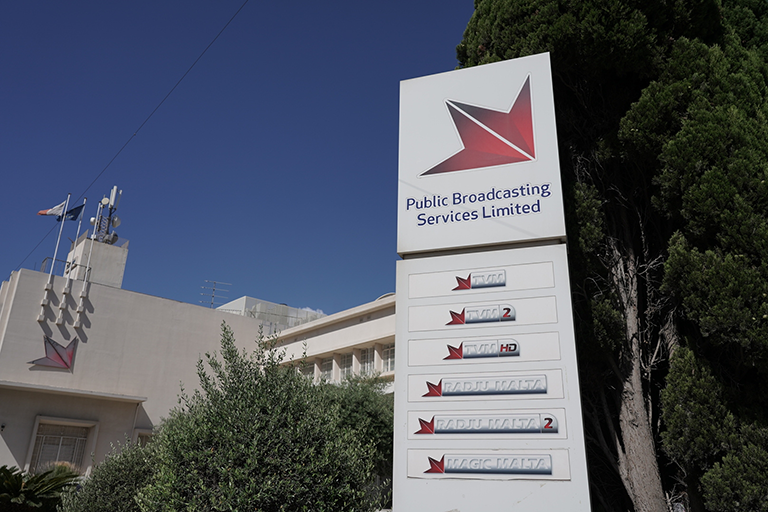
The RSF report identifies several countries where public media face particularly acute challenges. Malta, alongside Hungary, Poland, Greece, and Croatia, is cited as a country where politicisation of public broadcasting is especially pronounced.
In Malta, concerns centre around the frequent omission of sensitive information related to government activities or corruption from public broadcasts. The report highlights claims that editorial decisions are often censored or skewed to reflect a particular political bias. RSF notes that a majority of survey respondents in Malta reported regular instances of politically motivated editorial control.
Moreover, Malta is among a small group of EU countries where public media reportedly fail to ensure adequate political pluralism—a core tenet of democratic broadcasting. RSF contends that this shortfall weakens the credibility of public service media and falls short of aligning with the core principles, if not the exact requirements, of EU legal frameworks.
The report further recounts an incident in which a Maltese journalist resigned from a public broadcaster after political interference, exemplifying how editorial compromise can have tangible professional consequences and erode trust within media institutions.
Broader European context: the politicisation of public broadcasting
Beyond the specific cases of Malta and its counterparts, RSF paints a broader picture of systemic malaise afflicting public broadcasters across the EU. The erosion of editorial independence is often facilitated by structural vulnerabilities—namely, precarious funding mechanisms and governance models that lack transparency and accountability.
In countries like Hungary and Poland, for example, public broadcasters have long been criticised for acting as de facto extensions of ruling political parties. In Greece and Croatia, similar concerns have emerged, particularly regarding the selective reporting of politically sensitive content and lack of journalistic freedom.
Compounding these issues is the rapidly evolving digital media landscape, which has introduced new financial strains and intensified competition for audiences. Traditional public broadcasters, often encumbered by bureaucratic inertia, are struggling to adapt to these changes while maintaining their public service mandate.
The promise and limitations of the European Media Freedom Act
The European Media Freedom Act, and in particular Article 5, is widely regarded as a potential turning point for public media governance in Europe. Article 5 explicitly requires EU member states to ensure the independence of public service media in both editorial and operational terms. It also mandates transparency in funding and decision-making processes.
However, RSF cautions that legal mandates, while necessary, are insufficient on their own. The organization argues that meaningful reform will require sustained political commitment, civil society engagement, and rigorous enforcement mechanisms. Absent these elements, the EMFA risks becoming a symbolic gesture rather than a substantive safeguard.
Recommendations from RSF for safeguarding public media
To address the challenges identified in its report, RSF has proposed a multi-pronged set of reforms aimed at restoring trust in public broadcasting and reinforcing institutional independence. These include:
Transparent and independent leadership appointments
RSF recommends that public broadcasters adopt leadership appointment processes that are both transparent and insulated from political influence. Involving civil society representatives in the selection process could help ensure that candidates are chosen based on merit and commitment to journalistic integrity, rather than political loyalty.
Creation of a European pluralism watchdog
To monitor internal political diversity and enforce standards of pluralism, RSF advocates for the establishment of an independent EU-wide oversight body. Such a mechanism would assess whether public media outlets reflect the full spectrum of political viewpoints, as required under EU democratic norms.
Stable and independent financing
Financial autonomy is crucial for editorial independence. RSF proposes that public broadcasters be subject to long-term, independently conducted funding assessments and be supported by multi-annual financing plans that cannot be easily influenced by shifting political agendas.
Innovative funding mechanisms
To reduce reliance on politically contingent state budgets, RSF suggests exploring alternative funding models, such as independent public media funds or audience-supported revenue streams, which could provide greater financial stability and independence.
Enhanced transparency and public accountability
Greater transparency in editorial decision-making and institutional operations is also key. RSF calls for increased public engagement through initiatives like an annual “Media Day” on 3 May, which would serve to both celebrate and scrutinise public media performance.
Establishment of a pan-European broadcaster
Finally, RSF proposes the creation of a new pan-European public media institution designed to serve as a model of best practices and to counteract national-level political interference. This broadcaster could operate independently of any single member state and offer cross-border content grounded in journalistic excellence.
Looking ahead: urgency and responsibility
With the EMFA just weeks away from becoming binding law, RSF’s message is clear: the time for passive observation is over. While the Act provides a much-needed legal framework, its success will depend on the extent to which member states are willing to go beyond minimum compliance and proactively defend public media from further erosion.
“The creation of tomorrow’s public media is not a luxury,” said Bruttin. “It is a necessity — and it must begin now.”
The stakes could not be higher. At a time when trust in democratic institutions is under threat and misinformation is proliferating at an alarming rate, the role of independent, accountable public broadcasters has never been more vital. Failing to protect these institutions not only undermines journalistic freedom but also weakens the foundations of European democracy itself.
Conclusion
The challenges facing public service media in Europe today are neither isolated nor incidental—they are systemic and growing. As documented by Reporters Without Borders, the erosion of editorial independence, political meddling in governance, and precarious funding structures represent a serious and immediate threat to democratic integrity across the continent. With the European Media Freedom Act poised to take effect, the EU has an opportunity—indeed, a responsibility—to not only enforce its provisions but to cultivate a culture of genuine media independence and pluralism.
However, legislation alone cannot solve what is fundamentally a political and institutional crisis. It is now up to individual member states to demonstrate their commitment to democratic values by implementing transparent, accountable, and independent frameworks for public broadcasting. Failure to do so risks transforming public media into partisan instruments rather than impartial guardians of truth.
At a time when misinformation spreads rapidly and democratic institutions face mounting pressure, the role of independent public broadcasters is more crucial than ever. Ensuring their integrity is not merely a regulatory obligation—it is an existential necessity for the future of European democracy.
FAQs
What is the European Media Freedom Act (EMFA)?
The EMFA is a new EU regulation designed to protect media freedom and pluralism across member states. It includes provisions for safeguarding public broadcasters' independence.
When does the EMFA come into effect?
The EMFA is scheduled to come into force on August 8, 2025.
Why is RSF concerned about public broadcasters in Europe?
RSF has found widespread evidence of political interference, funding instability, and a lack of editorial independence in public media across the EU.
Which countries are most affected by public media politicisation?
Malta, Hungary, Poland, Greece, and Croatia are among the countries flagged by RSF for particularly serious issues related to public media independence.
What is Article 5 of the EMFA?
Article 5 mandates that EU member states ensure the editorial and operational independence of public service media and promote transparency in their governance.
How has Malta been implicated in RSF’s findings?
Malta is noted for alleged censorship, biased reporting, and lack of political pluralism in its public media, with incidents of political interference prompting journalist resignations.
What solutions does RSF propose?
RSF recommends independent leadership selection, sustainable funding models, a European media watchdog, greater transparency, and the creation of a pan-European broadcaster.
What is the role of a European watchdog on media pluralism?
Such a body would monitor whether public broadcasters fairly represent a range of political views and adhere to democratic standards.
Why is financial independence important for public broadcasters?
Stable, politically neutral funding enables public media to operate without undue influence, preserving their ability to report impartially.
What is “Media Day,” and how would it help?
RSF proposes an annual “Media Day” on 3 May to increase public engagement, celebrate media freedom, and evaluate the performance of public broadcasters.

Ash
I like to keep it short. I am a writer who also knows how to rhyme his lines. I can write articles, edit them and also carve out some poetic lines from my mind. Education B.A. - English, Delhi University, India, Graduated 2017.