Redevelopment Bid in Natura 2000 Site Faces Scrutiny

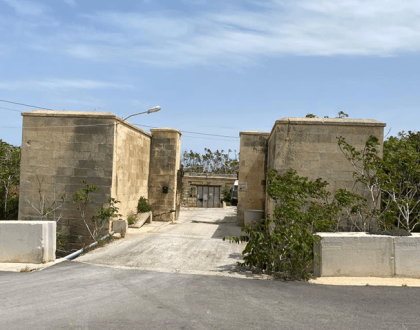
A controversial planning application has been filed seeking to redevelop ruins within Buskett, one of Malta’s most ecologically significant and legally protected woodland areas. The proposal, submitted by developer Alex Tanti, involves a site within the Natura 2000 network and falls under an Outside Development Zone (ODZ) designation, thereby triggering serious environmental and legal concerns.
The application, registered under reference PA/02807/25, outlines the construction of what is described as a “farmer’s quarter” in a remote area known as Ta’ Żejnu, within the broader region of Wied il-Girgenti. Notably, this valley is part of the Natura 2000 network due to its ecological importance, including rare flora and fauna and its role as a natural corridor for wildlife.
Details of the proposed development
The application envisions the development of a residential unit with a bedroom, kitchen, and living area. Additionally, the plan includes the construction of a new cesspit. Environmental watchdogs and planning observers have noted that cesspits are often a pretext for subsequent applications to develop a swimming pool, which can significantly alter the rural landscape and contribute to environmental degradation.





















The site selected for the proposed project lies deep within an ODZ, which under current planning legislation is supposed to be protected from residential or commercial development unless justified under specific and restrictive rural development policies. Nevertheless, Malta has seen a steady rise in comparable projects within ODZ zones, frequently introduced through phased applications and altered land use classifications.
Previous attempt and environmental objections
This is not the first attempt by developer Alex Tanti to redevelop the area. In 2023, Tanti submitted a similar application, then under a different architect. That application was withdrawn following an outright objection by the Environment and Resources Authority (ERA), the governmental body responsible for environmental protection and regulatory oversight.
At the time, ERA had characterised the application as a “non-starter,” citing the lack of historical evidence indicating previous habitation of the site. This is a crucial criterion, as redevelopment of ruins in ODZs is often only permissible if it can be clearly proven that the site was once used as a residence or valid structure.
The Authority further highlighted significant worries regarding how the proposed building might affect the visual character of the surrounding valley, emphasizing the Wied il-Girgenti area’s status as a cherished natural landmark. Furthermore, the ERA warned of the proposal’s potential to contribute to the degradation of sensitive ecosystems, including disruption to native plant species and habitats for local wildlife.
Legal and environmental framework
Under Maltese law and European Union regulations, areas classified as Natura 2000 sites enjoy a heightened level of protection due to their environmental importance. Any development that may impact the ecological integrity of such areas is subject to stringent assessment processes and typically requires an Environmental Impact Assessment (EIA).
The designation of Natura 2000 is not symbolic—it carries legal obligations on the part of national authorities to prevent habitat degradation and to manage land use in a sustainable manner. Allowing new development in such areas may contravene both national and EU directives, particularly the Habitats Directive and the Birds Directive, which underpin the Natura 2000 framework.
Moreover, the fact that the project lies in an ODZ means that any new construction must adhere to restrictive planning guidelines. These zones are specifically intended to shield rural and ecologically sensitive areas from speculative development.
A potential loophole in rural development policy
While the ERA has historically been firm in objecting to such projects, there is growing concern among environmental NGOs and residents that recent changes to rural development policies have opened loopholes. These amendments, introduced quietly in recent years, allow developers to apply for new structures under the guise of “agricultural use” or “farm-related facilities,” terms that can be broadly interpreted.
Critics argue that the “farmer’s quarter” label in Tanti’s latest application could be an attempt to exploit this ambiguity. Environmental advocacy groups have urged the Planning Authority to consider the broader implications of these applications and not to approve projects that undermine the spirit of ODZ protections.
Role of the Planning Authority and public participation
The Planning Authority (PA) is currently reviewing the application and is accepting public comments and objections before issuing its recommendation. Objections may be submitted by individuals, organisations, and local councils. The deadline for public submissions is set to expire at the end of this week.
Historically, the PA has faced criticism for approving developments in ODZ areas despite clear objections from environmental agencies and civil society. Nonetheless, the authority insists that all applications are reviewed based on current policy frameworks and legal parameters.
In this instance, while the project appears unlikely to receive approval due to the sensitive nature of the site and the ERA’s previous stance, it remains to be seen whether recent policy shifts could influence the decision-making process.
Community reaction and wider implications
Residents and environmental groups have expressed alarm over the renewed attempt to develop within Buskett. The Buskett woodland, already under pressure from surrounding land use changes and encroachment, is one of Malta’s last remaining green lungs. The woodland is also historically significant, dating back to the time of the Knights of St. John, and serves as an important recreational area for the Maltese public.
Environmental NGOs, such as Din l-Art Ħelwa and Friends of the Earth Malta, have warned that allowing such development to proceed could set a dangerous precedent for future applications. These groups maintain that the environmental and cultural value of Buskett should take precedence over private development interests.
Legal experts in land use and environmental law have also weighed in, noting that should the Planning Authority approve the application, it could potentially be challenged in court or through EU channels, given the site’s Natura 2000 status.
The architect’s involvement
The architect listed on the latest application is George Farrugia, a professional who has been involved in multiple rural development projects in the past. While there is no suggestion of wrongdoing on his part, his name has become associated with several ODZ developments, some of which have been controversial.
In this context, the choice of architect is seen by some observers as strategic, aimed at navigating the complexities of rural development policy and maximizing the likelihood of approval.
What comes next?
As the application enters the consultation phase, it will be subject to scrutiny not only by the Planning Authority and ERA but also by the general public and civil society organisations. If objections are strong and the authority deems the project incompatible with current policies, it is likely to be rejected. However, if recent policy shifts are interpreted in the applicant’s favour, the proposal may proceed, possibly triggering appeals or legal action.
The case highlights broader concerns about the weakening of planning protections in Malta and the need for robust enforcement of environmental regulations. As development pressures continue to mount, the country’s limited natural heritage, including areas like Buskett, may face increasing threats.
Conclusion
The planning application filed by Alex Tanti for development within the ODZ of Ta’ Żejnu in Buskett represents a significant test case for Malta’s environmental governance. While the ERA has previously signaled strong objections, recent changes to rural development policy leave open the possibility—however controversial—of approval.
As the deadline for public input approaches, environmental advocates and residents are rallying to ensure that Malta’s legal obligations under Natura 2000 and national conservation laws are upheld. The outcome of this application could have far-reaching implications, not just for Buskett, but for the future of Malta’s protected landscapes more broadly.
FAQs
What is Natura 2000?
Natura 2000 is a European Union network of protected areas aimed at ensuring the long-term survival of Europe’s most valuable and threatened species and habitats.
What is an Outside Development Zone (ODZ)?
An ODZ is a planning classification in Malta that restricts development in rural and ecologically sensitive areas to protect the environment and landscape.
Why is the Buskett woodland significant?
Buskett is one of Malta’s few remaining woodlands, with historical, ecological, and recreational value. It is a designated Natura 2000 site.
What does the application propose to build?
The application seeks to build a residential unit described as a “farmer’s quarter,” including a kitchen, bedroom, living space, and a cesspit.
Who is Alex Tanti?
Alex Tanti is the developer who submitted the planning application for development in Buskett. This is his second attempt to develop the site.
Has the ERA objected to similar applications before?
Yes, the ERA objected to a similar application by the same developer in 2023, citing environmental concerns and lack of historical residential use.
Can the Planning Authority approve ODZ development?
While ODZ areas are protected, recent policy changes have allowed for some development under rural development rules, though such approvals remain controversial.
What is the role of the public in this process?
The public can submit objections or support for the application during the consultation period before the Planning Authority makes a decision.
Could this application be legally challenged?
Yes, if the application is approved, it could potentially be challenged under Maltese or EU environmental law.
Is a cesspit a sign of future development?
In many cases, a cesspit is viewed by environmentalists as a precursor to more intensive development, such as installing a pool or expanding a residence.

Ash
I like to keep it short. I am a writer who also knows how to rhyme his lines. I can write articles, edit them and also carve out some poetic lines from my mind. Education B.A. - English, Delhi University, India, Graduated 2017.