Robert Abela shifts stance on Cabinet asset disclosures
Prime Minister Robert Abela has once again altered his position regarding the publication of Cabinet members' asset declarations for 2023, now asserting that the documents are confidential and exempt from public disclosure. This new justification, issued in response to a Freedom of Information (FOI) request from The Shift, directly contradicts Abela’s previous pledges to uphold transparency and public accountability.
The development has intensified concerns over the Prime Minister’s commitment to democratic norms and legal obligations. The Shift has filed a formal complaint with the Commissioner for Information and Data Protection, arguing that Abela's refusal to disclose the documents constitutes a violation of the principles of transparency and good governance.
Notably, until recently, Abela had never suggested that Cabinet asset declarations should be treated as confidential. The change in approach coincides with a growing spotlight on his personal finances, particularly following property purchases that appeared inconsistent with his publicly declared income.





















Contradictions and reversals: A pattern emerges
In December 2023, The Shift initially raised concerns about the missing asset declarations from the Cabinet. Initially, Abela avoided public comment. Later, when challenged in Parliament by Nationalist Party (PN) MP Karol Aquilina, the Prime Minister misleadingly claimed that the declarations had already been filed and published. However, he refused to provide copies or evidence to support this assertion.
Further undermining Abela’s claims, Speaker of the House Anglu Farrugia confirmed that the asset declarations had not been made public, breaking a three-decade tradition of transparency. Although Speaker Farrugia acknowledged the breach of parliamentary practice, he also noted he had no enforcement power to compel the Prime Minister to comply.
Adding to the controversy, the Standards Commissioner, responsible for overseeing declarations by ministers, informed The Shift that his office had not received the 2023 declarations either. This revelation further raised questions about the government's commitment to transparency.
The shadow of the Xewkija property deal
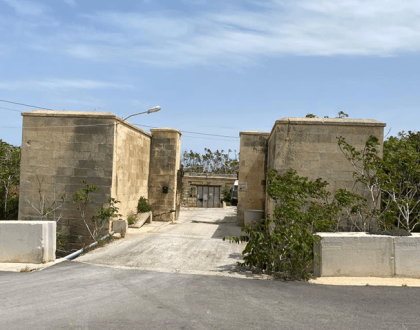
Much of the current scrutiny over Abela’s personal finances can be traced to a controversial property purchase in Xewkija, Gozo. Abela acquired an old property in the village, which he is reportedly converting into a boutique hotel.
The deal raised eyebrows because of apparent discrepancies between Abela’s modestly declared income and the significant financial outlay required for such a project. The issue led the Standards Commissioner to open an investigation. However, the investigation was effectively neutralized after Abela stonewalled inquiries, citing procedural loopholes.
Abela’s resistance to scrutiny in the Xewkija case, coupled with his evolving justifications for withholding asset declarations, has fueled perceptions that he is seeking to shield his finances from public examination.
Promises of reform and the reality of inaction
In response to mounting criticism, Abela initially sought to deflect attention by announcing ambitious plans for reform. He pledged that new regulations would soon require all Members of Parliament, including those in the Opposition, to submit expanded asset declarations. He also suggested that once these reforms were implemented, the 2023 Cabinet declarations would be published.
However, months have passed without any sign of progress. No legislative changes have been introduced, and calls for greater transparency have largely faded from the political discourse. The Opposition, which had initially pressed for accountability, has grown increasingly silent, leading to accusations of a bipartisan reluctance to embrace genuine reform.
Meanwhile, Abela has hardened his stance, now portraying the asset declarations as confidential documents protected under Cabinet confidentiality rules. This position marks a dramatic departure from Malta’s long-standing practice of disclosing ministers' financial interests to the public.
A broader erosion of democratic standards
The implications of Abela’s actions extend beyond the immediate controversy over asset declarations. Observers warn that the Prime Minister’s refusal to disclose basic financial information about his Cabinet members undermines public trust in government and weakens democratic institutions.
Transparency advocates argue that asset declarations are a fundamental safeguard against corruption and conflicts of interest. By shielding these documents from public scrutiny, Abela risks fostering a culture of impunity within his administration.
Critics also point out that Abela’s stance appears to contradict Malta’s commitments under various international frameworks, including European Union standards for transparency and anti-corruption measures.
Opposition response and the role of civil society
The Nationalist Party initially seized on the issue to criticize Abela’s government, framing it as emblematic of a broader culture of secrecy and unaccountability. However, in recent months, the Opposition’s efforts have waned, leading some analysts to question whether political expediency has triumphed over principle.
In the absence of strong political opposition, civil society organizations have stepped into the breach. Groups such as Repubblika and the Daphne Caruana Galizia Foundation have continued to advocate for transparency and accountability, highlighting the broader risks posed by the government’s approach.
These organizations argue that without public access to asset declarations, it becomes significantly harder to detect and deter corruption, particularly in a political environment where patronage and cronyism are perceived to be widespread.
The shifting narrative: From transparency to secrecy
Abela’s shifting narrative about asset declarations reflects a broader pattern observed throughout his tenure. Despite early promises to usher in a new era of clean governance following the scandal-plagued administration of his predecessor, Joseph Muscat, Abela has increasingly adopted tactics that critics say mirror the worst aspects of the previous regime.
Repeated reversals on key transparency measures, combined with a dismissive attitude towards journalistic inquiries and public interest litigation, have eroded the credibility of the government’s reform agenda.
For many observers, the current controversy over Cabinet asset declarations is not an isolated incident but part of a larger trend toward opacity and executive overreach.
Legal challenges and potential outcomes
The formal complaint lodged by The Shift with the Commissioner for Information and Data Protection could trigger a significant legal showdown. Under Malta’s Freedom of Information Act, public bodies are generally required to disclose information unless specific, legally defined exemptions apply.
If the Commissioner rules against Abela’s position, the government may be compelled to release the Cabinet’s 2023 asset declarations. Alternatively, the case could escalate into a lengthy legal battle, with broader implications for the public’s right to access information.
Legal experts note that the outcome of the dispute could set an important precedent for how transparency laws are interpreted and enforced in Malta going forward.
Conclusion: A critical test for Malta’s democracy
The controversy surrounding Robert Abela’s handling of Cabinet asset declarations has become a critical test for the health of Malta’s democracy. At stake is not just the public’s right to know about the financial interests of their elected officials, but the broader principle that those in power must be held accountable to the people they serve.
As Malta continues to grapple with the legacy of past governance scandals, the way this issue is resolved will send a powerful signal about the country’s future direction—whether it will move towards greater openness and accountability, or slide further into a culture of secrecy and impunity.
The coming months will reveal whether public pressure, civil society advocacy, and legal mechanisms are sufficient to uphold the values of transparency and democratic governance in Malta.
FAQs
What controversy is surrounding Robert Abela's Cabinet asset declarations?
The controversy centers around Abela’s refusal to publish his Cabinet’s 2023 asset declarations, despite previous commitments to transparency.
Why did Robert Abela claim the asset declarations are confidential?
Abela now asserts the declarations are confidential Cabinet documents, a reversal from his previous stance supporting public disclosure.
Has Robert Abela faced formal complaints over the issue?
Yes, The Shift filed a complaint with the Commissioner for Information and Data Protection, challenging Abela’s refusal to disclose the documents.
What role did the Standards Commissioner play in the controversy?
The Standards Commissioner confirmed he had not received the Cabinet’s 2023 asset declarations, contradicting Abela’s earlier claims.
What is the significance of the Xewkija property deal?
The property deal raised questions about discrepancies between Abela’s declared income and his apparent wealth, prompting an investigation.
Were any reforms introduced to improve transparency?
Despite promises of reform, no changes have been introduced, and the 2023 asset declarations remain undisclosed.
How has the Opposition reacted to Abela’s stance?
While initially critical, the Opposition has grown increasingly silent, raising concerns about bipartisan reluctance to demand transparency.
What could happen if the Commissioner rules against Abela?
If the Commissioner rules against him, Abela may be legally compelled to release the Cabinet’s 2023 asset declarations.
Why is transparency in asset declarations important?
Transparency helps prevent corruption and conflicts of interest by allowing the public to scrutinize the financial interests of officials.
What does this controversy mean for Malta’s democracy?
The controversy is seen as a critical test for Malta’s commitment to transparency, accountability, and democratic governance.

Ash
I like to keep it short. I am a writer who also knows how to rhyme his lines. I can write articles, edit them and also carve out some poetic lines from my mind. Education B.A. - English, Delhi University, India, Graduated 2017.