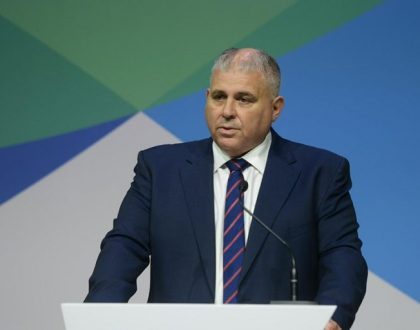
Robert Aquilina cleared of domestic violence charges

Domestic violence proceedings brought against anti-corruption advocate Robert Aquilina have been formally dismissed by the Family Court, following a firm appeal from his wife, Jeanette Aquilina, who described the case as the result of politically motivated manipulation. The case was closed by Magistrate Lara Lanfranco, who upheld Mrs Aquilina’s request to withdraw the complaint, citing her declaration that her prior statements had been distorted to serve as part of a wider campaign of character defamation against her husband.
In a carefully worded and emotionally charged statement before the court, Mrs Aquilina stated unequivocally: “I declare that I do not want to be, and will not be, a participant in the persecution of my husband Robert.” Her appeal formed the cornerstone of the court’s decision to end proceedings, bringing to a close a legal episode that had drawn significant attention due to the political context in which it unfolded.
No allegation of physical violence, says wife
Jeanette Aquilina provided further context to the court by clarifying that the incident in question, which occurred on 30 May, did not involve any physical aggression. Rather, she described the situation as a heated verbal disagreement between spouses, taking place under the considerable strain caused by Robert Aquilina’s high-profile public role in anti-corruption advocacy.





















The disagreement was overheard by a police officer stationed near the couple’s residence, triggering police intervention and subsequent questioning of Mr Aquilina at the Floriana police headquarters. Throughout the process, Mr Aquilina maintained his innocence and cooperated fully with authorities.
Concerns of political interference raised by complainant
Mrs Aquilina expressed serious concern about how her initial statements had been handled and reported by sections of the media. In particular, she singled out leaks to media outlets with affiliations to the Labour Party, alleging that her words were used out of context and manipulated to damage her husband’s public image.
She stated: “What I said to the police is being exploited and manipulated for the persecution and character assassination of my husband Robert.” The statement implied a deliberate effort to weaponise the incident for political gain, particularly given Mr Aquilina’s outspoken criticism of the ruling party and his leading role in exposing allegations of public sector misconduct.
Court finds no legal grounds to continue proceedings
The Family Court, while acknowledging a late request from the Police Commissioner to call additional witnesses, determined that continuing the case was legally and ethically unjustified. Magistrate Lanfranco ruled that such an approach would go against the fundamental principles of justice and the spirit of the law, particularly given that the original complainant had clearly and voluntarily withdrawn her accusations.
“The court believes this renunciation was made in the best interests of the complainant and her children,” Magistrate Lanfranco stated. The court was satisfied that Mrs Aquilina’s withdrawal of the complaint was neither coerced nor improvised, but rather the result of deliberate reflection and a desire to shield her family from further distress.
Political and legal fallout continues
The legal decision did not mark the end of the political commentary surrounding the case. Lara Dimitrijevic, a lawyer and activist well known for her work on women’s rights, publicly criticised the decision not to arrest Mr Aquilina in the wake of the domestic complaint. While Ms Dimitrijevic’s advocacy is widely recognised, the political dimensions of her intervention attracted scrutiny.
Ms Dimitrijevic is the sister of Alex Sciberras, the current President of the Labour Party, and the daughter of former Labour MP and judge Philip Sciberras. Critics of her comments argue that her remarks, though presented in the context of gender rights advocacy, were part of a broader pattern of politically motivated commentary designed to discredit Mr Aquilina.
This perception was shared by Mrs Aquilina, who reiterated her belief that the entire episode had been appropriated as part of an orchestrated smear campaign against her husband.
Repercussions for Robert Aquilina’s public roles
Following the media coverage and the legal developments, Robert Aquilina took the step of resigning from his role in Repubblika, a civil society organisation advocating for good governance and rule of law. He also suspended his functions within the Fondazione Falcone, citing a need to preserve the credibility of these entities amid growing public scrutiny.
In a public statement issued at the time, Mr Aquilina emphasised that these decisions were made not as an admission of guilt but as a measure to protect the organisations from being caught in the political and media crossfire. His move was seen by many observers as a gesture of accountability, intended to preserve public trust in the causes he champions.
Ongoing scrutiny over media and police conduct
The handling of the case has also prompted further questions about the ethics of police leaks and media reporting in politically sensitive cases. The suggestion that confidential information shared with the police may have been disclosed to partisan media outlets has raised concerns about institutional impartiality and procedural integrity.
This case is not the first time such accusations have emerged in Malta’s legal and political landscape. It has revived debate around the role of law enforcement and media institutions in high-profile disputes involving public figures, particularly those who are critical of the government or hold dissenting views.
Calls have been made by independent observers and legal experts for clearer internal protocols within law enforcement agencies to prevent premature disclosures or leaks that could jeopardise investigations or damage reputations without due process.
Domestic violence advocacy and legal process
While the decision to drop the charges has been welcomed by the Aquilina family and supporters of press freedom, it has also sparked dialogue within the sphere of domestic violence advocacy. Some activists have expressed concern that the dismissal of the case might undermine public confidence in how domestic abuse complaints are treated, especially when public figures are involved.
Legal analysts have stressed the importance of distinguishing between genuine domestic violence cases and incidents that arise from misunderstandings or are subject to political misuse. The integrity of the legal process, they argue, must always be upheld through proper evaluation of evidence, voluntary testimony, and judicial independence.
Family privacy and future steps
In concluding her statement, Jeanette Aquilina pleaded for privacy, underlining the couple’s commitment to protecting their three children from the media and political storm. “We want to move on as a family,” she said, reiterating that the wellbeing of their children remained paramount.
While the court’s decision may have brought the legal matter to a close, the broader implications of the case are likely to persist. It has sparked renewed conversation about political influence in legal matters, the role of public scrutiny in family disputes, and the responsibilities of both media and law enforcement in upholding justice without bias.
For Robert Aquilina, the incident represents another chapter in a life deeply interwoven with public accountability and legal complexity. Whether he will resume his leadership roles in civil society remains to be seen, but the case has undoubtedly reaffirmed the complex intersection between private life and public service in contemporary Malta.
Conclusion
The dismissal of the domestic violence case against Robert Aquilina marks the resolution of a highly sensitive legal matter that unfolded amid significant political and media scrutiny. At its core, the case raised serious concerns about the potential misuse of private disputes for political ends and highlighted the ethical responsibilities of institutions, including law enforcement and the media, in handling such matters impartially. The court’s decision, grounded in the voluntary and considered withdrawal of the complaint by Jeanette Aquilina, reaffirms the importance of upholding due process and protecting the integrity of the legal system. While the public discourse surrounding the case may continue, the ruling serves as a reminder that justice must be rooted in facts and fairness, not influenced by external pressures or partisan agendas. As the Aquilina family seeks to move forward, the broader conversation around legal independence, political accountability, and the boundaries of public commentary remains more relevant than ever in Malta’s evolving democratic framework.
FAQs
What was the final outcome of the domestic violence case against Robert Aquilina?
The Family Court dismissed the case after Jeanette Aquilina voluntarily withdrew her complaint, stating it had been politically manipulated.
Was there any physical violence involved in the incident?
According to Mrs Aquilina, the dispute was a verbal altercation and no physical violence occurred.
Why did the police get involved in the first place?
A police officer stationed outside the couple’s home overheard the argument and intervened, leading to a report and investigation.
What role did political affiliations play in this case?
Mrs Aquilina alleged that her statements were leaked to Labour-affiliated media and used as part of a political smear campaign against her husband.
Who criticised the court’s decision not to arrest Robert Aquilina?
Lawyer and activist Lara Dimitrijevic publicly criticised the decision, prompting debate due to her family’s political ties.
Why did Robert Aquilina resign from Repubblika and Fondazione Falcone?
He stepped down to protect the credibility of the organisations amidst the controversy and media attention.
What was the court’s reasoning for dismissing the case?
The court found no basis to continue proceedings after the complainant voluntarily and clearly withdrew the allegations.
Did the Police Commissioner try to continue the case?
Yes, the Police Commissioner requested further witness hearings, but the court rejected the request as unnecessary and contrary to the law’s spirit.
Has the case impacted Robert Aquilina’s public reputation?
Yes, the case has influenced public perception, but supporters argue it was part of a politically driven campaign against him.
What lessons does the case offer regarding legal and political boundaries?
It highlights the importance of safeguarding judicial independence and ensuring that personal disputes are not manipulated for political purposes.

Claire
A highly motivated, results-driven, enthusiastic and ambitious writer. I can offer you well researched and high-quality article writing on any topic for your website or blog and can as well re-write your existing web content.