Villa Rosa public consultation sparks controversy

A major controversy has emerged around a public consultation concerning a proposed high-rise development on the Villa Rosa site in Malta. The draft public consultation document released by the Planning Authority (PA) appears to significantly understate the number of objections submitted against the plan.
The document in question suggests that only 43 individuals objected to the proposed changes through a standard letter circulated by the NGO Moviment Graffitti. However, independent verification by MaltaToday confirms that the real number of objections submitted via this route was far higher — amounting to 3,047.
The development plan, which seeks to amend local parameters to permit a 39-storey high-rise on the historic Villa Rosa site in St. Julian’s, has faced widespread opposition from residents, environmentalists, and civil society groups. The situation has sparked renewed concerns about transparency, accountability, and the influence of developers over the planning process in Malta.





















The official consultation figures and the discrepancy
According to the PA’s published document, 4,318 total submissions were received during the consultation period. Out of these, the document states that 4,212 shared identical text supporting the proposed changes to the local plan, while only 43 opposed the objectives using the same wording.
A full list of the 4,212 supporters and the 43 objectors was included in the documentation. However, MaltaToday has confirmed that this figure is inaccurate and fails to reflect the actual volume of objections submitted through Moviment Graffitti’s online platform. The NGO has provided strong evidence, including a live counter on its website at the time of the consultation, to verify the submission of over 3,000 objections.
Moreover, some of the names listed by the PA as supporters of the high-rise project appear to be individuals who had in fact objected, further fueling suspicion.
Planning Authority maintains its position
When asked about the discrepancy, a spokesperson for the Planning Authority insisted that their figures were accurate. The spokesperson stated that the PA had received only 43 objections using identical wording, and denied any intention to mislead the public.
“It is absolutely not in our interest to hide any figures and we have published all the objections we have received,” the spokesperson said, rejecting any claims of dishonesty or manipulation. The PA also invited MaltaToday to its offices to verify whether the 3,047 emails submitted via the Moviment Graffitti platform were received.
During the visit, MaltaToday was shown a list containing the names and email addresses of the 3,047 individuals who had submitted their objections through the Graffitti platform. However, the publication was not given a copy of the list, preventing independent verification of its inclusion in the official tally.
Graffitti insists system was functioning correctly
Moviment Graffitti has categorically denied that only 43 objections were submitted through its online system. The NGO noted that the system, which has been used on several prior occasions for similar campaigns, was operating normally during the consultation period.
In fact, 43 of the people who used the Graffitti system are included in the Planning Authority’s published list of objectors — a detail the group uses to validate the platform’s effectiveness. Graffitti emphasized that its system incorporated a live counter to ensure public transparency, and had facilitated thousands of successful submissions.
Accusations of manipulation and calls for accountability
In a strongly worded statement, Moviment Graffitti accused the Planning Authority of misrepresenting public feedback and compromising the integrity of the consultation process.
The group called for the entire public consultation process to be annulled, describing it as “rigged.” It alleged that the PA either failed to properly receive and document the thousands of objections submitted via its platform or actively manipulated the data, potentially in coordination with the developers behind the high-rise proposal.
Graffitti pointed out the suspicious timing with which the developer publicly cited the figure of 4,000 supporters shortly after the consultation period closed — even before the official report had been published. The NGO noted that there was no submission-tracking system available to the developers, raising the question of how they were able to access the figures so quickly.
The organization warned that the situation represented a significant breach of public trust, and reinforced concerns about the excessive influence of wealthy developers over Malta’s planning institutions.
Public anger over perceived erosion of democratic process
The dispute has ignited widespread frustration among civil society groups and members of the public, who view the incident as symptomatic of deeper problems within Malta’s planning system.
Graffitti described the local plan review as “obscene,” arguing that it was crafted to benefit the ultra-wealthy at the expense of the community and the environment. The organization described the proposed 39-storey development as a “monument to greed” that symbolizes the growing trend of developer dominance in the country’s urban planning policies.
Environmental campaigners have echoed Graffitti’s sentiment, arguing that developments like Villa Rosa serve private financial interests while contributing to overdevelopment, traffic congestion, environmental degradation, and the erosion of public space.
The stakes at Villa Rosa
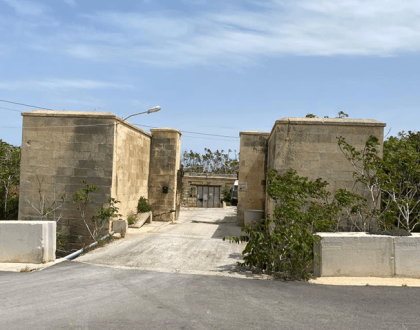
The Villa Rosa site holds significant historical and cultural value, located in a prime area of St. Julian’s and long associated with Malta’s architectural heritage. The proposed redevelopment — if approved — would radically transform the landscape with the construction of a 39-storey tower, making it one of the tallest structures in the country.
Opponents of the plan argue that such a development is incompatible with the character of the surrounding area and would set a dangerous precedent for future planning applications.
Legal and political implications
The situation has also sparked legal questions about whether the Planning Authority complied with its obligations under Malta’s planning regulations and public consultation laws. If proven, the mishandling of public submissions could expose the authority to legal challenges from affected individuals or NGOs.
On the political front, the controversy could place pressure on the government and relevant ministries to respond, particularly if it is revealed that the PA acted improperly or in collaboration with private developers.
Members of Parliament and political party spokespeople have already begun to demand greater transparency in planning processes, and the Villa Rosa case is likely to intensify public calls for reform.
Moving forward: Demand for reform grows louder
The Villa Rosa controversy has become a lightning rod for broader public discontent with Malta’s planning system. Activists, NGOs, and residents are increasingly calling for a complete overhaul of how public consultations are conducted and how planning decisions are made.
Key reforms being proposed include the creation of an independent oversight body for the Planning Authority, mandatory publication of all submissions in real time, and improved systems to track and verify public feedback.
Until such reforms are implemented, campaigners fear that similar cases of misrepresentation and manipulation could occur, undermining public faith in Malta’s democratic institutions and environmental safeguards.
Conclusion
The Villa Rosa development controversy has laid bare deep-rooted issues within Malta’s planning system, highlighting a troubling disconnect between public participation and institutional transparency. At the heart of the matter lies a fundamental question about democratic accountability: when thousands of citizens take the time to voice their objections through an organized platform, their voices must be heard, documented, and respected. The discrepancies between the number of objections submitted and those officially acknowledged by the Planning Authority raise serious concerns about the integrity of the public consultation process.
Moviment Graffitti’s claims, supported by independent verification, suggest that public sentiment against the high-rise development has been severely underrepresented in official records. The failure to accurately report thousands of objections not only undermines public trust but also calls into question the legitimacy of the entire planning process for the Villa Rosa site.
As calls grow louder for the annulment of the current consultation and for accountability from those responsible, this episode serves as a pivotal moment for Malta. It underscores the urgent need for structural reforms that ensure greater transparency, accurate documentation, and fair public engagement in the country’s urban planning framework. Only through meaningful reform can Malta hope to restore public confidence and ensure that planning decisions reflect the collective will of its citizens, not the unchecked ambitions of private developers.
FAQs
What is the Villa Rosa development plan?
It is a proposal to build a 39-storey high-rise tower on the historic Villa Rosa site in St. Julian’s, Malta, requiring changes to local development parameters.
Why is Moviment Graffitti opposing the plan?
Moviment Graffitti opposes the plan on grounds of environmental harm, overdevelopment, and lack of transparency in the consultation process.
How many objections were actually submitted?
According to Graffitti and independent verification, 3,047 objections were submitted through their platform, contrary to the 43 acknowledged by the Planning Authority.
Did the Planning Authority manipulate public feedback data?
Graffitti alleges manipulation, claiming that many objectors were misclassified as supporters in the PA's public consultation document.
What did the Planning Authority say in response?
The PA denied any wrongdoing and insisted that only 43 identical objections were received, inviting media to verify its internal records.
How was the objection data submitted?
Objections were submitted via an online form hosted by Moviment Graffitti, which included a live counter and automatic email forwarding to the PA.
Was the Graffitti platform functioning properly?
Yes, the platform had been successfully used in previous campaigns and showed a working submission system, as confirmed by 43 names appearing in the PA's objectors list.
Why is this case significant?
It highlights concerns about transparency, democratic participation, and the influence of private developers in Malta’s planning decisions.
What are the potential consequences of this controversy?
The incident could trigger legal challenges, political pressure for reform, and broader scrutiny of the PA’s public consultation procedures.
What reforms are being demanded?
Reforms include independent oversight of the PA, real-time publication of submissions, better transparency, and stricter accountability mechanisms.

Anna Amstill
I am an avid Blogger and Writer with more than 6 years of experience with Content Writing. An Online Marketing expert specializing in Blog writing, Article writing, Website content, SEO specific Keyword content and much more. Education B.A. - business management, York University, Canada, Graduated 2016.